


Malta, Including Gozo & Comino (Page 1 of 8)
Quick links to other Malta pages and/or sections Here
Malta is a small island country located in the central Mediterranean Sea, south of Italy and north of Libya. It lies between Europe and North Africa, making it an important crossroads throughout history. The country consists of three main islands: Malta, Gozo, and Comino. The entire country covers a total area of approximately 122 square miles (316 km²), making it one of the smallest countries in Europe. Despite its size, it has a relatively high population of around 520,000 people, resulting in one of the highest population densities in the world. Its capital city Valletta, is located on the northeast coast of the main island of Malta.
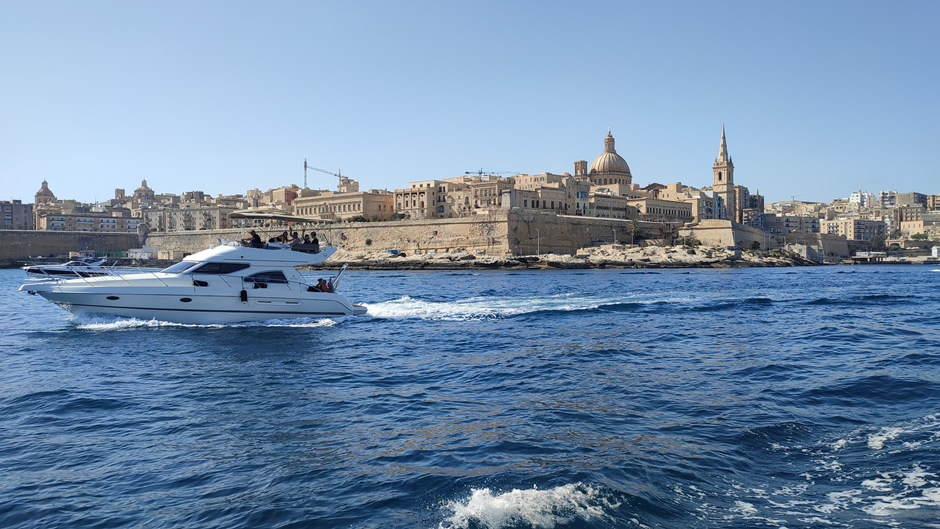
Above: Valletta, as seen from the Sliema side, across Marsamxett Harbour.
Malta has a long and rich history that dates back thousands of years. It was first inhabited around 5900 BC and later became home to one of the world’s oldest known temple-building civilisations. Over time, Malta was ruled by various powers including the Phoenicians, Romans, Arabs, and the Knights of St John. It later became part of the British Empire before gaining independence in 1964. Malta became a republic in 1974 and joined the European Union in 2004.
Above: Zoomable map of Malta (credit: www.openstreetmap.org)
Malta’s landscape is characterised by low hills, rocky coastlines, and a lack of rivers or mountains. The islands are made mostly of limestone, which has shaped both the natural scenery and traditional architecture. Malta has a Mediterranean climate, with hot, dry summers and mild, wet winters. The coastline features many bays, natural harbours, and cliffs, making it popular for swimming, boating, and tourism.
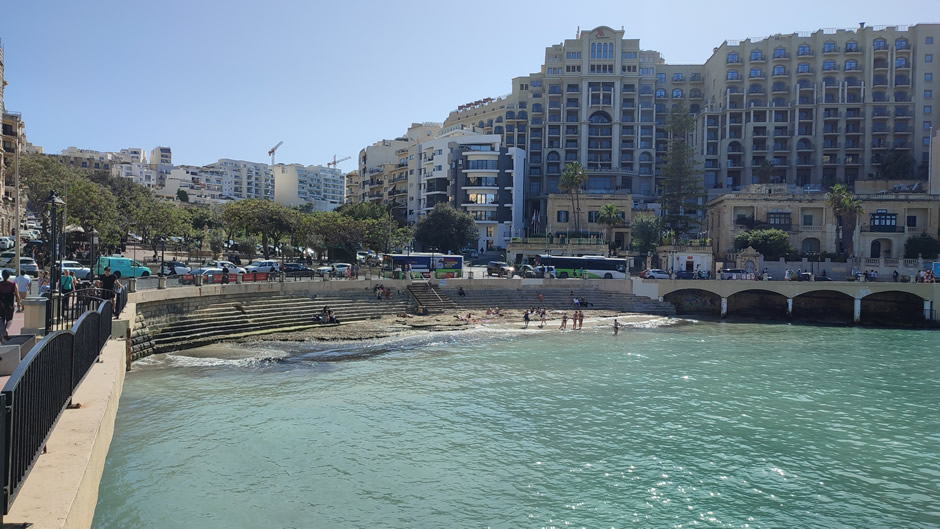
Above: Balluta Bay curves gently between Sliema and St Julian’s and is known for its calm turquoise water.
Maltese culture is a blend of influences from Europe and North Africa due to its historical connections. The official languages are Maltese and English, and Italian is also widely understood. Religion plays an important role, with Roman Catholicism being the dominant faith. Malta is known for its traditional festas (village festivals), colourful decorations, fireworks, and music. Local cuisine reflects Mediterranean flavours, with dishes often including seafood, olive oil, and fresh vegetables.

Above: Fresh fish in Marsaskala, a seaside town in the Southern Region of Malta.
Today, Malta is a modern, developed country and a member of the European Union. Its economy is largely based on services, particularly tourism, financial services, online gaming, and aviation. Tourism is a major contributor, with millions of visitors attracted each year by Malta’s history, beaches, and climate. The country has also developed into a hub for international business due to its strategic location and favourable regulations.
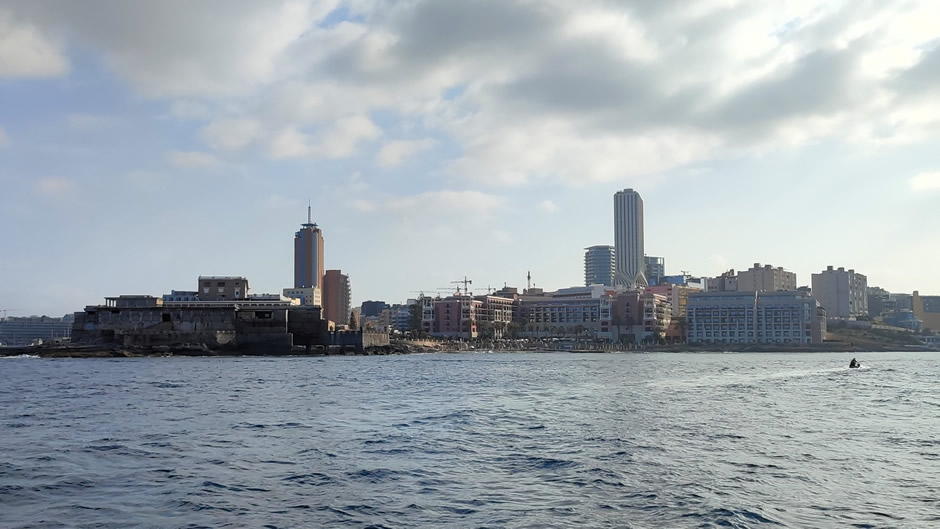
Above: St Julian’s is a lively coastal town in Malta known for its hotels, seaside promenade, and restaurants, offering a mix of relaxation and entertainment. Located within St Julian’s is Paceville, the island’s main nightlife hub, famous for its bars, clubs, and late-night energy. Other popular places to stay in Malta include Valletta, Sliema, Mellieħa, Mdina, Bugibba and Qawra – the latter two being located in St Paul’s Bay, a popular coastal area known for its relaxed atmosphere, waterfront promenade, and easy access to beaches.
Malta has become a popular filming location due to its historic architecture and scenic landscapes. Many well-known films and TV series have been shot there, including Gladiator, Troy, and parts of Game of Thrones; its historic cities and fortifications often stand in for ancient or fictional settings.
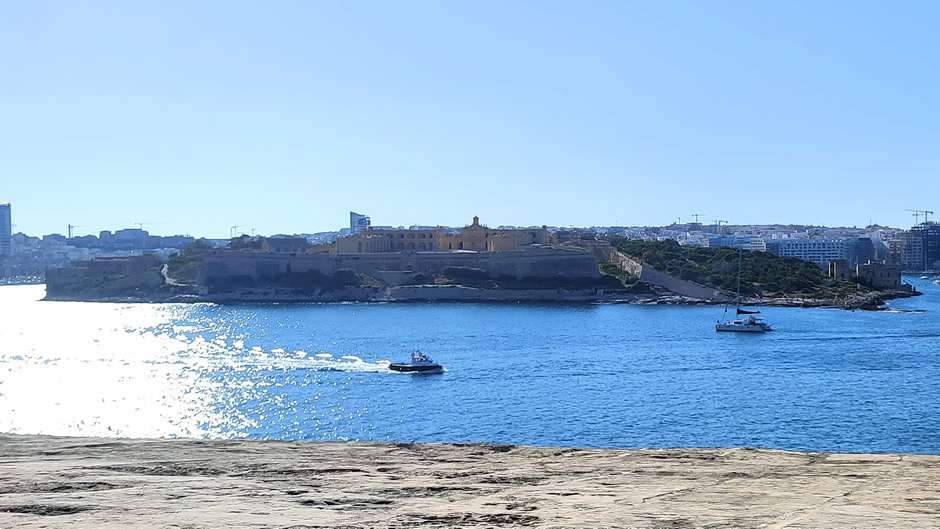
Above: From Valletta, the view across Marsamxett Harbour faces Sliema, with Manoel Island situated between them. The island is dominated by Fort Manoel, an 18th-century star-shaped fort built by the Knights of St John, featuring symmetrical bastions and thick limestone ramparts designed for defence. The fort encloses a central courtyard and includes the Chapel of St Anthony of Padua at its core. Surrounding it, the harbour serves as a natural inlet, while Sliema’s waterfront forms the modern urban backdrop opposite Valletta’s historic fortifications.
The photographs on this webpage were taken during a 10-night visit in April 2026. For the purposes of seeing some the island's main tourist highlights, practicality and cost, the coastal town of Sliema was chosen as a base for the stay. The sights visited were selected using the book DK Eyewitness Top 10 Malta and Gozo as a starting guide to work from and based upon the author’s personal preferences. Although most of the main tourist places are covered, these webpages are by no means comprehensive and do not cover things that Malta may offer, for example, for young families, or those with specialist interests, such as diving, hiking, or food and drink.
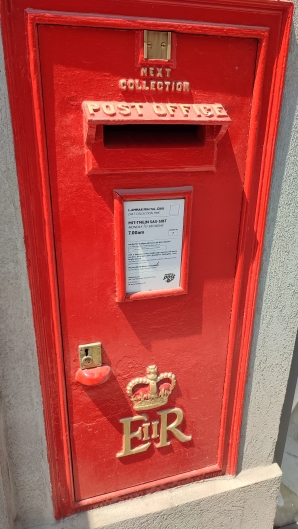 |
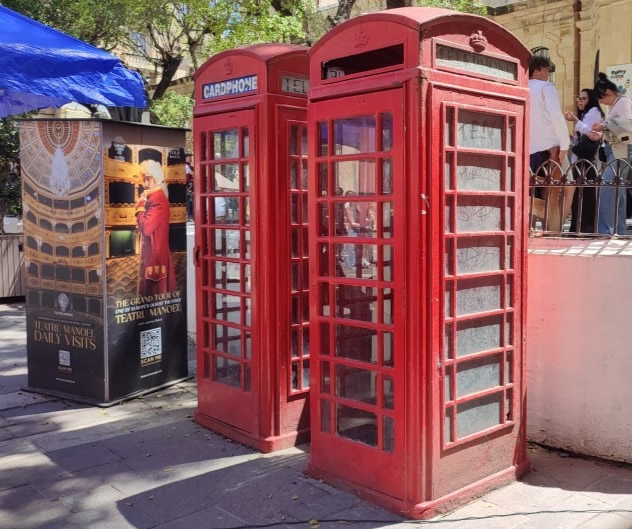 |
Above: Reminders that Malta was once a British Crown Colony
The British visitor may find Malta an ideal destination due to the fact that English is widely spoken, especially in the tourist areas, Malta drives on the left, and also uses the same electrical plug type as the UK. Many international visitors to Malta understandably come here to relax and do very little in a fairly guaranteed hot climate, whilst others are attracted to the many different sights the island has to offer, both by road and by boat. It is worth noting that many parts of the islands have a rocky coastline and so beach-lovers may wish to check the location of the nearest sandy beaches before booking up any accommodation here.
The sections on the webpages that follow cover the sights seen on this trip and are organised chronologically rather than representing a list based on popularity.
[Page 3] Paola and the Hypogeum
[Page 4] Highlights of Malta & Mdina - Ta' Qali Artisan Village, Gardens of St Anton, Rabat & Mdina, Dingli Cliffs, Mosta Rotunda & WWII bunkers
[Page 5] The Three Fortified Cities
[Page 6] Gozo - Ġgantija Archaeological Park, Dwejra Cliffs, Xlendi, Victoria (Rabat, Gozo)
[Page 7] Malta: Prehistoric Temples and Highlights of the South - Għar Dalam Cave and Museum, Marsaxlokk, Blue Grotto, Ħaġar Qim Prehistoric Complex, Limestone Heritage Quarry
[Page 8] Valletta (Includes Grandmaster’s Palace and St Johns Co-Cathedral), Footnote about the Auberges of Malta, Conclusions
Located on the northeastern coastline of the main island of Malta, Sliema (the base for this trip) is one of Malta’s most modern and bustling coastal towns, known for its long promenade, shopping streets, and views across the harbour to Valletta. Once a quiet fishing village, it has developed into a popular residential and commercial hub, offering a mix of cafés, restaurants, a large shopping mall, and seaside walkways that attract both locals and tourists throughout the year.
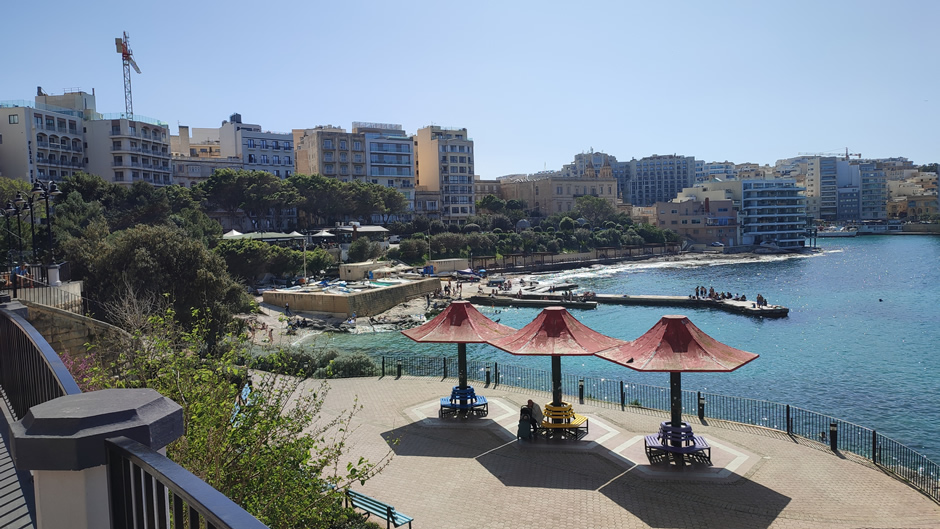
Above: Exiles Bay stretches along the Sliema coastline, known for its rocky swimming spots, clear water, and lively seaside atmosphere.
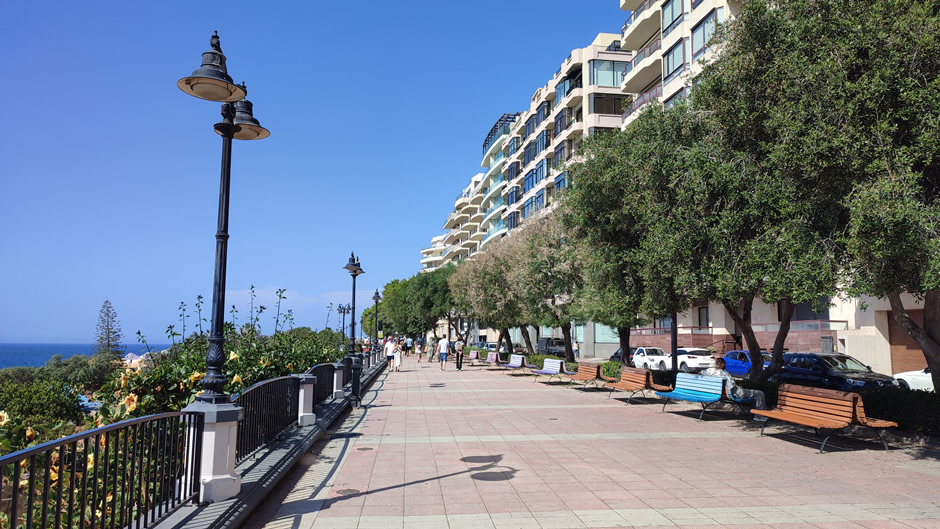
The promenade along Tower Road (shown below) in Sliema is one of the most popular seafront walkways in Malta, stretching for several kilometres along the coastline. It offers open views of the Mediterranean Sea on one side and a continuous line of cafés, restaurants, and hotels on the other. The promenade is well-used by both locals and visitors for walking, jogging, and relaxing, particularly in the evenings when the area becomes a social hub.
Sliema Harbour (shown below) serves as an important departure point for various boat services. From here, visitors can take ferries across to Valletta, as well as cruises around the island, including trips to the Blue Lagoon, Gozo, and Comino. The harbour area is lively and functional, combining transport services with scenic waterfront views looking towards Valletta.
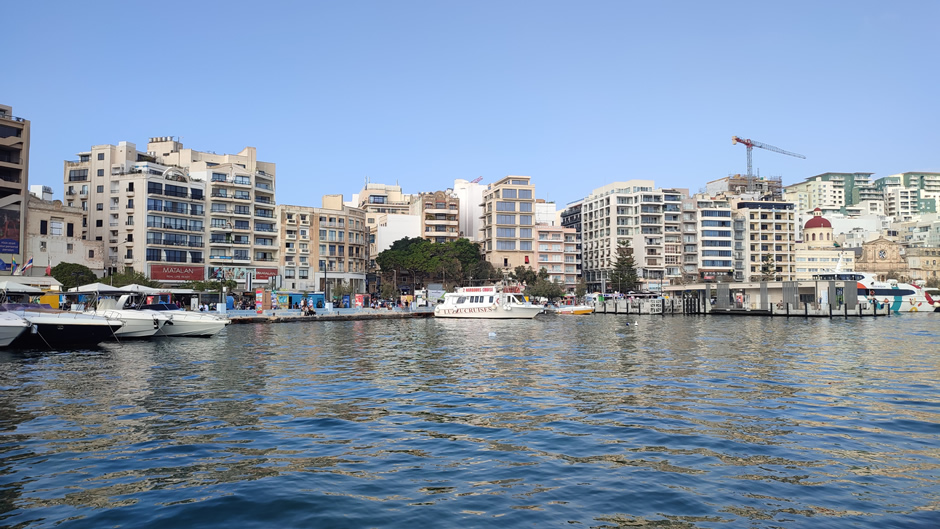
Sliema is shaped like a narrow peninsula, with the open sea and long promenade along Tower Road on one side, and the sheltered harbour facing Valletta on the other. This layout means that it is easy to move between the two sides by taking short routes up and down the gentle hill that runs through the centre. Along these quieter side streets, visitors can see older traditional buildings that contrast with the more modern developments on the main roads, offering a glimpse into the town’s earlier character while still being just minutes from the busy waterfront areas.
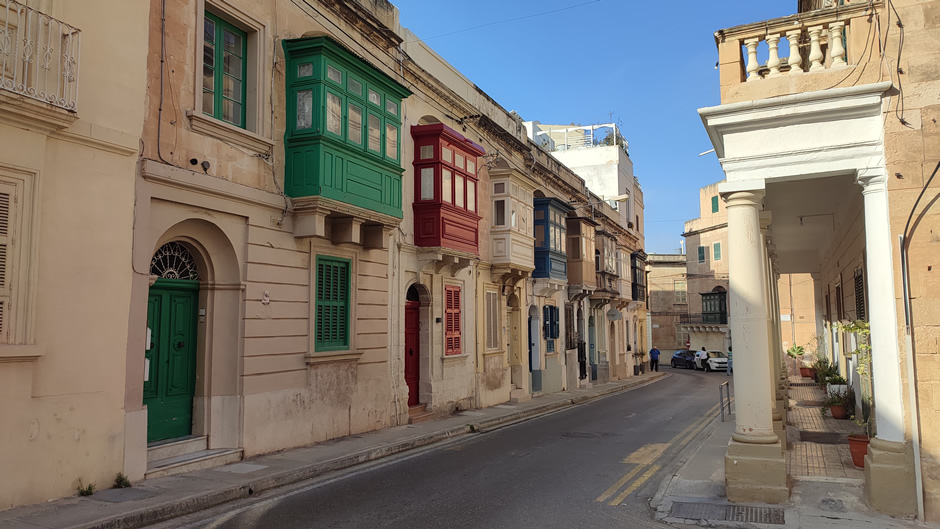
Above: A backstreet in Sliema. The traditional windows that jut out from older Maltese buildings are called gallariji (singular: gallarija), often referred to in English as Maltese balconies. These are enclosed wooden balconies that project from the façade of a building, usually painted in distinctive colours like green, blue, or red. Historically, they served both practical and social purposes - allowing residents to catch sea breezes, observe street life from above, and maintain privacy. Today, gallariji are a defining feature of Malta’s architectural identity and are especially common in older towns like Sliema, Valletta, and the Three Cities.
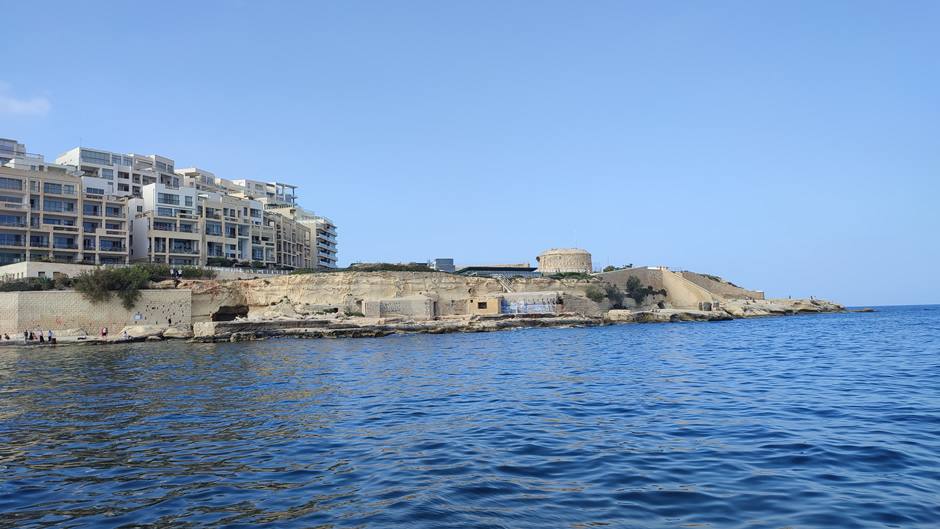
Fort Tigné, standing at the tip of Tigné Point in Sliema, is a compact 18th-century polygonal fort built by the Knights of St John and later reshaped by British military engineering. Its circular keep and angular limestone walls still overlook Marsamxett Harbour, giving the site a distinctive blend of historic fortification and modern waterfront redevelopment:
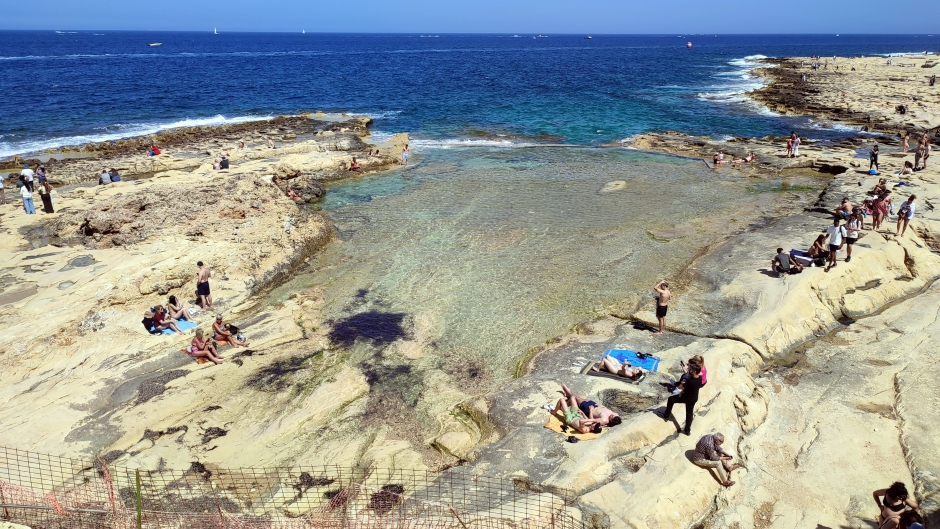
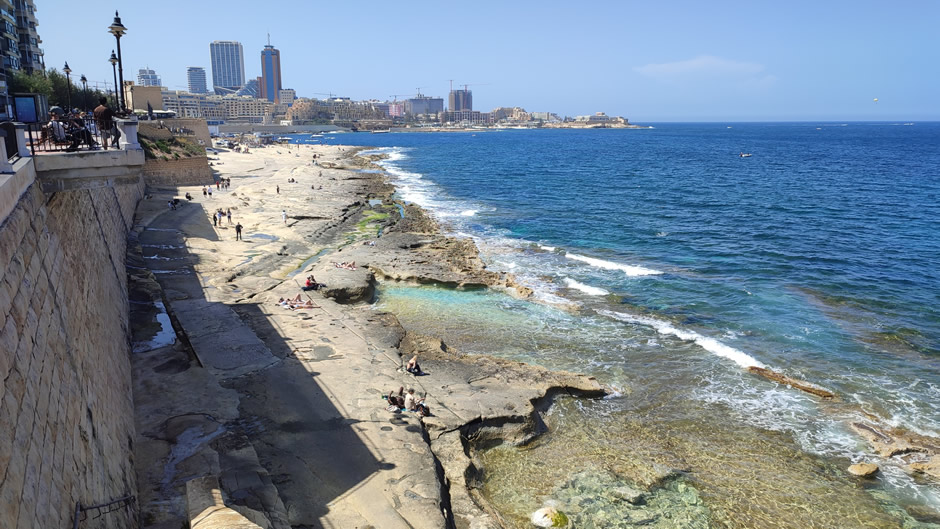
The Roman Baths in Sliema (or more accurately “Victorian-era baths” are a lesser-known historical feature, consisting of natural rock formations along the coastline that fill with seawater. Although not man-made baths from the Roman period, they are often referred to as such due to their appearance. Today, they serve as unique swimming spots where visitors can relax in sheltered pools while enjoying the Mediterranean surroundings. This stretch of coastline is popular with sunbathers, despite the lack of sand.
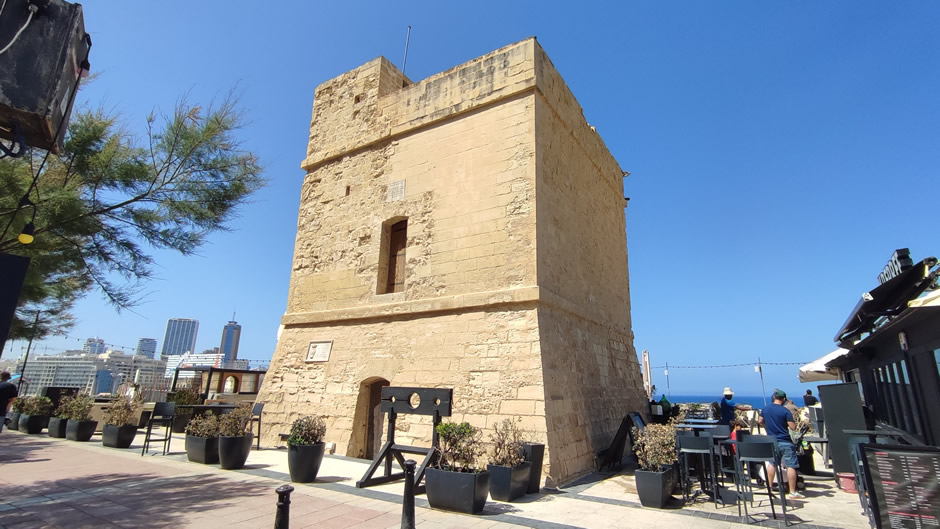
Torri ta’ San Ġiljan (Saint Julian’s Tower) stands on the Sliema seafront as a solid 17th-century coastal watchtower, built by the Knights of St John to guard the harbours. Its blocky limestone form rises above the shoreline, offering wide views over the open sea and the busy modern promenade below. Today it’s a quiet, photogenic landmark where visitors pause to take in the scenery and reflect on Malta’s long maritime history:
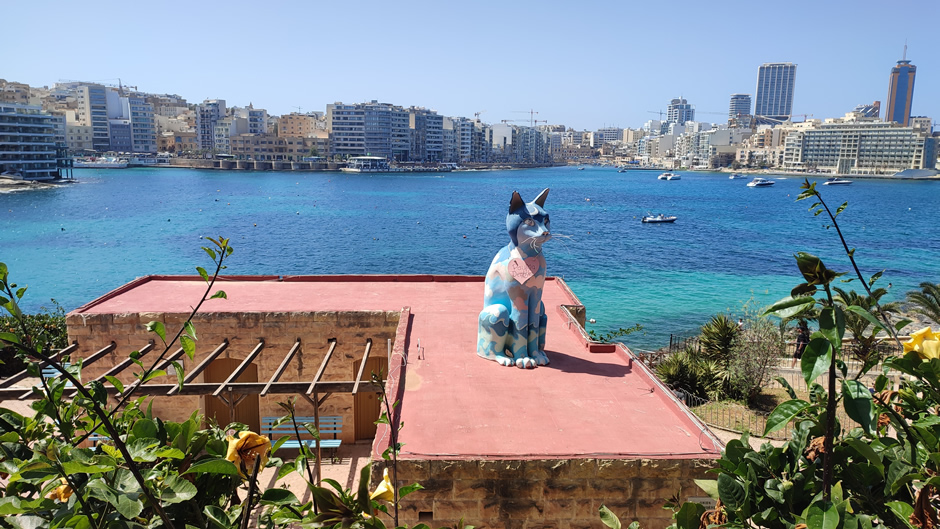
The cat statue in Sliema (shown below) sits quietly along the seafront near Exiles Bay, a small but charming landmark that has become a favourite stop for walkers on the promenade. Sculpted in a simple, modern style, it overlooks the rocky shoreline where Malta’s famous community of seaside cats often gather, making it feel both symbolic and perfectly placed. Visitors tend to pause for photos or to watch the real cats lounging nearby, giving the statue a playful, almost guardian-like presence on the waterfront.
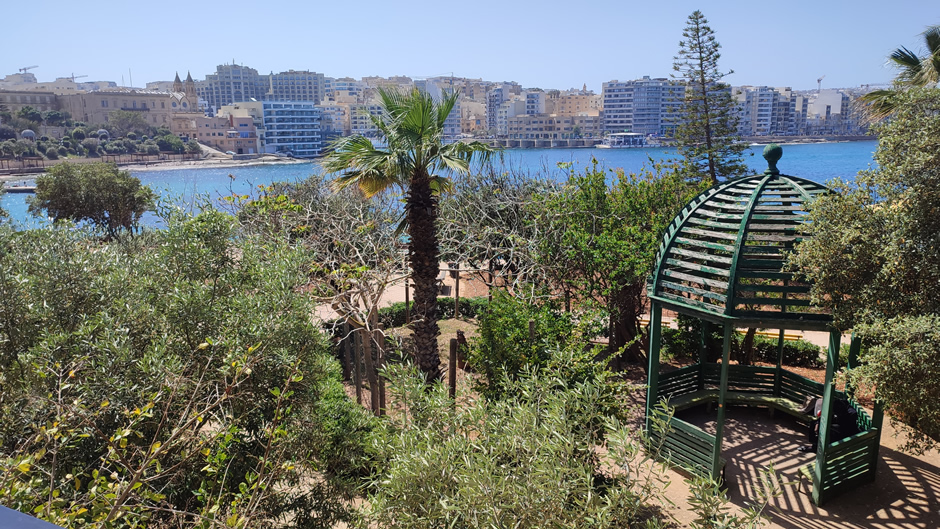
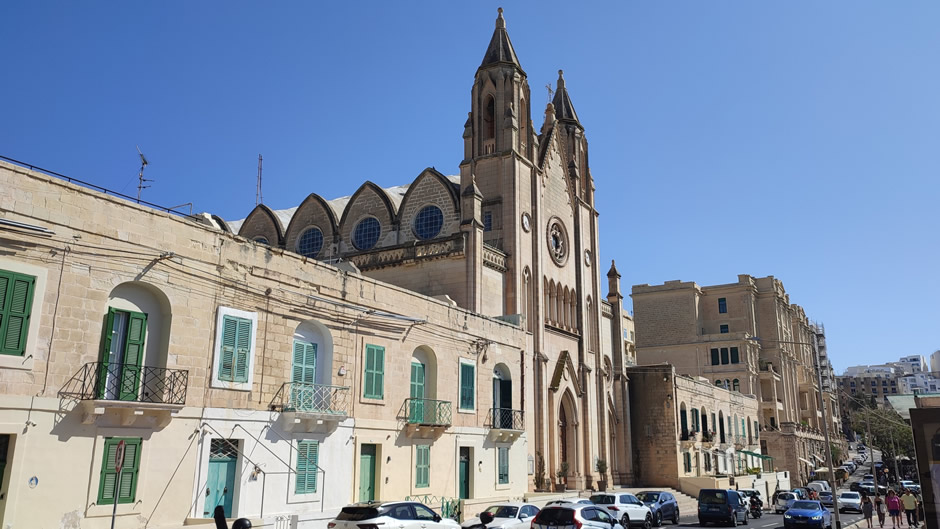
Knisja tal-Karmnu (Church of Our Lady of Mount Carmel) stands along Tower Road in Sliema as a striking coastal church, known for its serene interior, elegant façade, and the warm, peaceful atmosphere that draws visitors in from the busy promenade. Its architecture is especially eye-catching at night, when soft lighting highlights the stonework and gives the building a calm, reflective presence overlooking Balluta Bay:
Link to Next Page (Page 2 of 8)
Back to Top
