


Southwestern USA 2025 (Page 2 of 11)
Quick links to other Southwestern USA 2025 pages and/or sections Here
Las Vegas, Lake Mead, and the Hoover Dam
Las Vegas - “It's Vegas Baby!”
Introduction - Las Vegas is a city of spectacle, built on entertainment, gambling, and reinvention. From its desert origins to its glittering Strip, it has grown into a global hub for tourism, conferences, and culture.
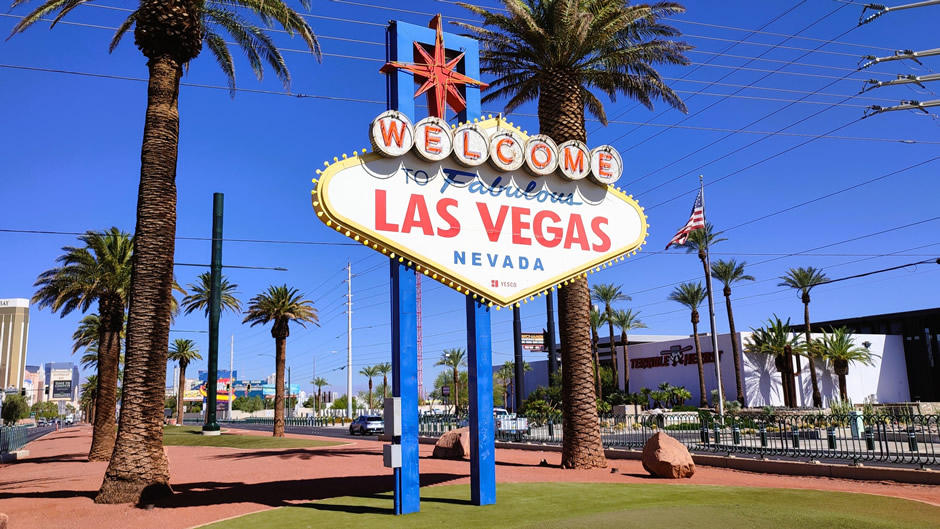
Above: The “Welcome to Fabulous Las Vegas” sign is one of the city’s most iconic landmarks, greeting visitors since 1959. Designed by artist Betty Willis in the bold Googie style (see previous page for definition), it stands at the southern end of the Strip and has become a popular photo spot, symbolising the glamour and energy of Las Vegas.
Las Vegas began as a small railroad town in 1905, its name meaning “the meadows” in Spanish, thanks to the natural springs that once sustained the area. The city’s transformation accelerated in the 1930’s with the construction of the Hoover Dam, which brought workers, electricity, and the beginnings of a casino culture. By the mid-20th century, organised crime played a role in shaping the early casino industry, though figures like Howard Hughes later helped shift Las Vegas toward a more corporate, family-friendly image.
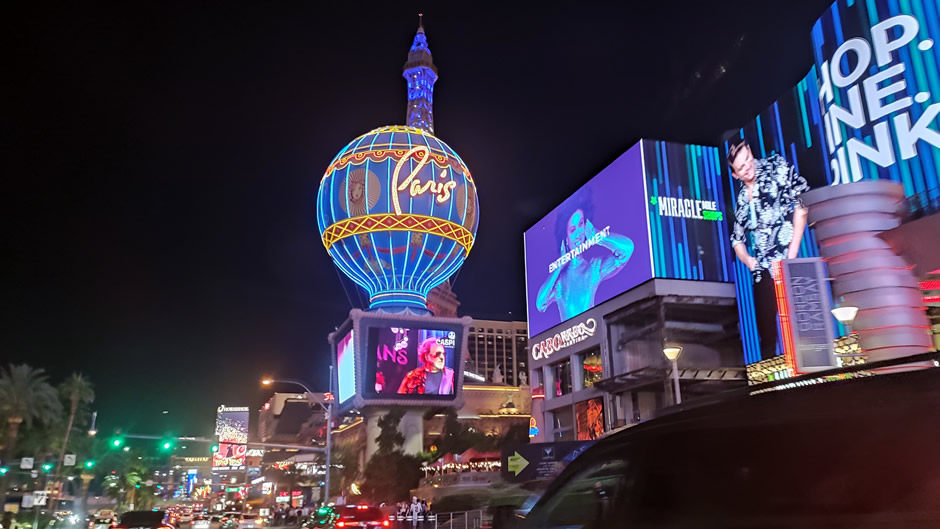
Above: Driving up the Strip at nighttime. The Strip is famously illuminated by thousands of neon signs, LED displays, and marquees that advertise casinos, hotels, and entertainment venues, drawing crowds in at all hours of the night.
Downtown Las Vegas, anchored by Fremont Street, was the original casino district. While it retains historic charm, it has struggled to compete with the mega-resorts of the Strip. Regeneration projects like the Fremont Street Experience have revitalised the area, but business challenges remain as gaming revenue has declined relative to other entertainment offerings. On the Strip, vast resorts such as MGM Grand and Caesars Palace dominate, but they too face pressures: unionisation efforts have highlighted long-standing labour issues, with all major Strip casinos now unionised as of 2025. Additionally, the industry has shifted focus, with non-gaming revenue from hotels, restaurants, and entertainment now surpassing gambling as the primary driver.
Las Vegas has many nicknames, most commonly "Sin City," "The Entertainment Capital of the World," and "The Gambling Capital of the World". Other nicknames include "City of Lights," "The Marriage Capital of the World," and "Lost Wages"
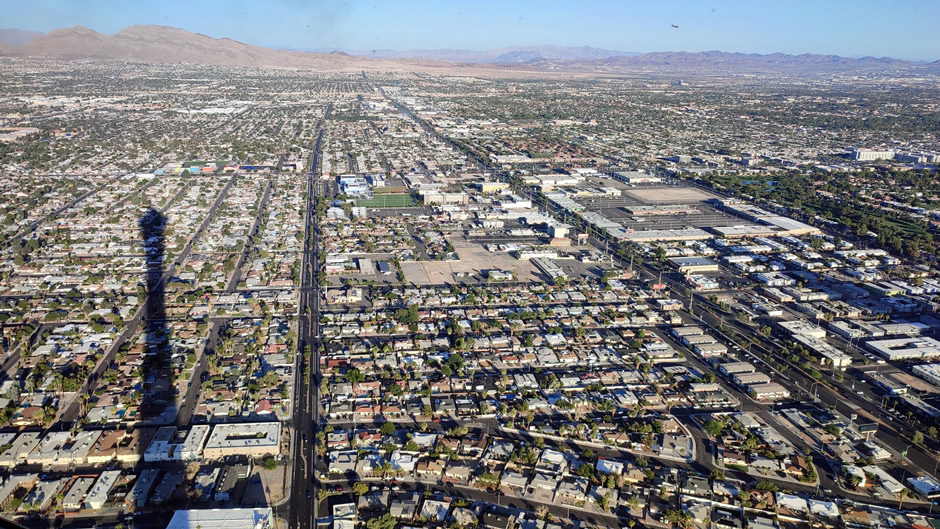
Above: City in the desert. Looking to the east from the STRAT Tower towards Las Vegas Valley's residential areas and the large Sunrise Mountain in the distance, which is situated on the edge of the valley.
Beyond the casinos, Las Vegas is home to the University of Nevada, Las Vegas (UNLV), a major research institution and cultural anchor. The city also boasts one of the largest convention centres in the world, making it a premier destination for business conferences. Its economy extends into hospitality, construction, and even aerospace, supported by infrastructure such as Harry Reid International Airport (known as McCarran International Airport until 2021) and extensive road networks. Together, these elements ensure that Las Vegas is not just a playground for tourists but also a functioning metropolis with diverse industries and a growing population.
The Visit
The city sights that follow were seen during a 4-night/3-full day visit to the city on this road trip. Accommodation was booked ahead, in an annex part of Circus Circus hotel, located at the north end of the Strip. The reason for this was not so much for the hotel itself (the author is not a fan of clowns), but the fact that factoring in the parking (which many hotels charge extra for), the prices were highly competitive, given its location on the Strip. Furthermore, the annex buildings meant it was possible to park right near the entrance to the accommodation block and the room itself, a convenience sometimes not possible in the resort hotels.
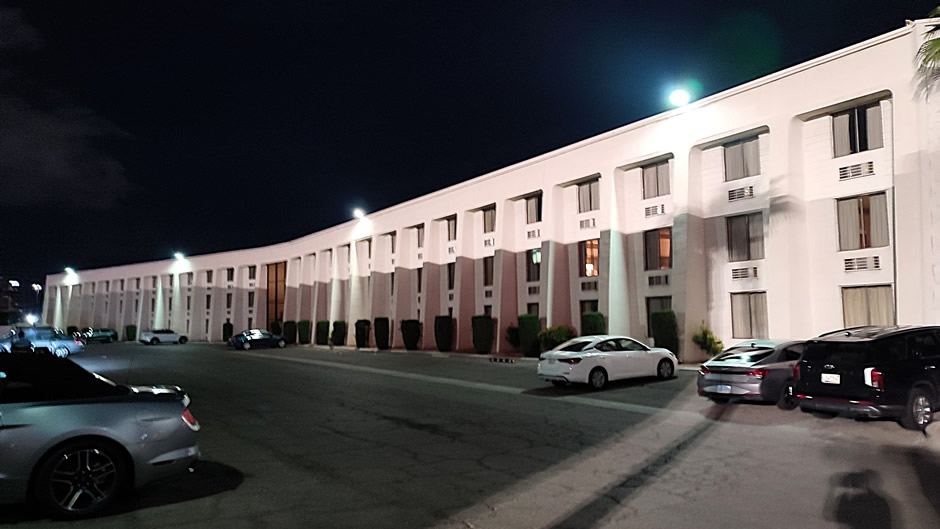
Above: Circus Circus Manor came with free and convenient parking at the northern end of the Strip. Whilst not the most luxurious accommodation choice, it is perhaps better suited for the more budget-minded traveller and has more the feel of a motel.
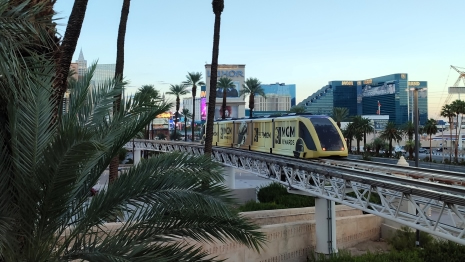
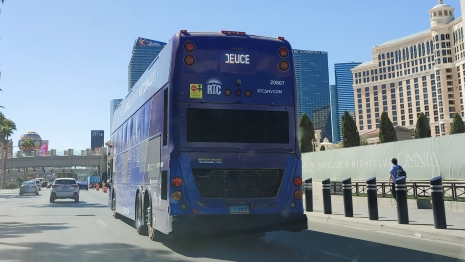
The first day was spent walking southwards down (mainly) the western side of the Strip from Circus Circus to Mandalay Bay Resort and Casino (the southernmost main resort) and then taking the Deuce bus back (the Deuce bus is a double-decker service that runs 24 hours a day, 7 days a week, and connects the Strip with Downtown Las Vegas). Day two was spent taking the Deuce bus back down to the southern end of the Strip and walking northwards (mainly) up its eastern side from near the MGM Grand to Fontainebleau Las Vegas (located opposite Circus Circus).The evening was spent taking the Deuce Bus to Fremont Street, a famous pedestrian mall in Downtown Las Vegas. Day 3 was spent exploring more of Las Vegas’ sights by car, a short rest in the hotel, and then the evening spent on foot going up the STRAT tower for sunset views over the city.
 |
 |
|
 |
 |
With the above in mind, the sights seen in Las Vegas that follow are in the order visited and not in any order of popularity or most recommended, nor does the coverage of hotels and other sites claim to be fully comprehensive!
Las Vegas Strip
The Las Vegas Strip is a 4.2-mile stretch of Las Vegas Boulevard South, just outside the city limits, known for its concentration of resorts, casinos, and entertainment venues. Development began in the 1940’s with early hotels like El Rancho Vegas, and the area grew into a major tourist hub through themed mega-resorts built in later decades. The main places seen along the Strip on this visit follow:
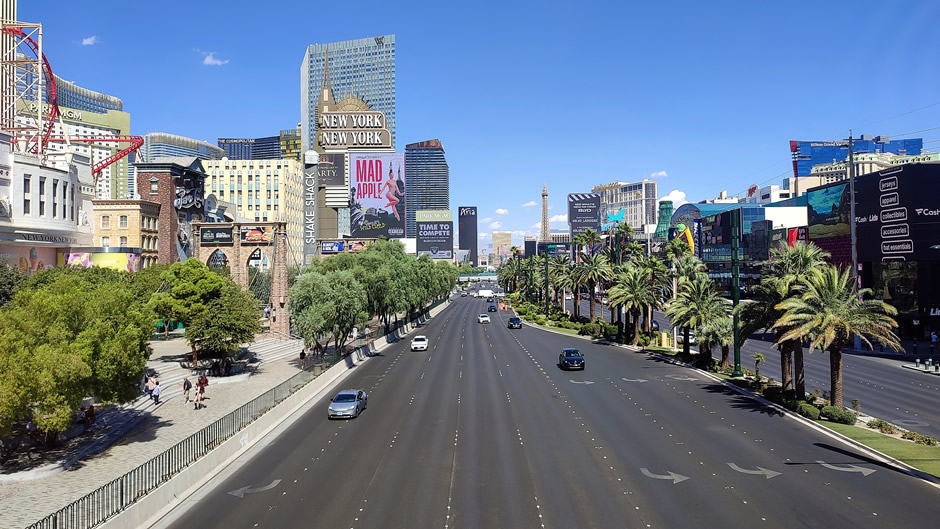
Above: The Strip, Las Vegas, as seen from one of several pedestrian walkways that cross the boulevard.
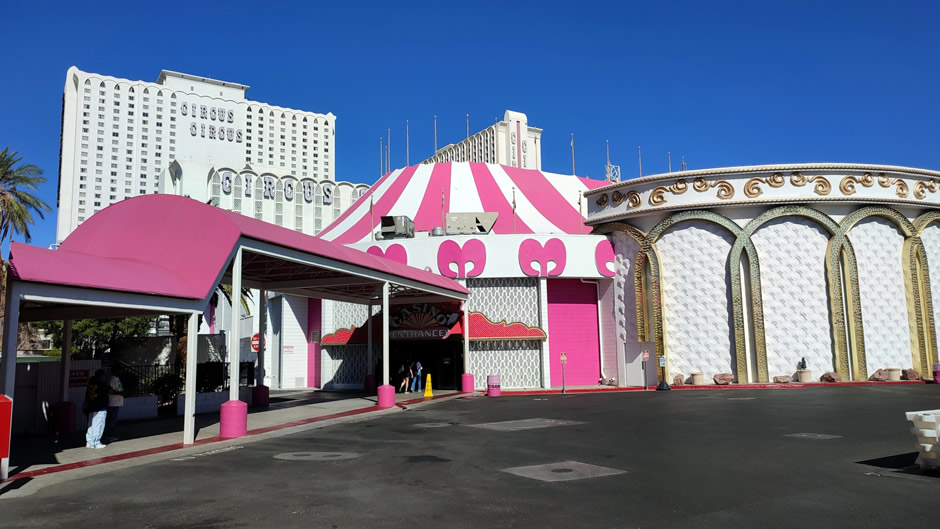
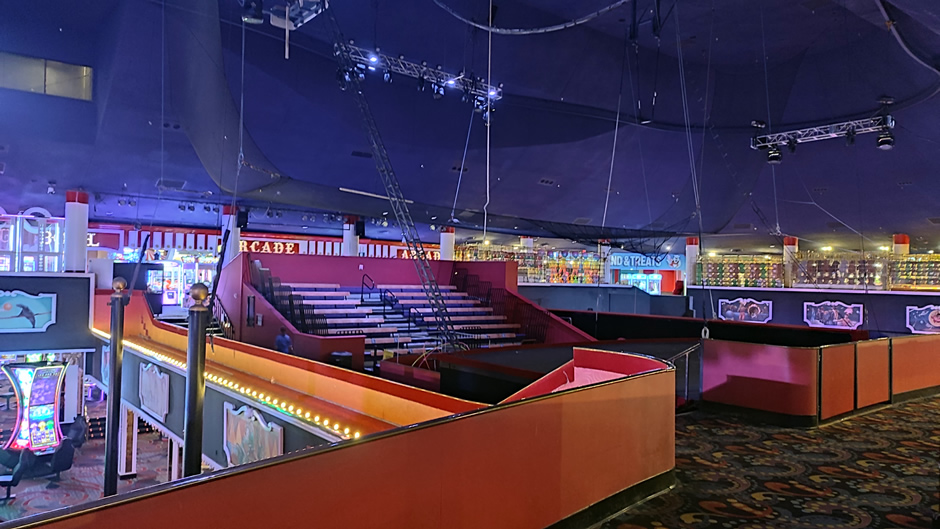
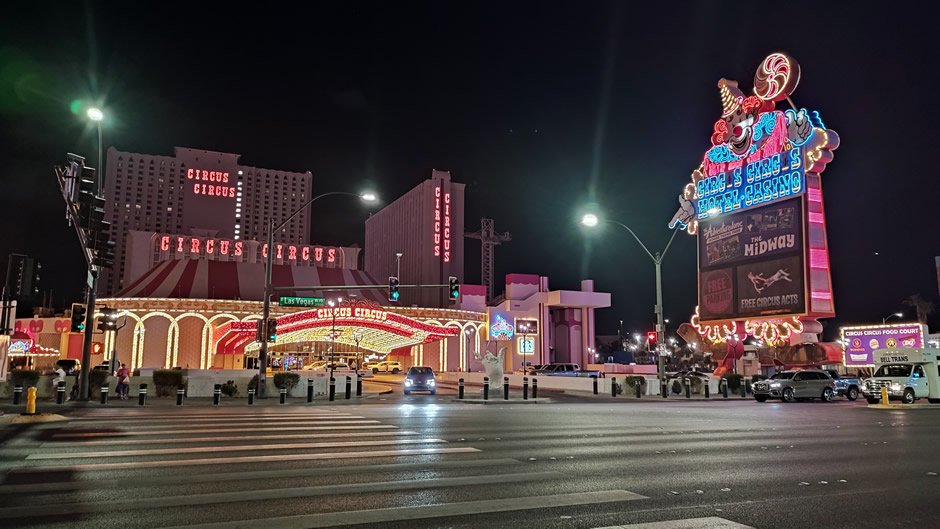
Starting on the western side of the Strip at the northern end, Circus Circus, shown below, opened in 1968. It is a family-oriented resort themed around a circus, with 3,767 rooms and a 3-star rating. It is known for live trapeze acts above the casino floor, the Adventuredome indoor amusement park, and its Midway arcade. Its affordability and carnival atmosphere distinguish it from luxury-focused Strip resorts.
Resorts World (shown below): Built on the former Stardust site, Resorts World opened in 2021 with an East Asian-inspired design. It houses 3,506 rooms across three Hilton brands (Hilton, Conrad, Crockfords) and is rated 4 stars. Attractions include a large casino, high-end dining, and modern entertainment venues, making it the Strip’s newest megaresort.
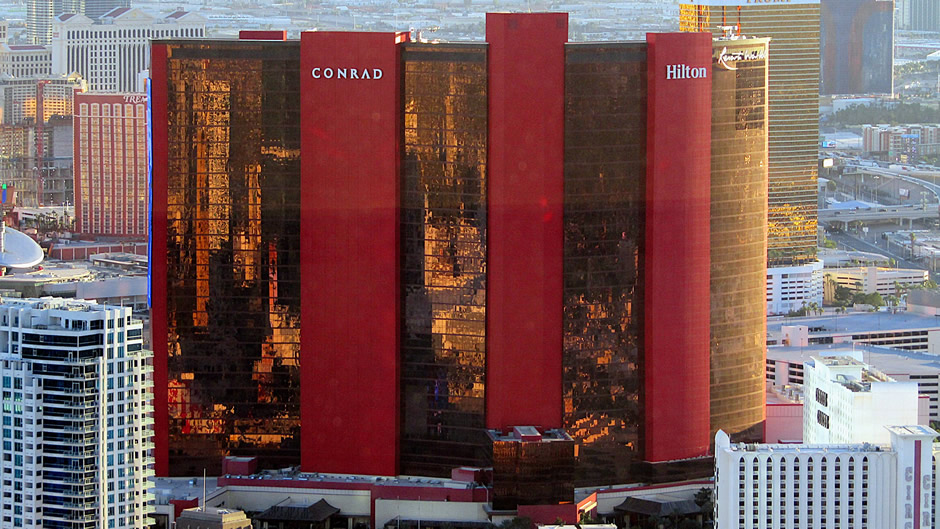
Above: Resorts World seen from a window in the STRAT Tower.
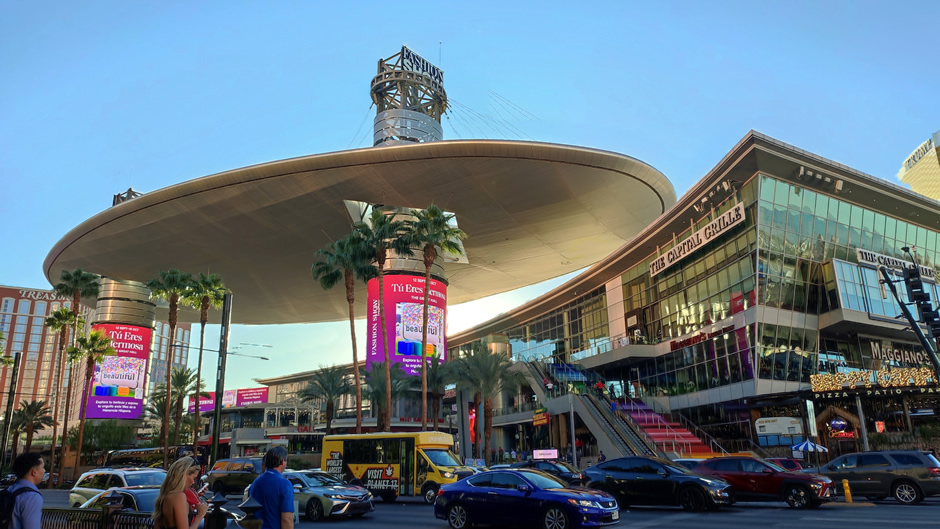
Fashion Show Mall (shown below): Opened in 1981, Fashion Show Mall is the largest shopping centre on the Strip, spanning 1.9 million square feet. It features over 250 stores, eight anchor department stores, and a retractable runway for fashion shows. Its “Cloud” steel canopy is a unique architectural feature.
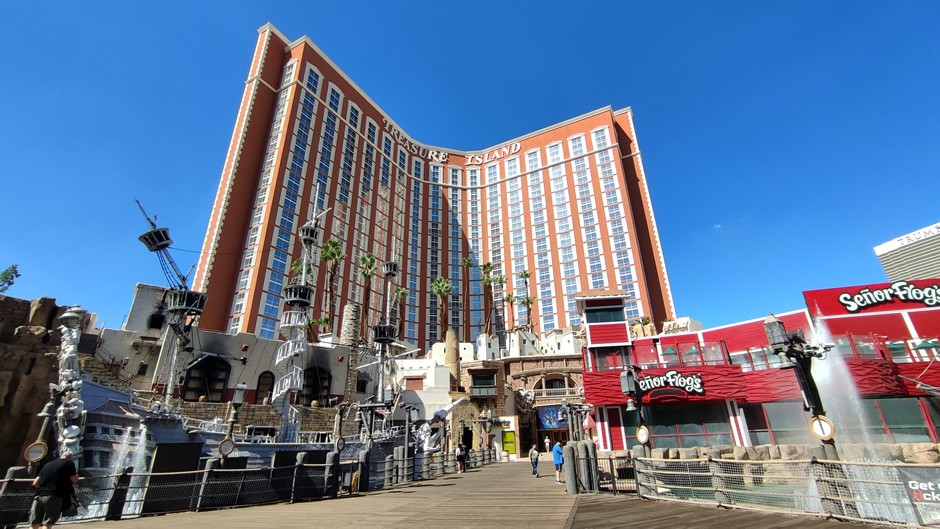
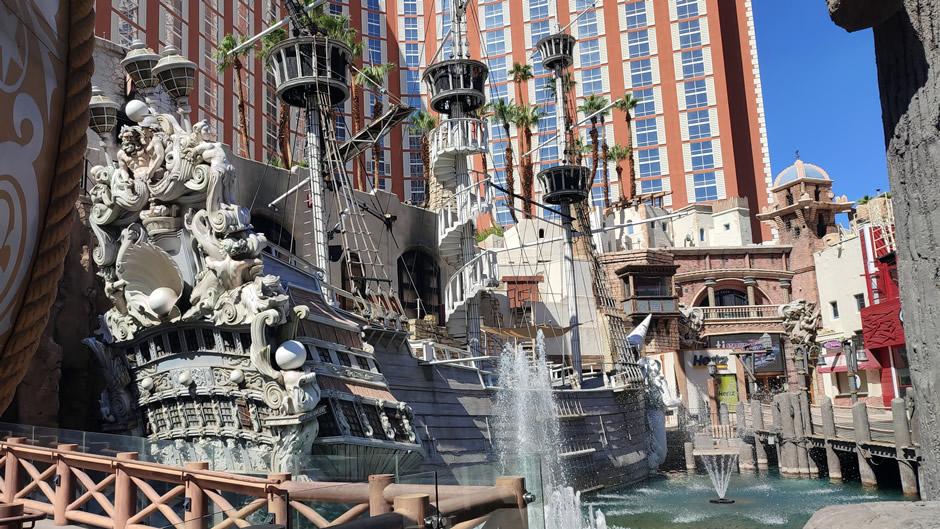
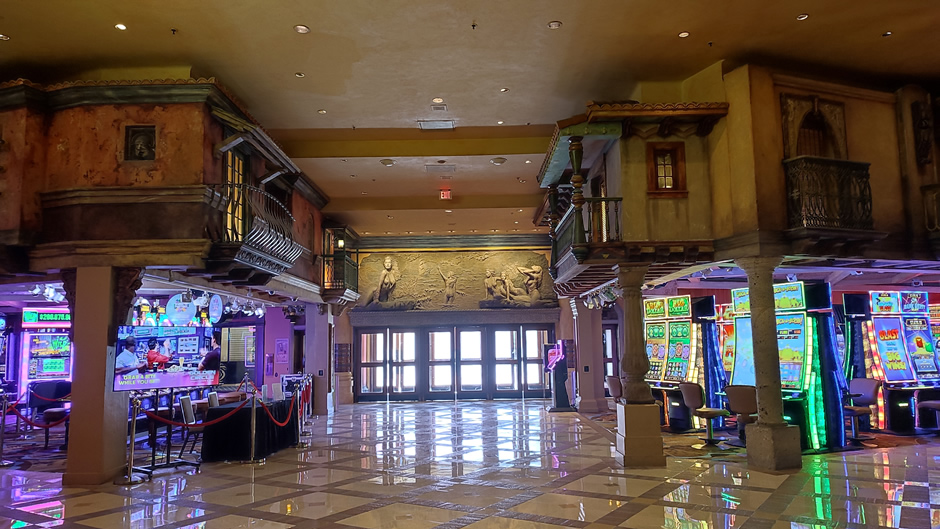
Treasure Island (shown below): Debuting in 1993, Treasure Island originally had a pirate theme, later toned down to modern luxury. It offers 2,885 rooms, a 4-star rating, and (At the time of writing) attractions like Cirque du Soleil’s Mystère and Marvel Avengers S.T.A.T.I.O.N. The hotel has a good selection of dining and nightlife options.
Hard Rock International is building a guitar-shaped hotel tower on the former Mirage Hotel site, (at the time of writing) set to open in 2027 with about 3,600 rooms. The project will double gaming space at the site and add major entertainment venues:
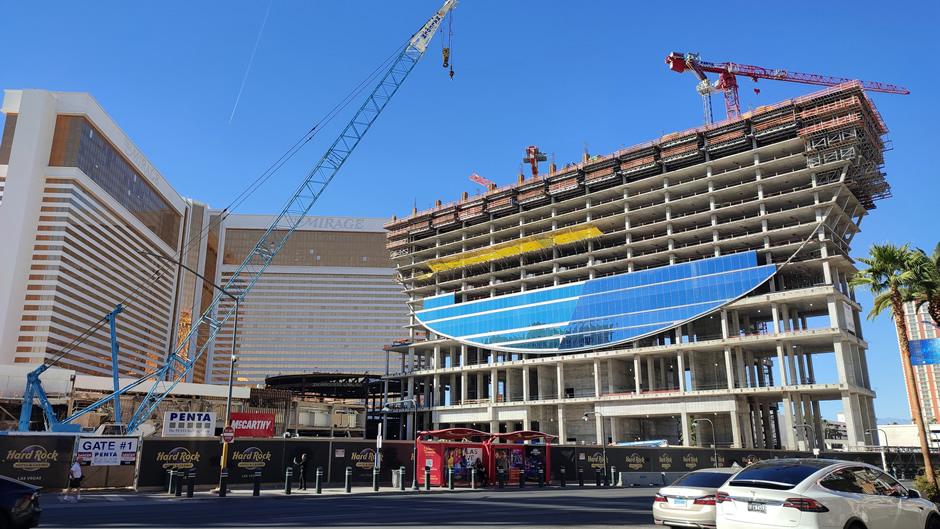
Above: Hard Rock International Hotel under construction in 2025
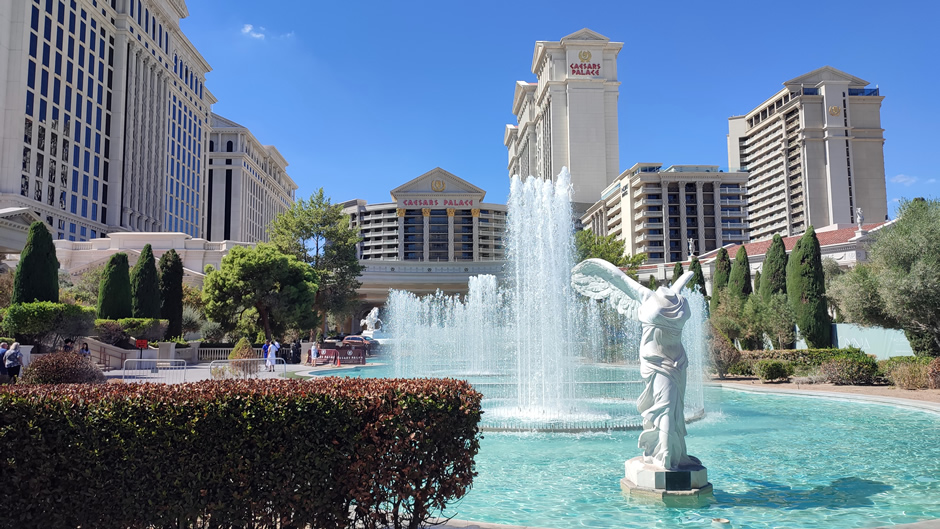
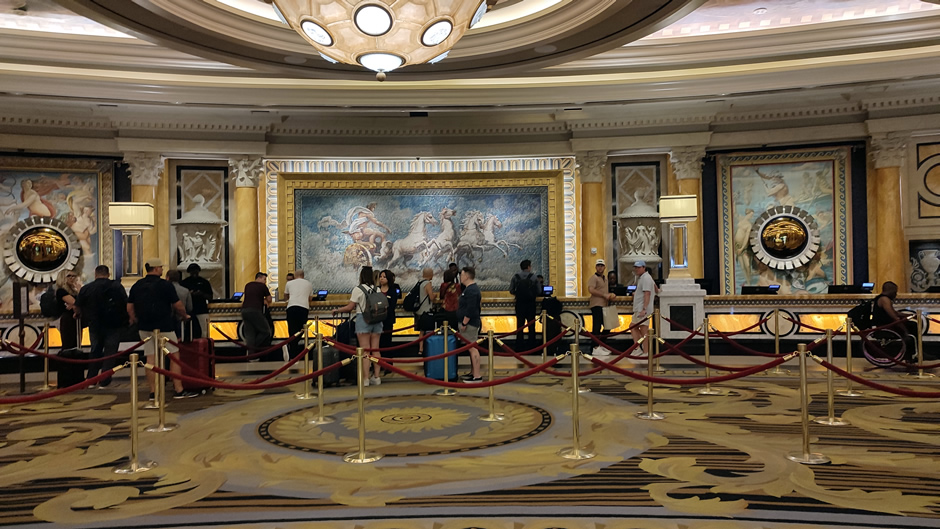
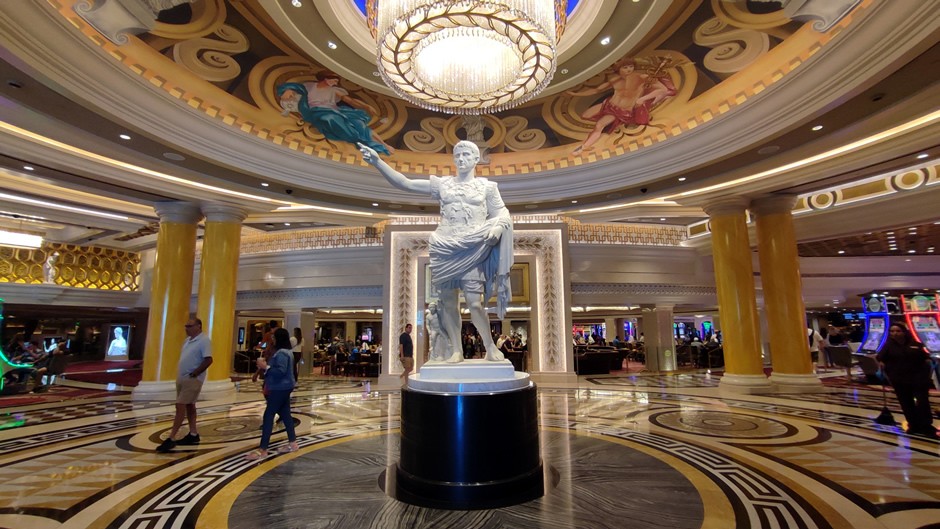
Caesars Palace (shown below): Since 1966, Caesars Palace has embodied Roman Empire grandeur. With 3,960 rooms and a 4.5-star rating, it features the Colosseum Theater, Forum Shops, and the Absinthe show (a racy, adults-only comedy, circus and burlesque show). The hotel’s classical architecture and luxury dining cement its reputation as a Strip icon.

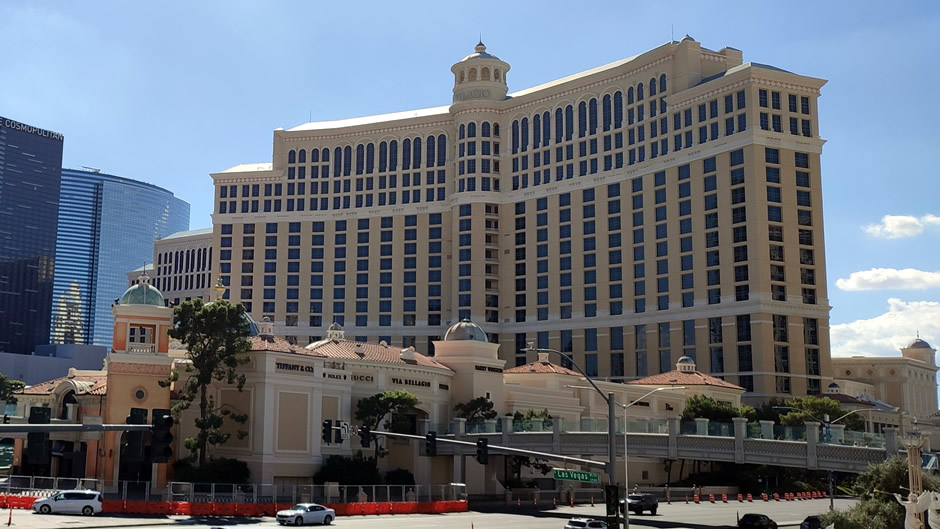
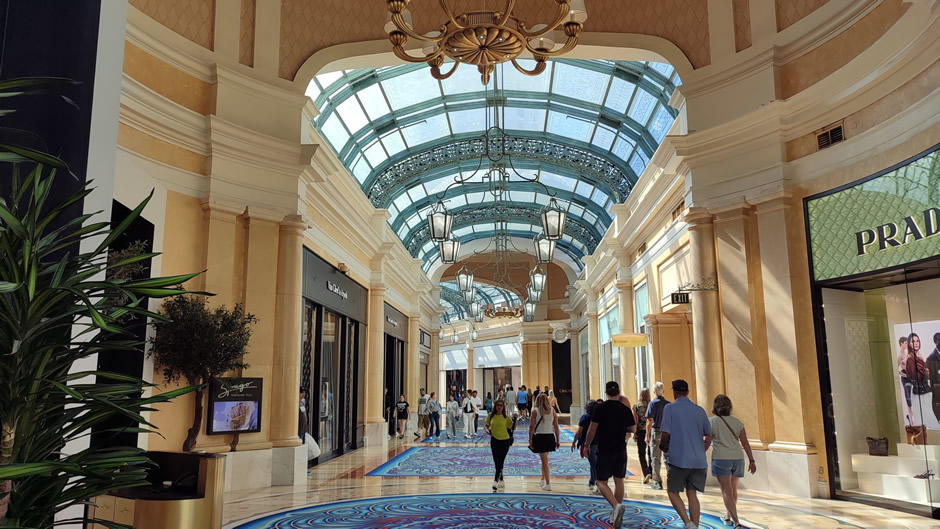
Bellagio (shown below): Opened in 1998, Bellagio is themed after Lake Como’s town of Bellagio in Italy. It has 3,933 rooms, a 5-star rating, and is famous for its Fountains of Bellagio, Conservatory & Botanical Gardens, and fine art gallery. Its luxury positioning set a new standard for Vegas resorts.

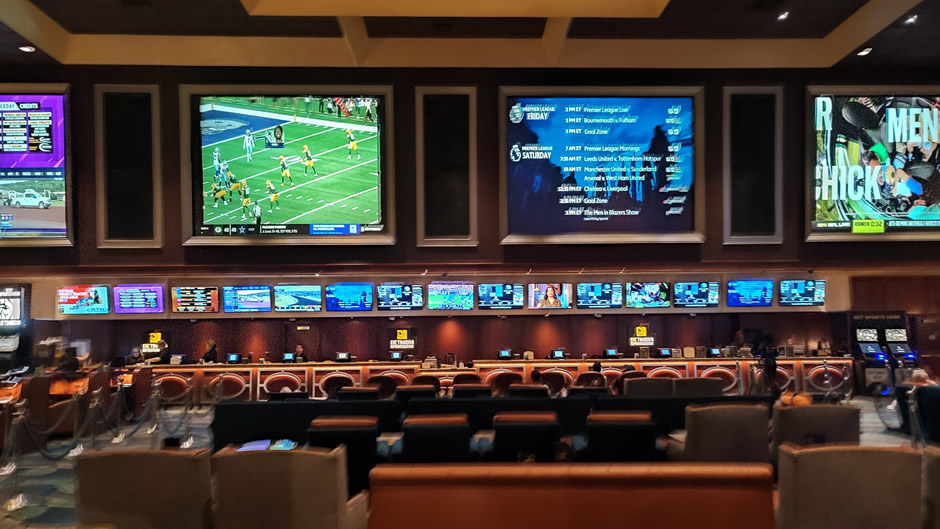
The Cosmopolitan (shown below): Built in 2010, The Cosmopolitan offers 3,027 rooms with private terraces overlooking the Strip. Rated 5 stars, it is known for Marquee Nightclub, hidden speakeasies, and eclectic dining. Its modern design and residential-style rooms make it unique among Strip resorts.
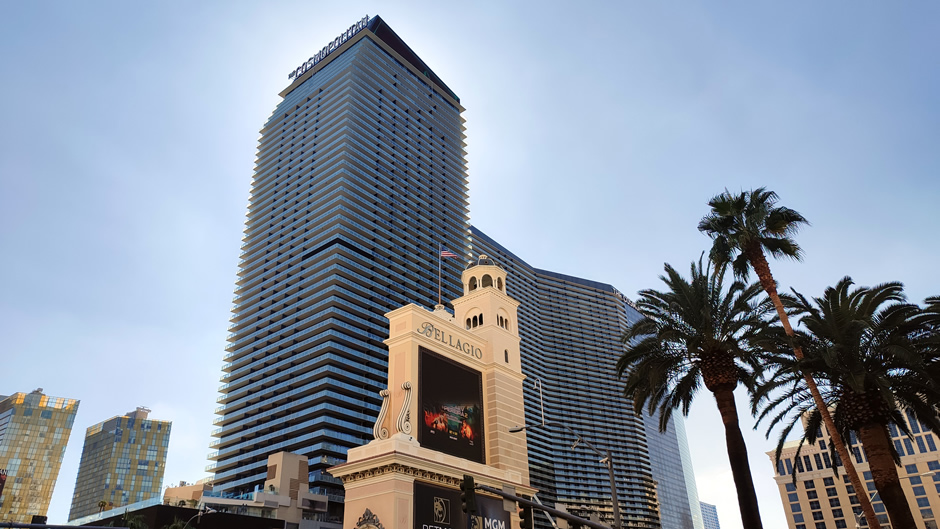
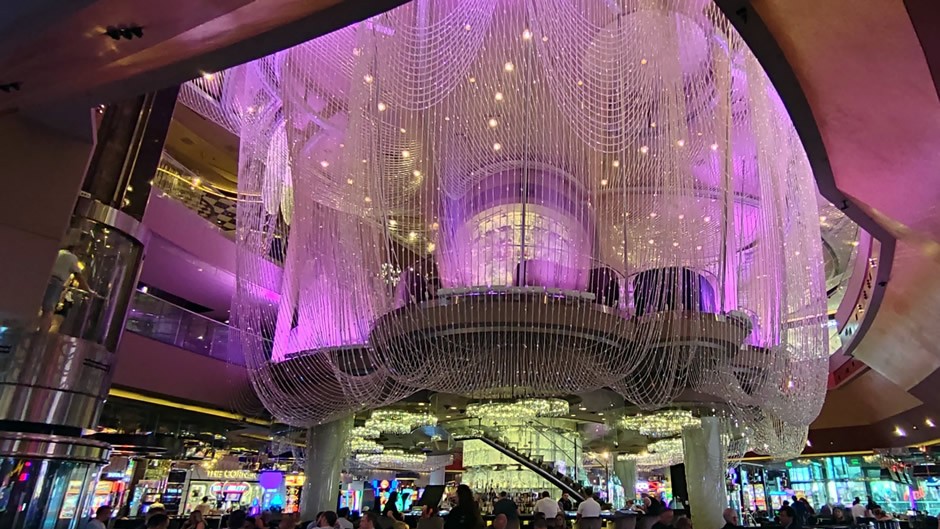
Above: The Cosmopolitan (behind the sign for The Bellagio), and inside The Chandelier, a dazzling three-storey crystal-draped bar.
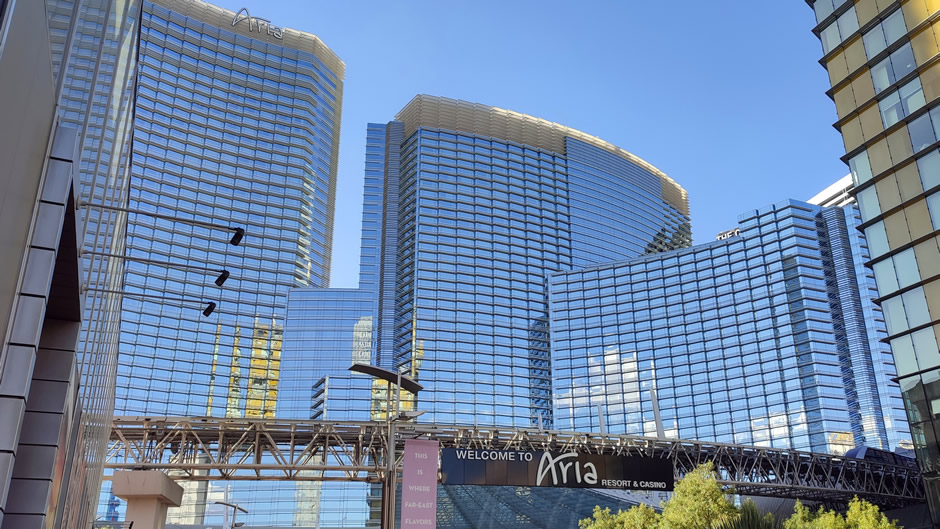
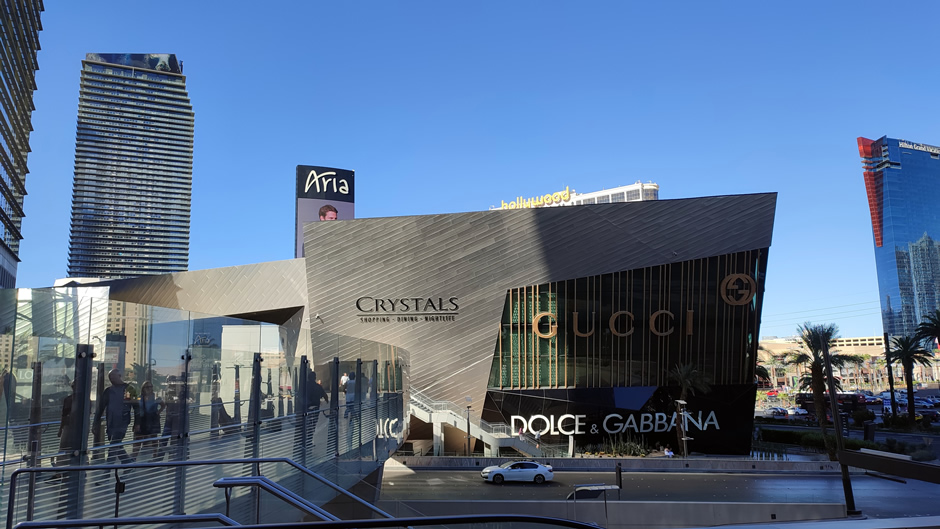
Aria Resort and Casino (shown below): Opened in 2009 as part of CityCenter, Aria has 4,004 rooms and a 5-star rating. Its sleek glass architecture emphasizes sustainability. Attractions include fine dining, large gaming floors, and (at the time of writing) the show "O" by Cirque du Soleil. The resort is notable for eco-friendly design and modern luxury. Directly connected to the Aria Resort and Casino is The Shops at Crystals, a high-end designer boutique shopping centre and entertainment destination. Its seamless indoor access effectively makes it an extension of the resort’s experience.

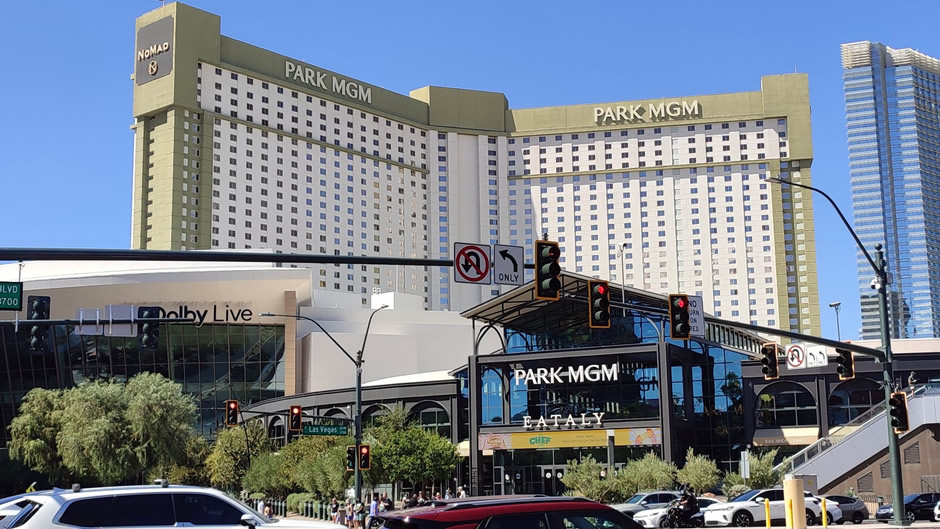
Park MGM (shown below): Originally Monte Carlo (1996), it was rebranded Park MGM in 2018. With 2,993 rooms and a 4-star rating, it features Dolby Live theatre, Eataly marketplace, and Haus of Gaga exhibits. Its boutique-style atmosphere and central location make it distinctive.
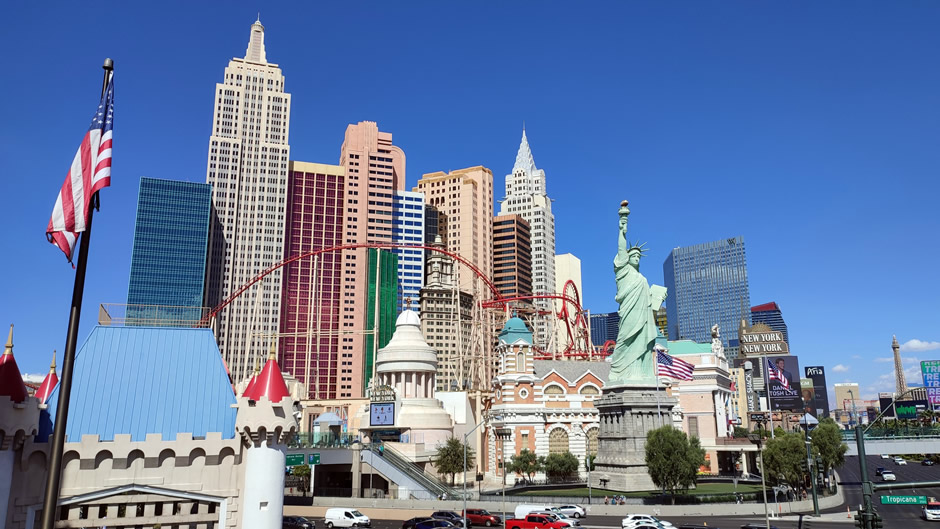
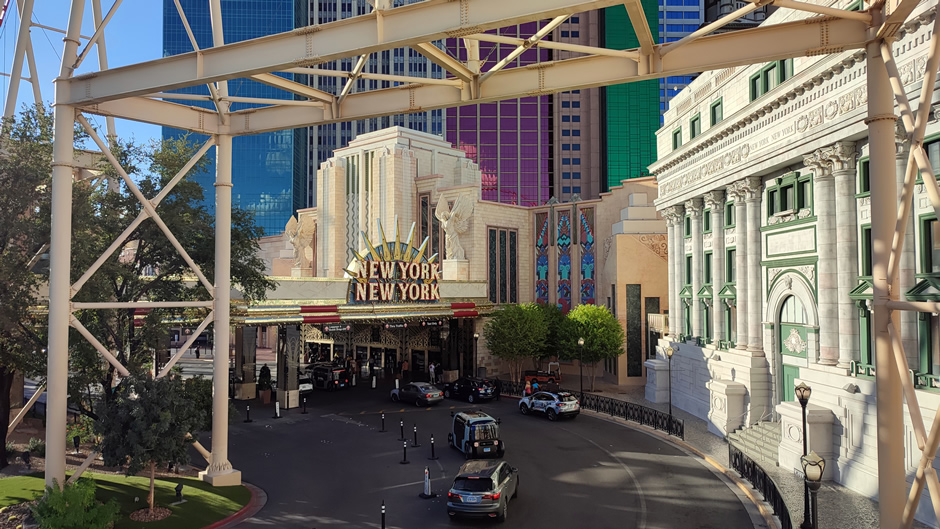
New York-New York (shown below): Opened in 1997, themed after New York City. It has 2,024 rooms, a 4-star rating, and attractions like the Big Apple Coaster, Hershey’s Chocolate World, and Cirque du Soleil’s Mad Apple. Its skyline façade includes replicas of the Statue of Liberty and Brooklyn Bridge.
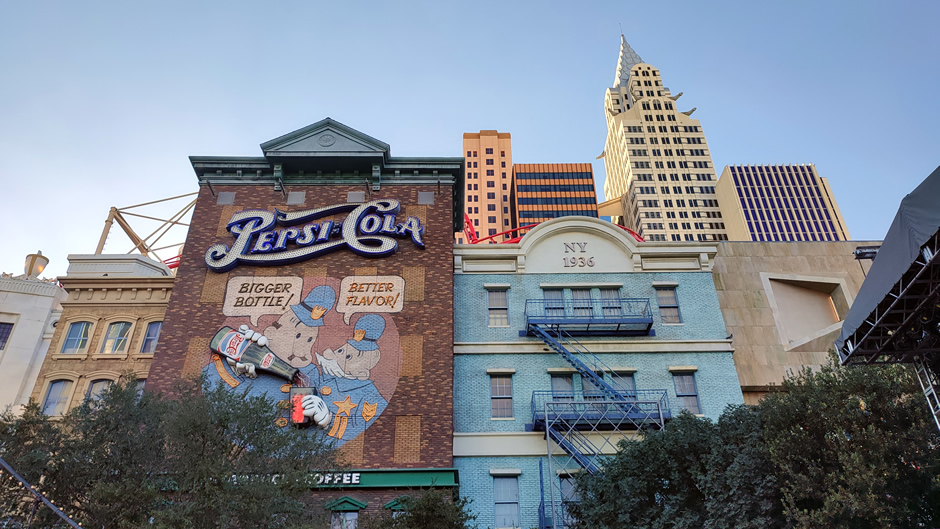
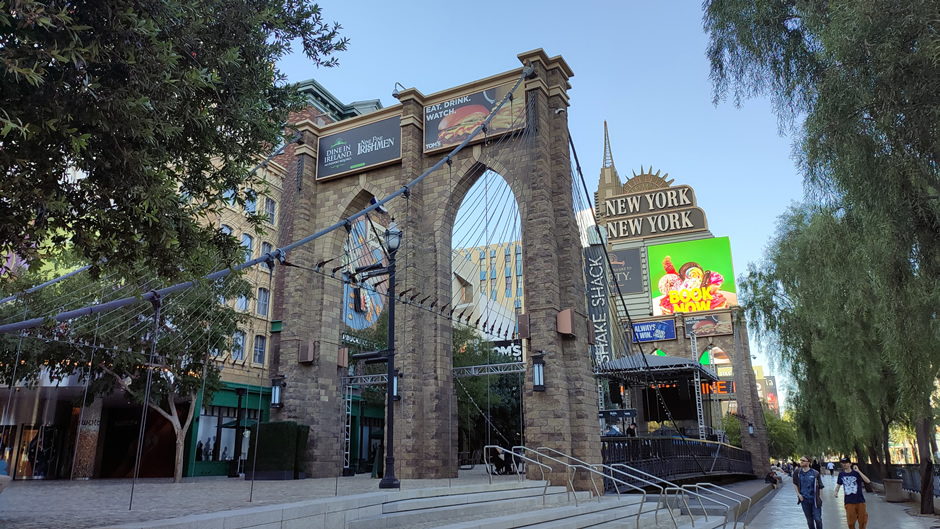
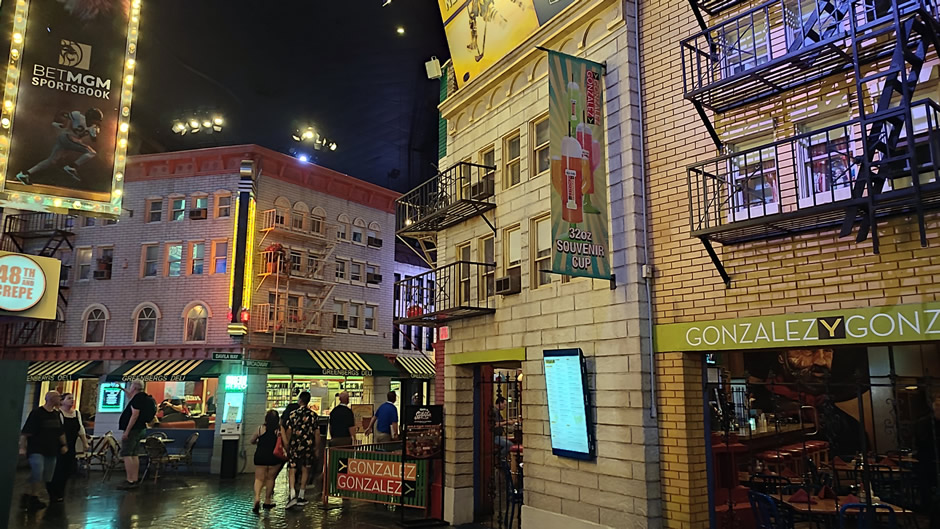
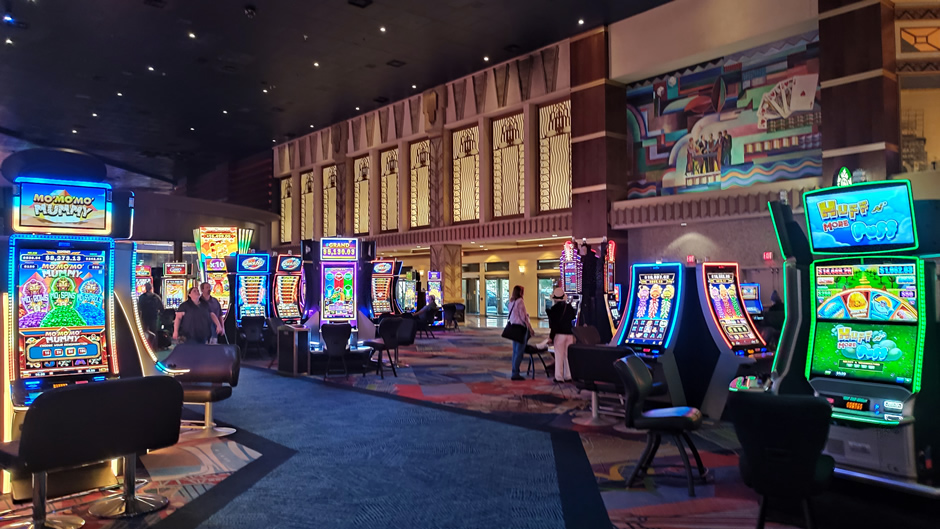
Excalibur (shown below): Built in 1990, Excalibur is themed on medieval Europe. It offers 3,981 rooms, a 3-star rating, and family-friendly attractions like the Tournament of Kings dinner show and Fun Dungeon arcade. Its castle architecture makes it one of the Strip’s most recognizable resorts.

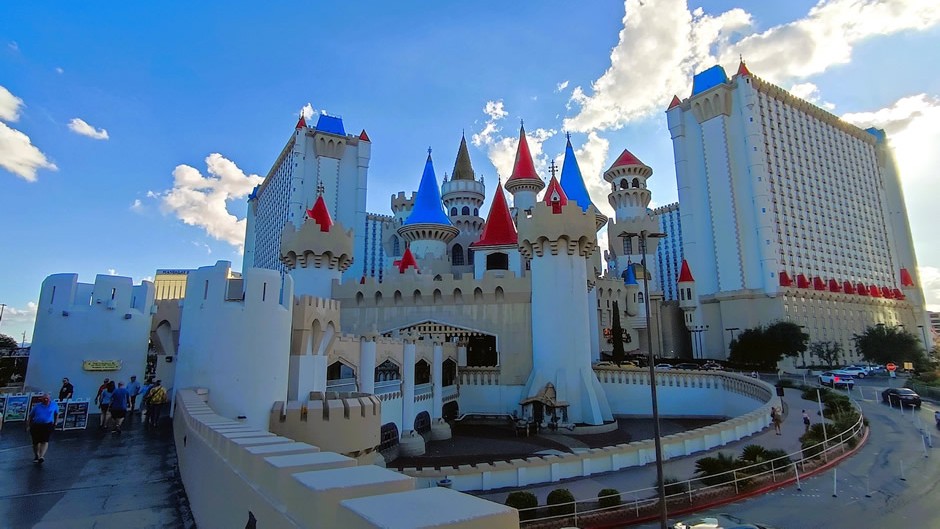
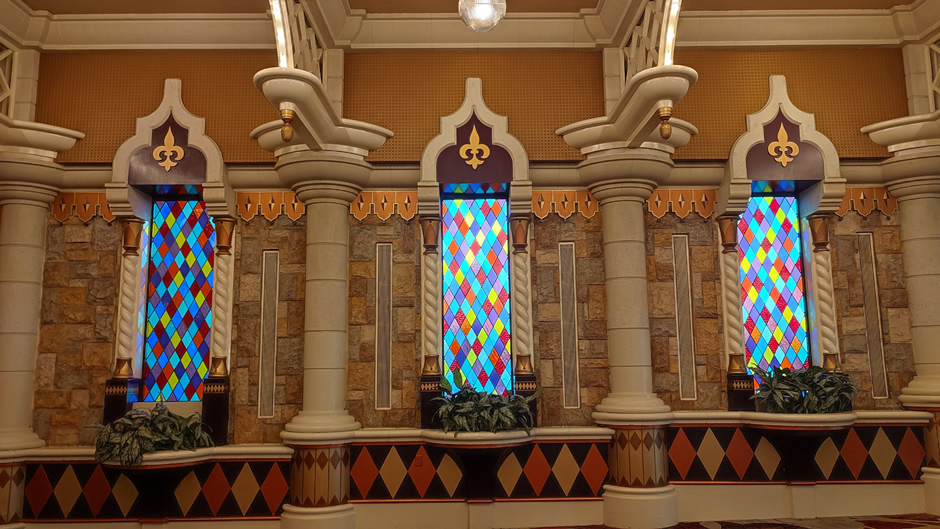
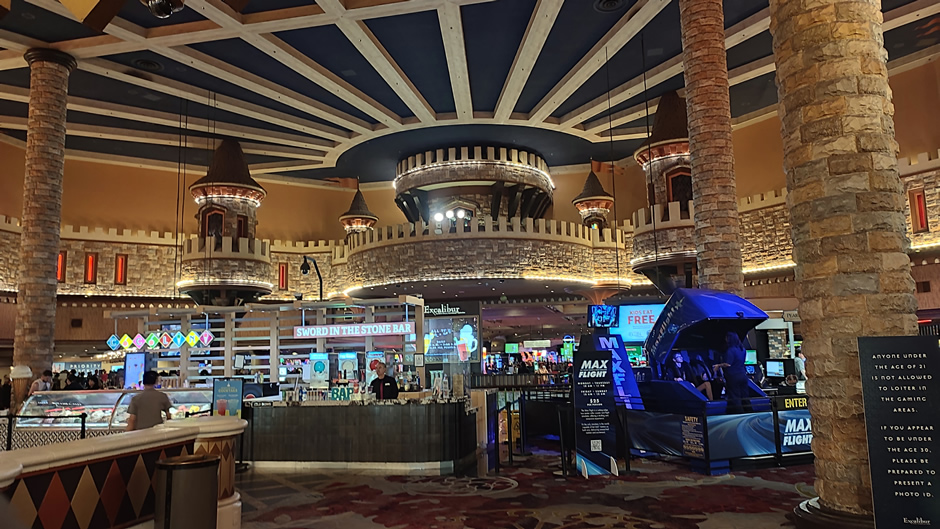
Luxor (shown below): Opened in 1993, Luxor is themed on ancient Egypt with a 30-storey pyramid. It has 4,407 rooms, a 3.5-star rating, and (at the time of writing) attractions like Titanic and Bodies exhibitions, plus Blue Man Group. Its pyramid and sphinx design remain iconic.

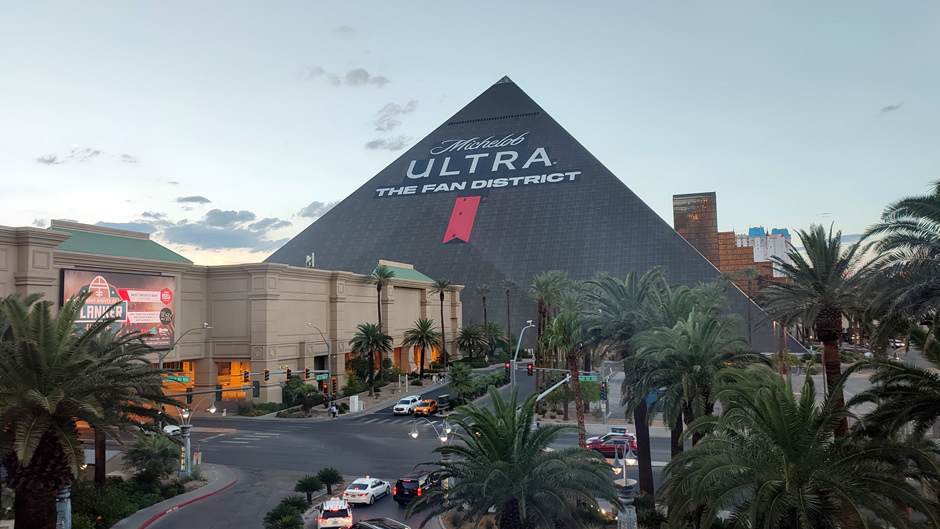
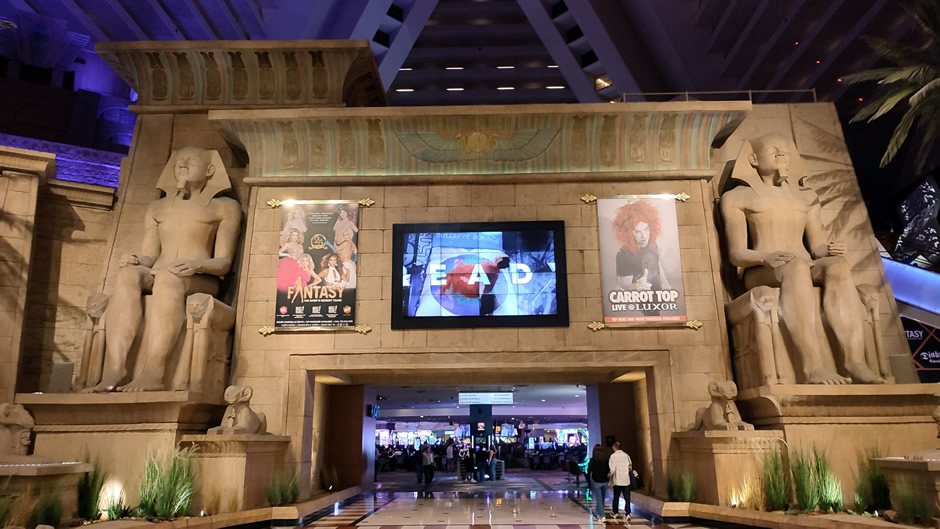
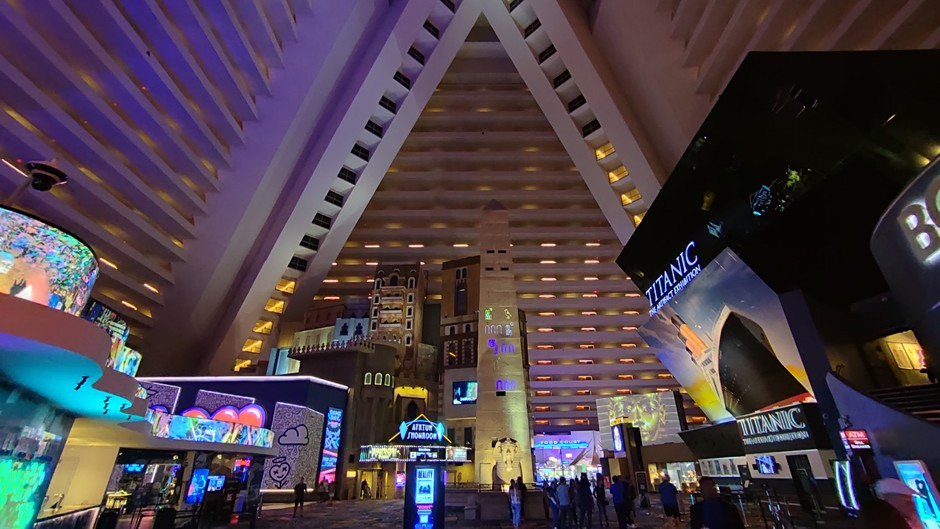
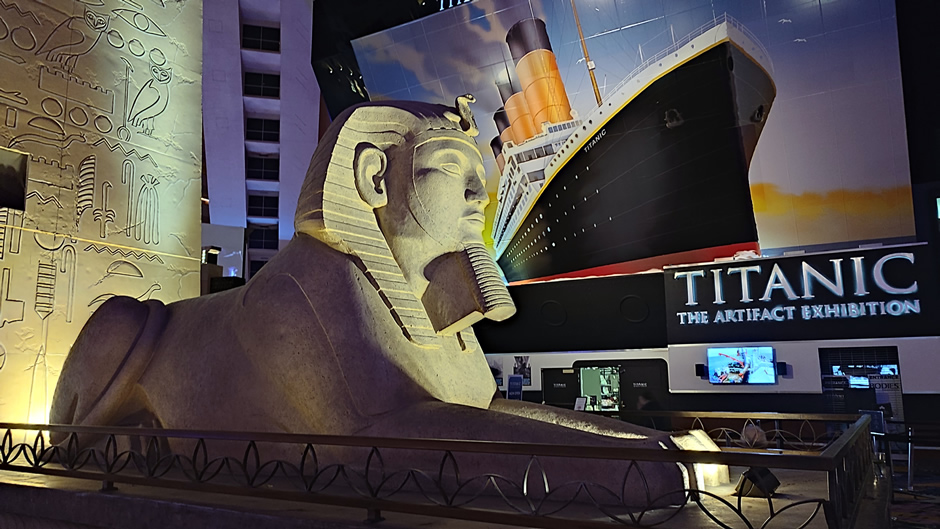

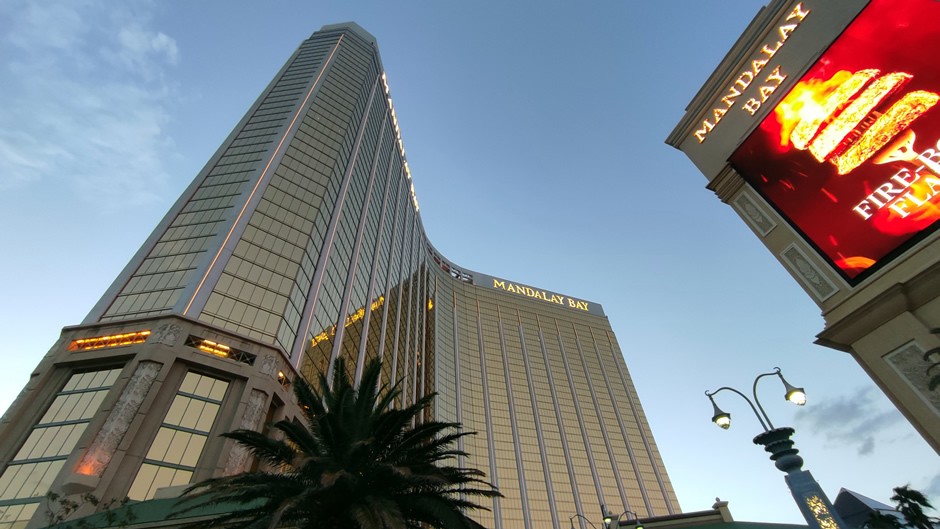
Mandalay Bay (shown below): Debuting in 1999, Mandalay Bay has a tropical theme. With 3,209 rooms and a 4-star rating, it features Mandalay Bay Beach, Shark Reef Aquarium, and Michelob Ultra Arena. Its convention centre and large pool complex make it a major event hub.
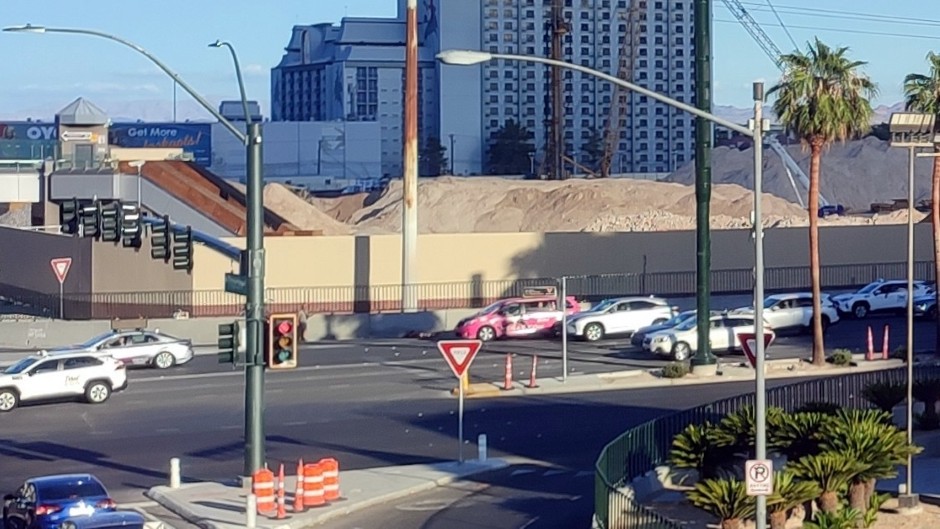
Moving to the eastern side of the Strip, at the southern end, the old Tropicana site, shown below, is being cleared to make way for a new 35-acre development that includes a Major League Baseball stadium for the Las Vegas Athletics (A's) and a new Bally's luxury 3,000 room hotel-casino resort. The Tropicana hotel and casino was demolished by an implosion in October 2024 to make way for the project. While the main structures have been demolished, some site clearing and demolition work is still ongoing, with construction on the resort expected to begin in early 2026 and the overall project expected to be completed in time for the 2028 baseball season.
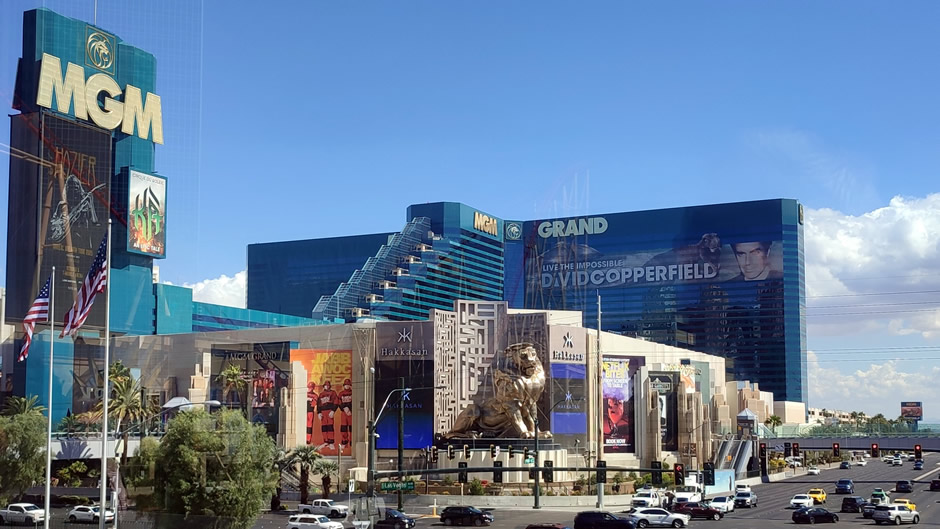
MGM Grand (shown below): Since 1993, MGM Grand has been one of the largest hotels in the world. It has 5,044 rooms, a 4-star rating, and (at the time of writing) attractions like KÀ by Cirque du Soleil, MGM Grand Garden Arena, and Topgolf. Its scale and entertainment offerings define its appeal.
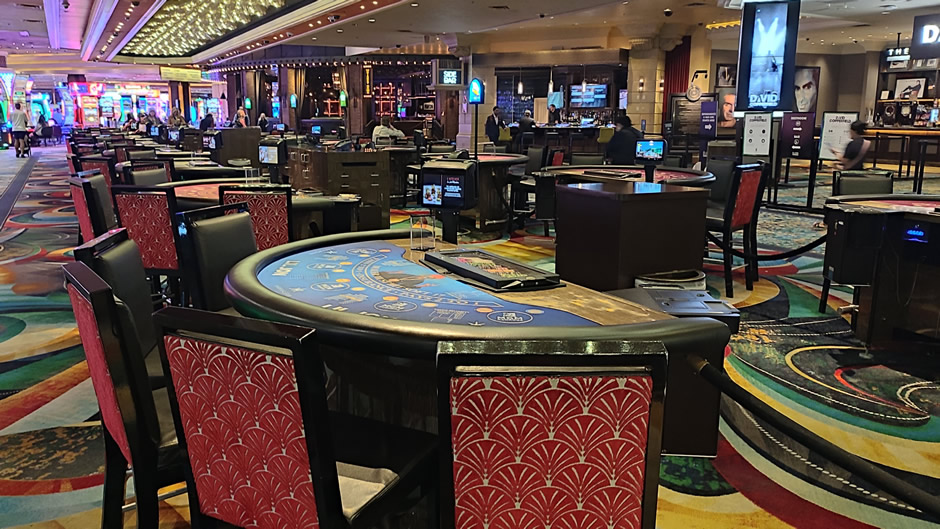
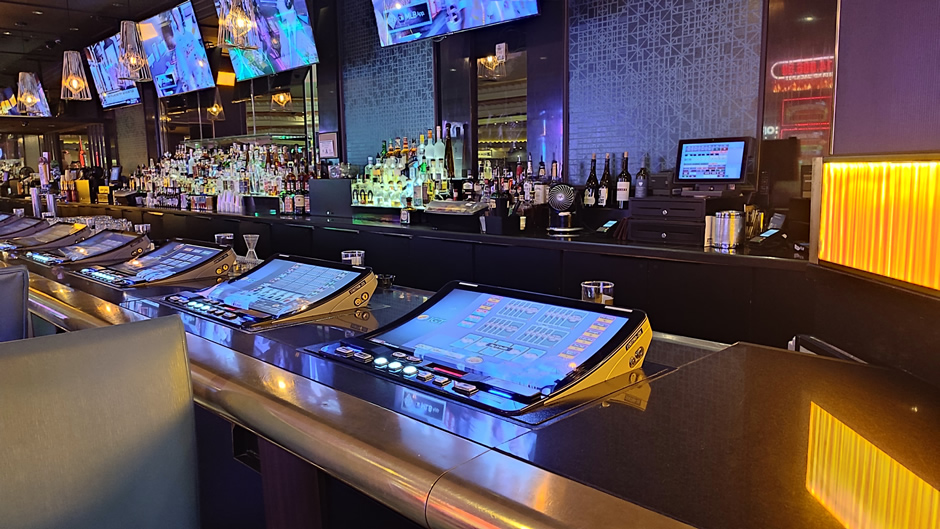
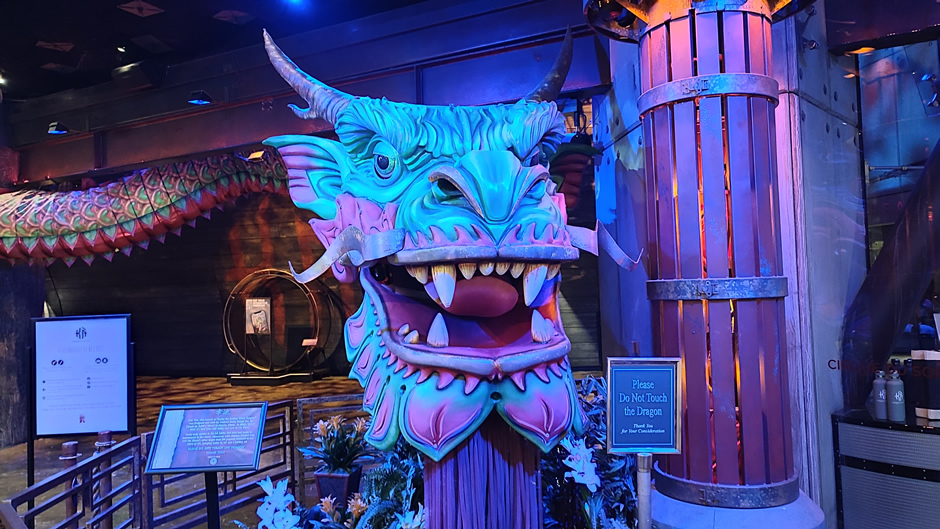
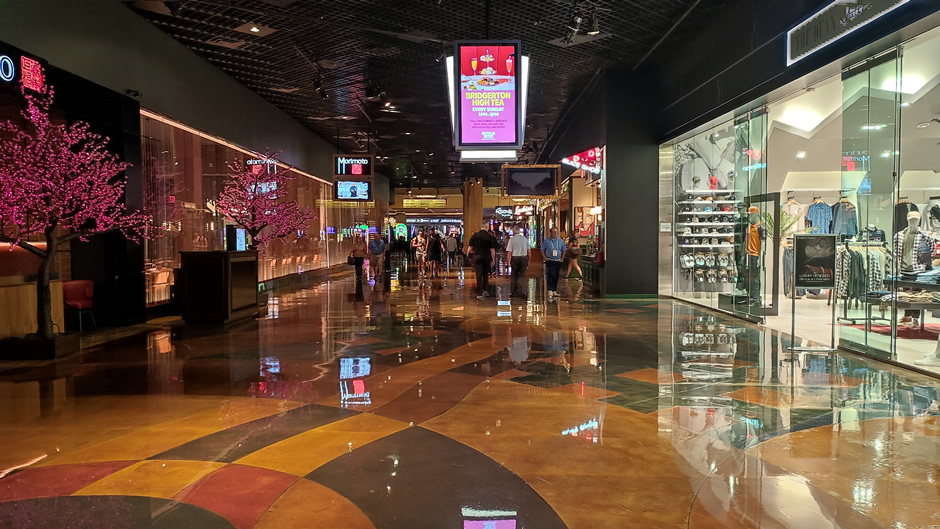
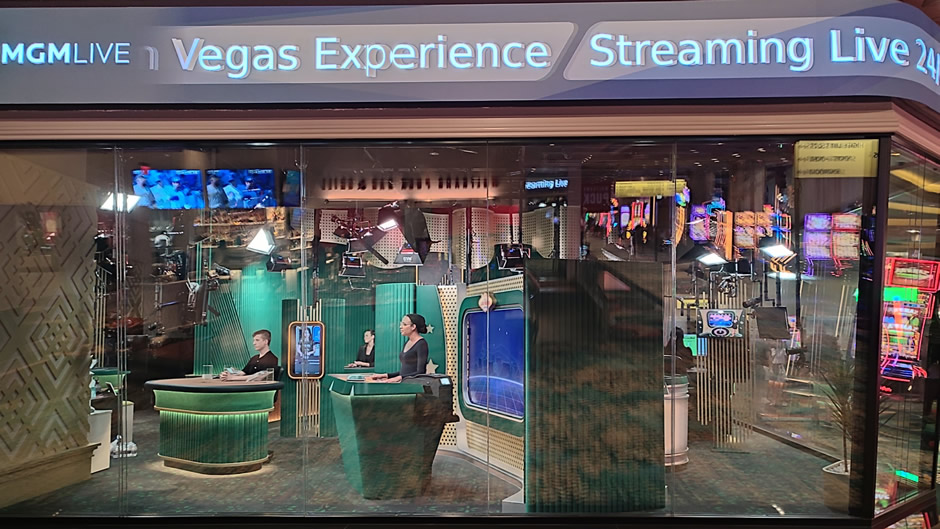
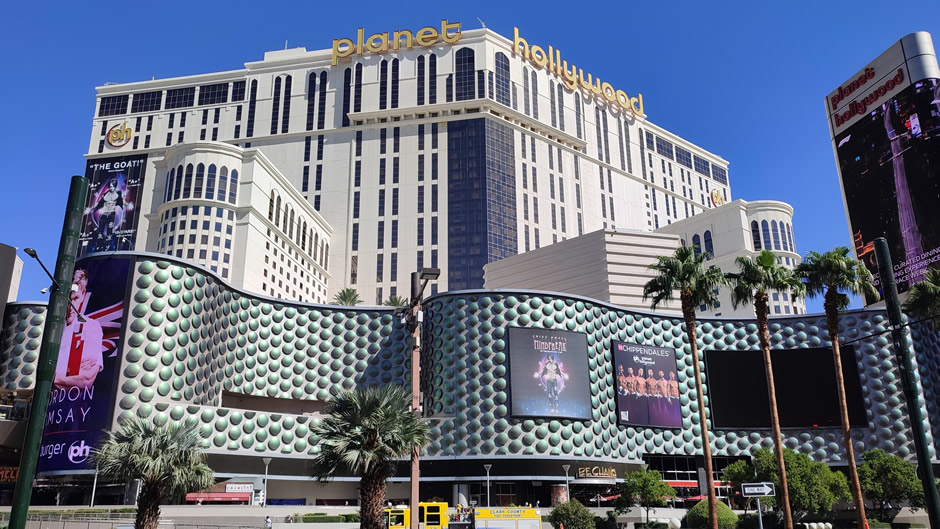
Planet Hollywood (shown below): Originally Aladdin (2000) and rebranded in 2007, it has 2,494 rooms, a 4-star rating, and features Miracle Mile Shops, Bakkt Theater (formerly known as the Zappos Theater), and Gordon Ramsay Burger. Its Hollywood theme and central location attract younger visitors.
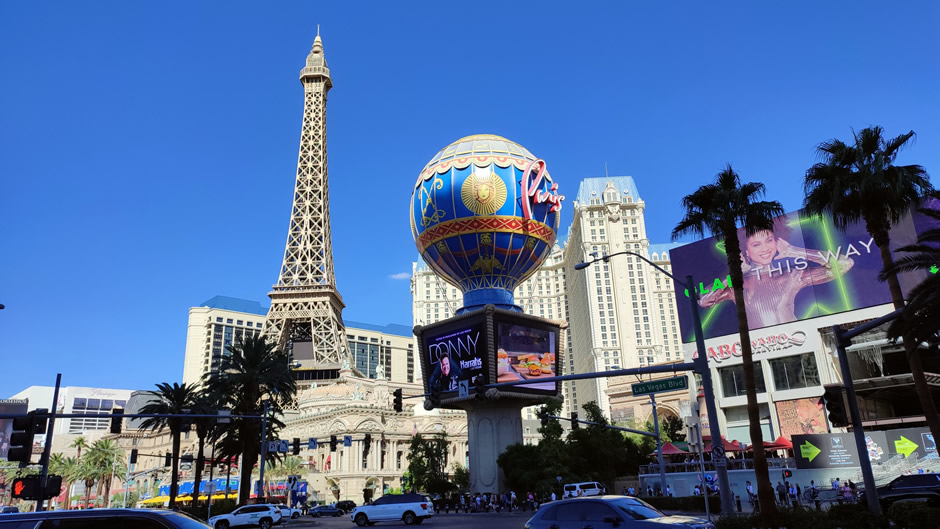
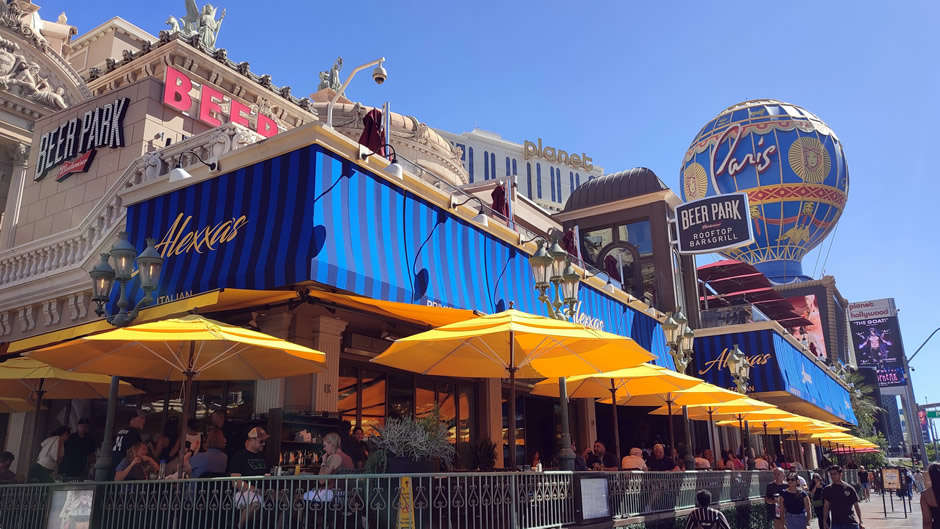
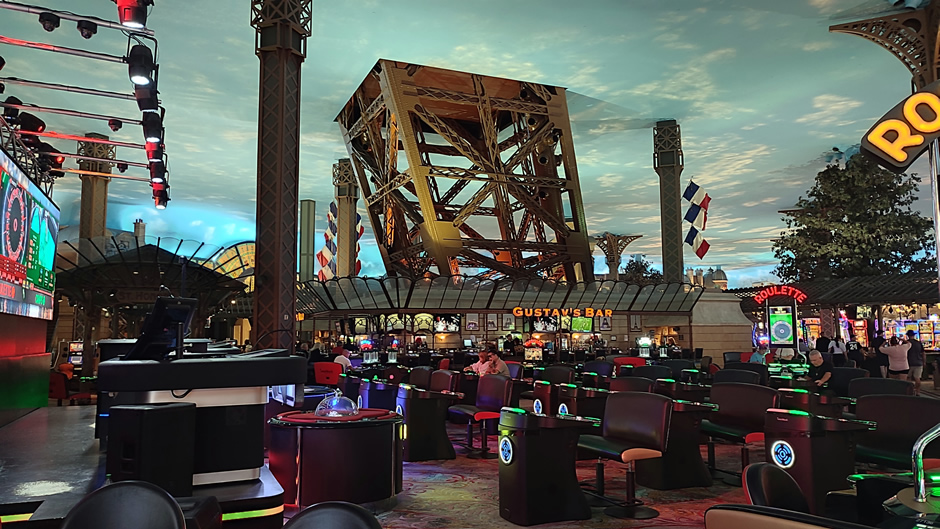
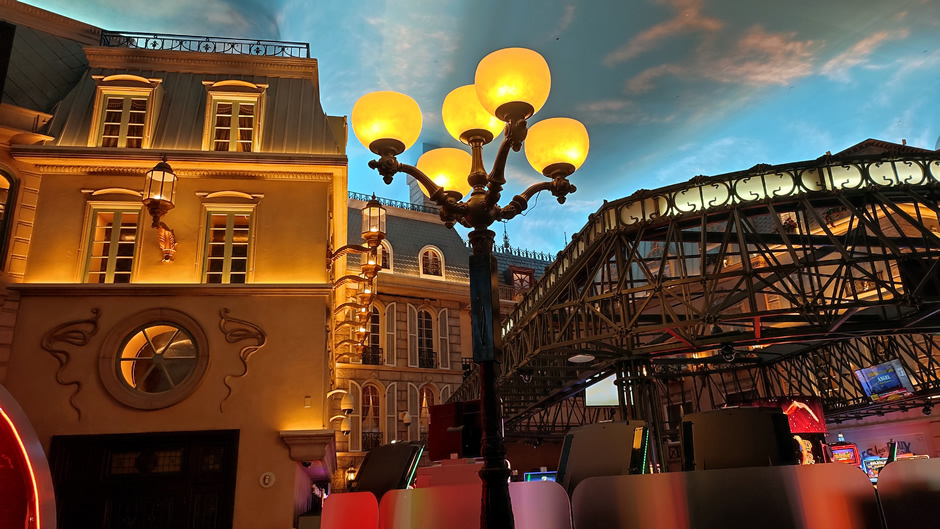
Paris Las Vegas (shown below): Opened in 1999, it is themed after Paris with an impossible-to-miss half-scale Eiffel Tower. It has 3,672 rooms, a 4-star rating, and attractions like Mon Ami Gabi, Eiffel Tower Restaurant, and Pool à Paris. Its French-inspired architecture is a Strip landmark.

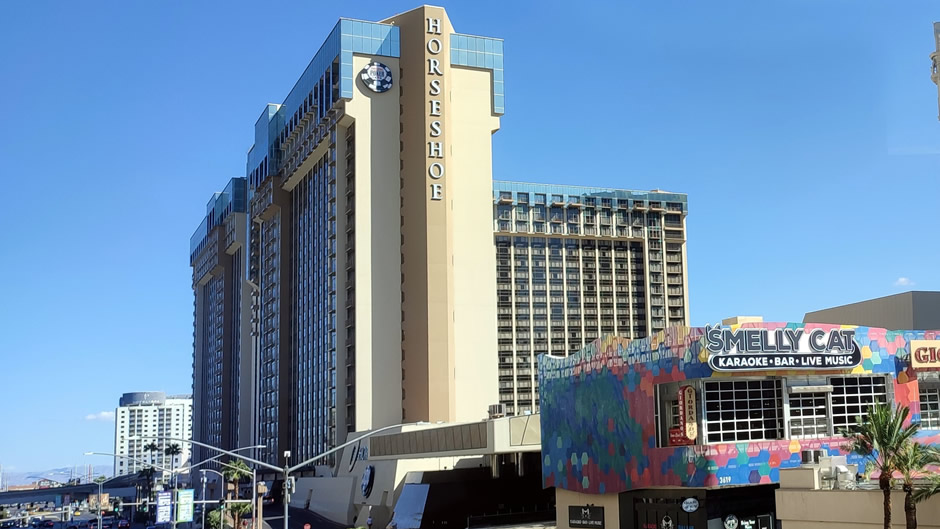
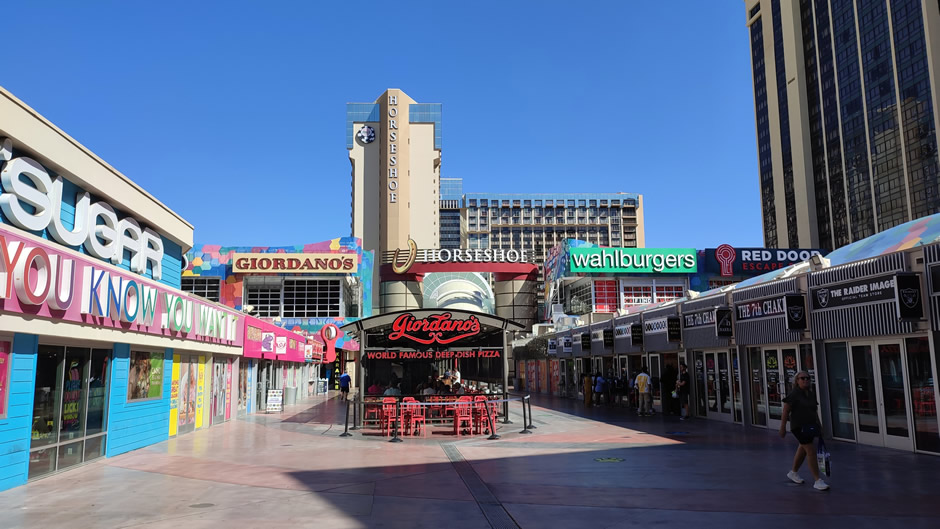
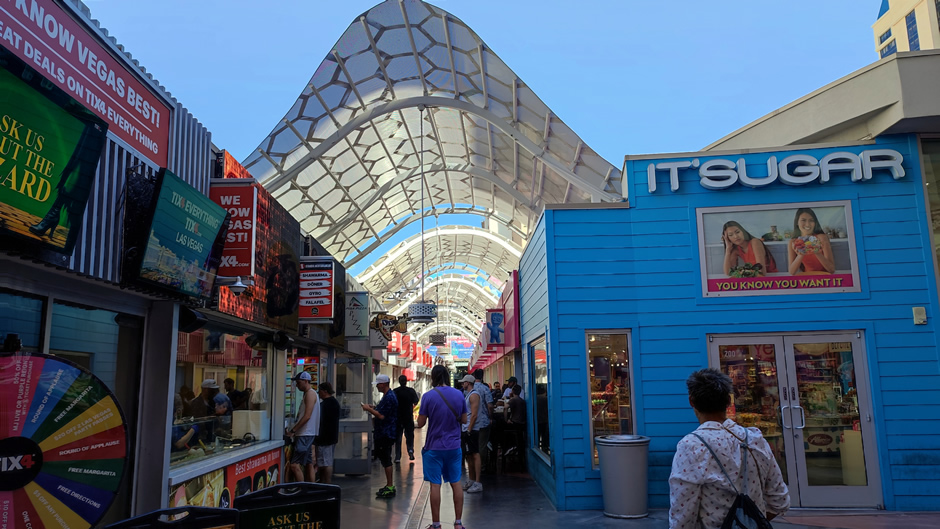
Horseshoe Las Vegas (shown below): Opened in 1973 as the original MGM Grand, later Bally’s, the property rebranded to Horseshoe in 2022. It has 2,056 rooms, a 3-star rating, and a Western-influenced brand identity. Highlights include the Grand Bazaar Shops and a sizable casino; the site is also known for the 1980 MGM Grand fire that led to major safety reforms.
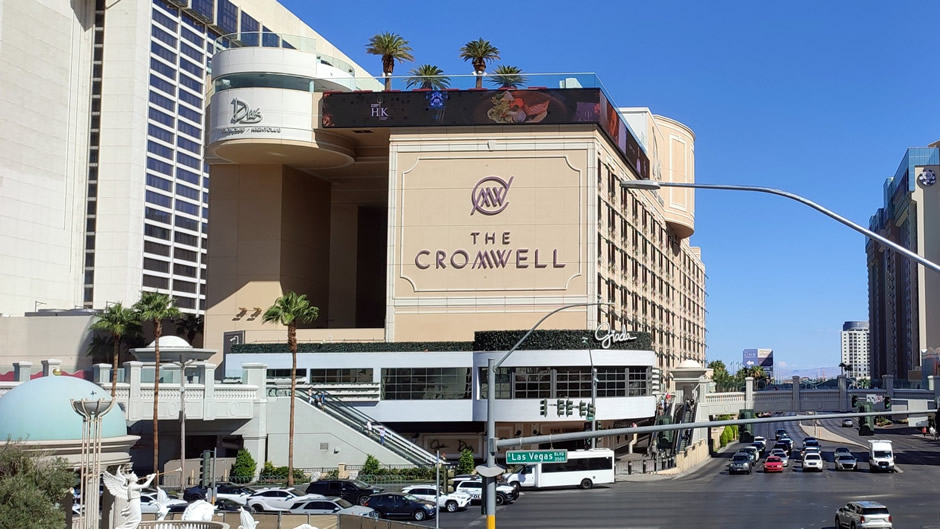
The Cromwell (shown below): Originally the Barbary Coast (1979), The Cromwell reopened in 2014 as a boutique, adults-focused hotel with 188 rooms and a 4-star rating. It emphasises modern-luxury design and is known for Drai’s Beach Club & Nightclub and Giada, its signature Strip-facing restaurant.
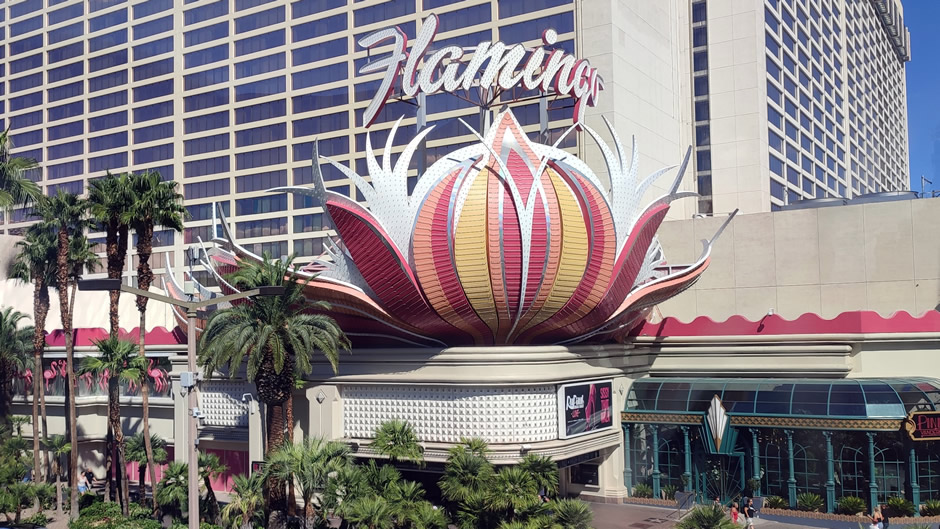
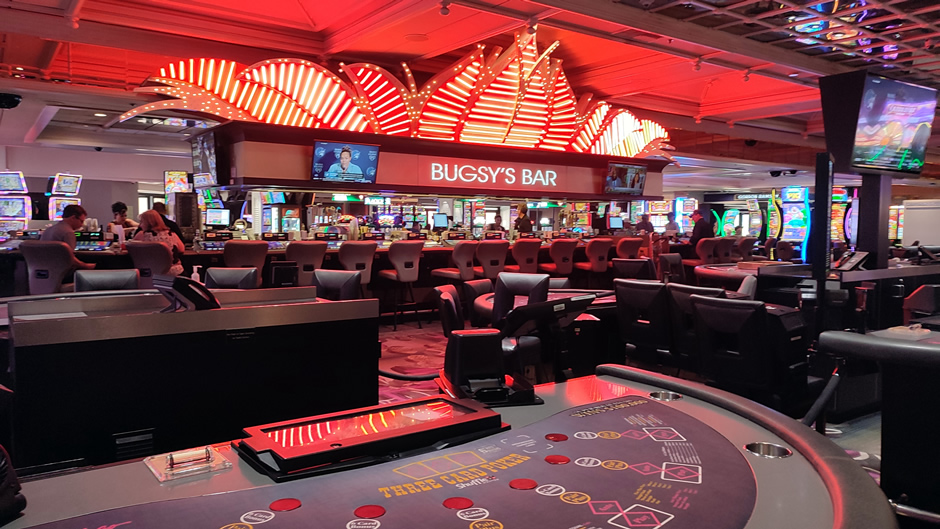
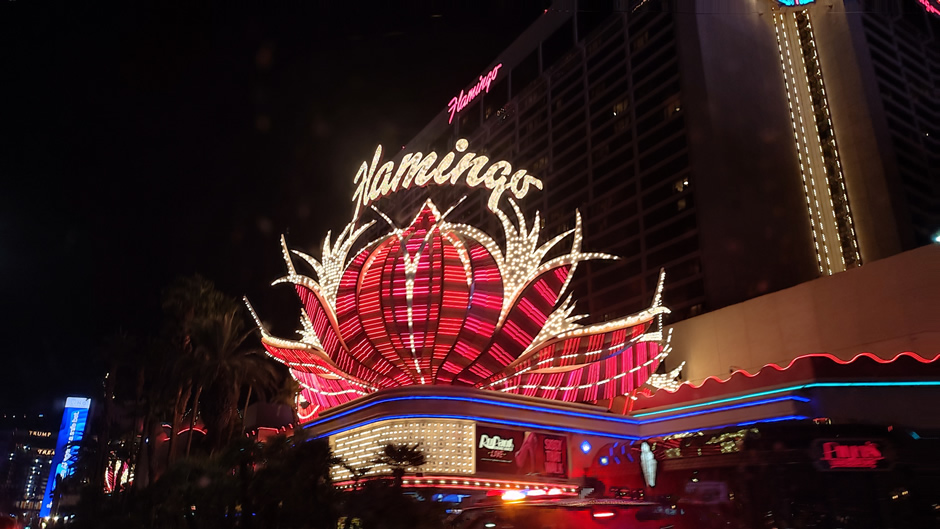
Flamingo (shown below): The oldest resort on the Strip opened in 1946 by Bugsy Siegel. It has 3,460 rooms, a 3.5-star rating, and features a wildlife habitat, retro neon, and shows like RuPaul’s Drag Race Live. Its tropical gardens and history make it unique.
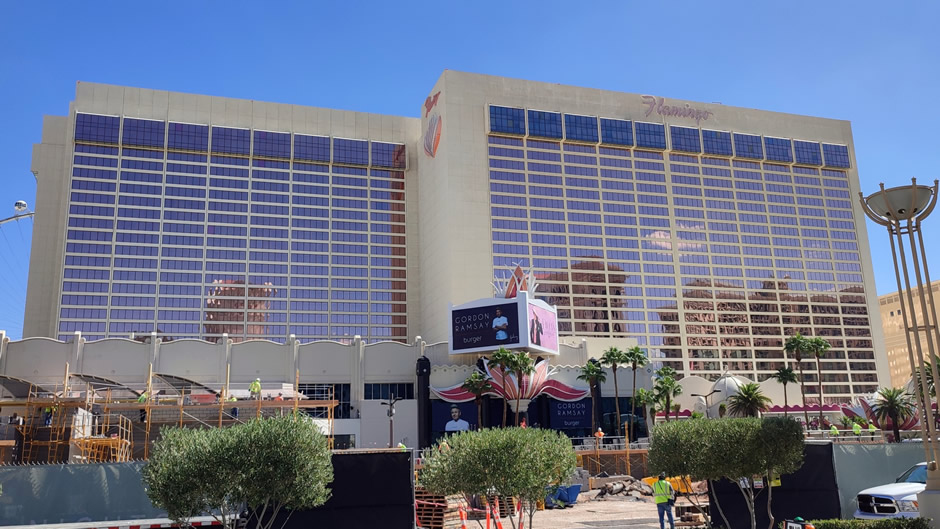
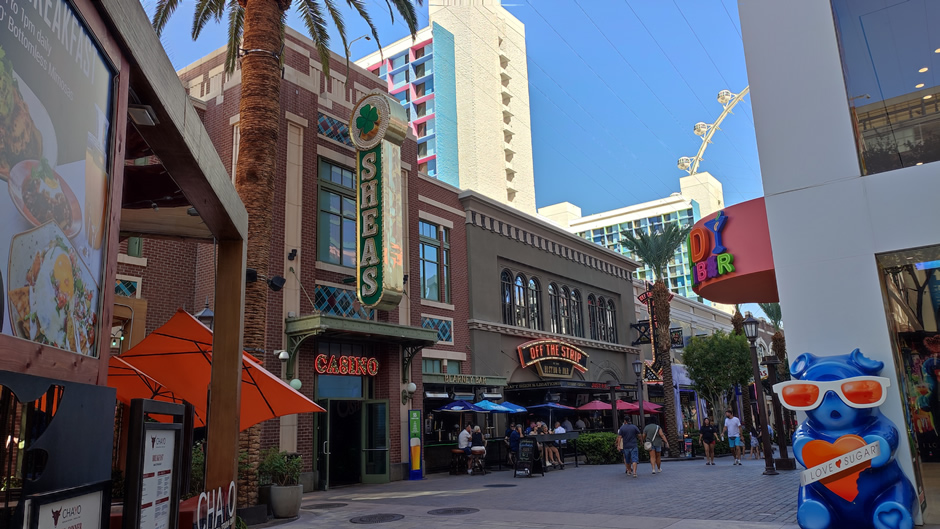
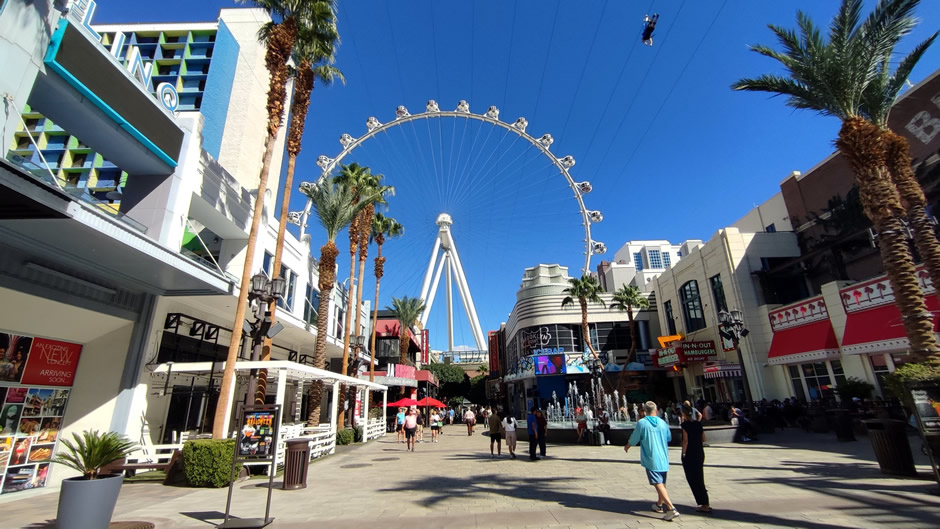
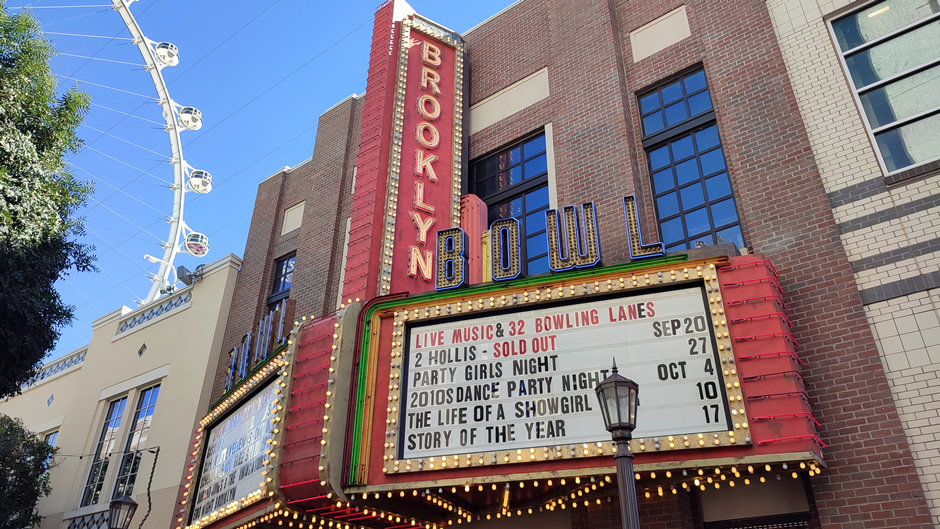
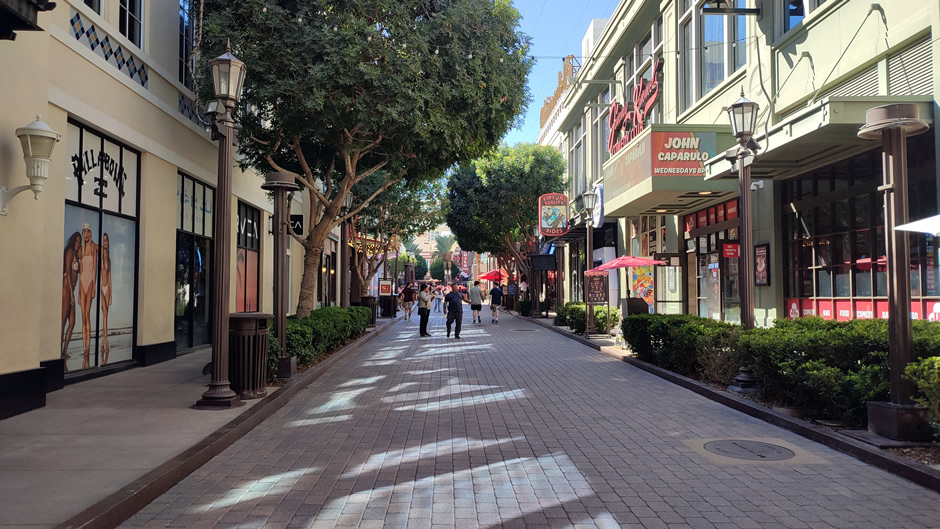
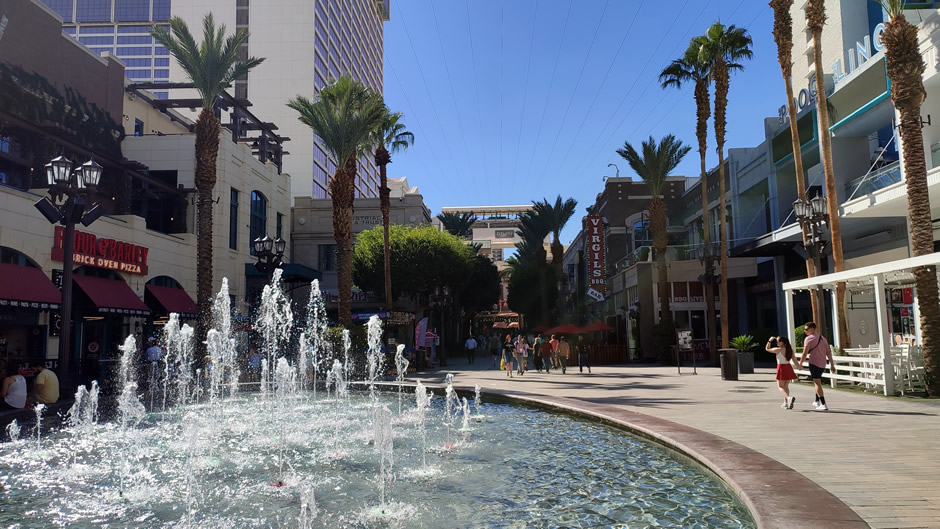
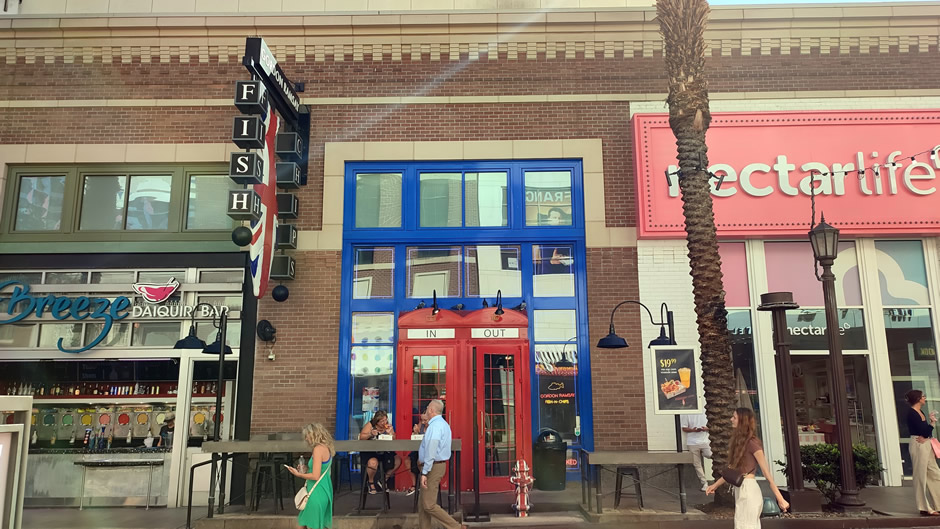
The LINQ Promenade (shown below) is a lively open-air entertainment district on the Las Vegas Strip, offering visitors a mix of restaurants, bars, shops, and attractions (including a zipline) in a pedestrian-friendly setting. Its centrepiece is the High Roller, the world’s tallest observation wheel at 550 feet, which opened in 2014. The High Roller provides sweeping views of the Strip and the surrounding desert, with spacious cabins designed for groups, parties, or even yoga sessions. Together, the promenade and the wheel represent Las Vegas’s shift toward diversifying beyond gaming, creating spaces that emphasize dining, nightlife, and unique experiences as much as traditional casino floors. For those seeking a different atmosphere to the Strip, a stroll down here is a pleasant alternative.
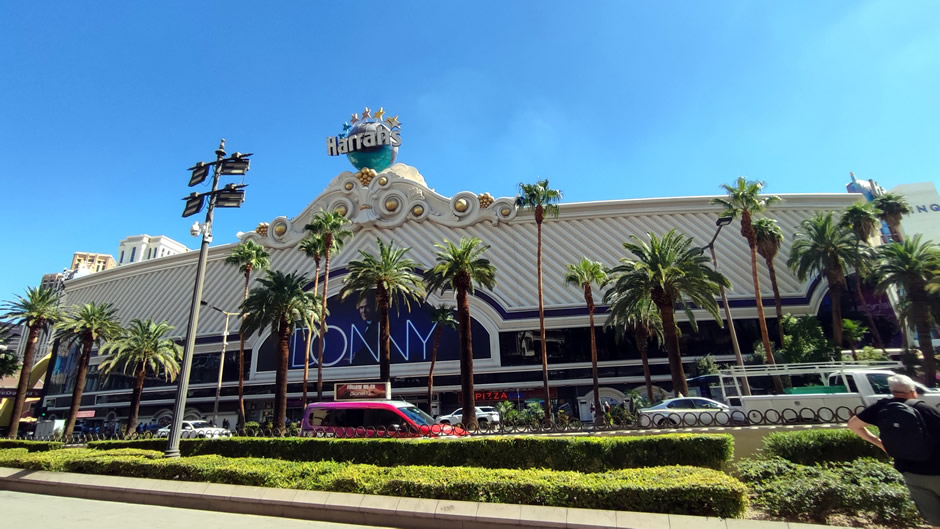
Harrah’s Las Vegas (shown below): Harrah’s opened in 1973 (originally the Holiday Casino) and now features a Mardi Gras theme with 2,542 rooms and a 3-star rating. Key draws include the open-air Carnaval Court, a large casino floor, and direct access to the Las Vegas Monorail. Entertainment and casual dining are central to the resort’s appeal.
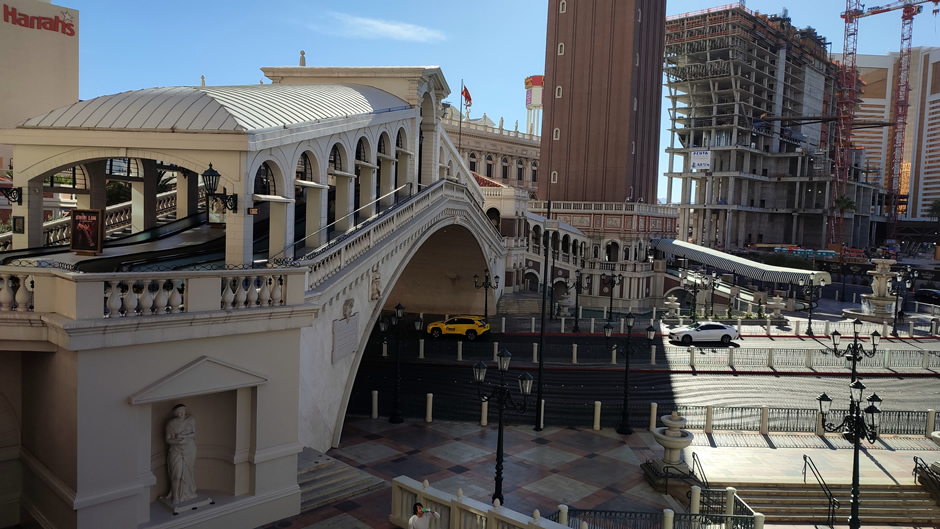
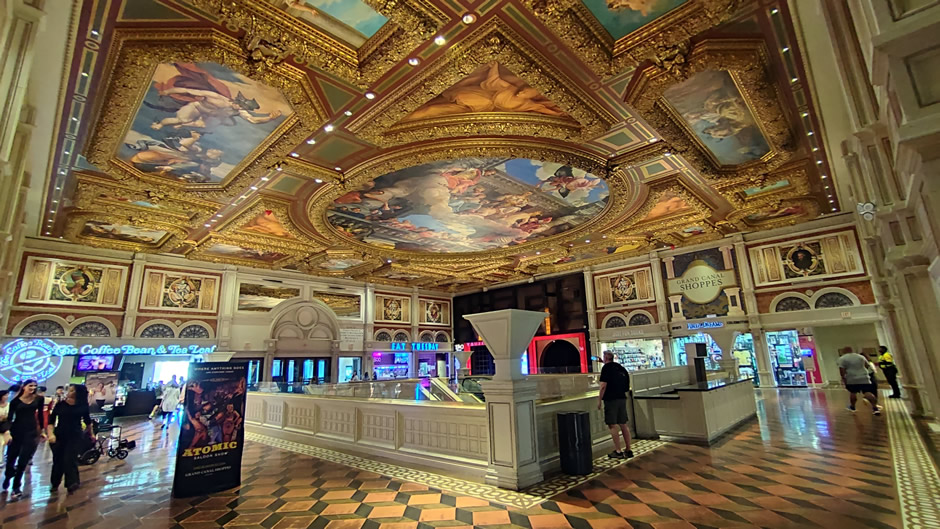
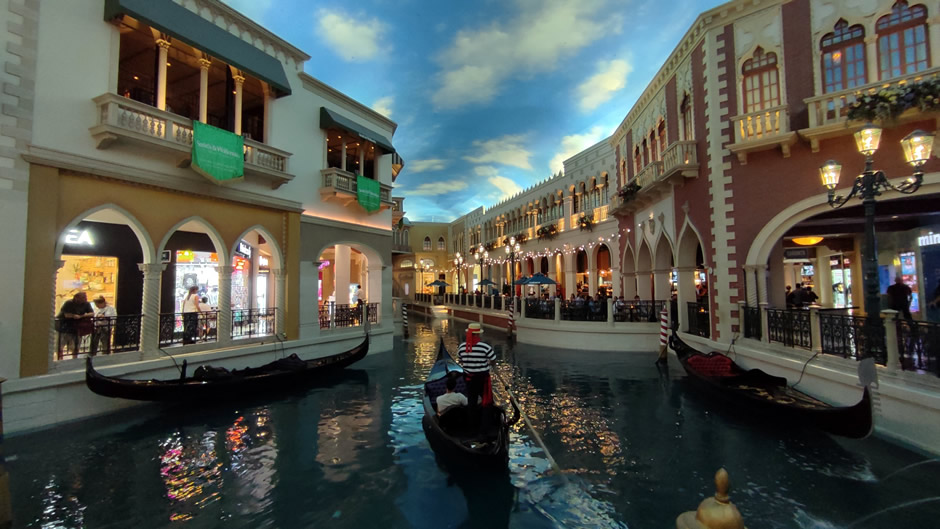
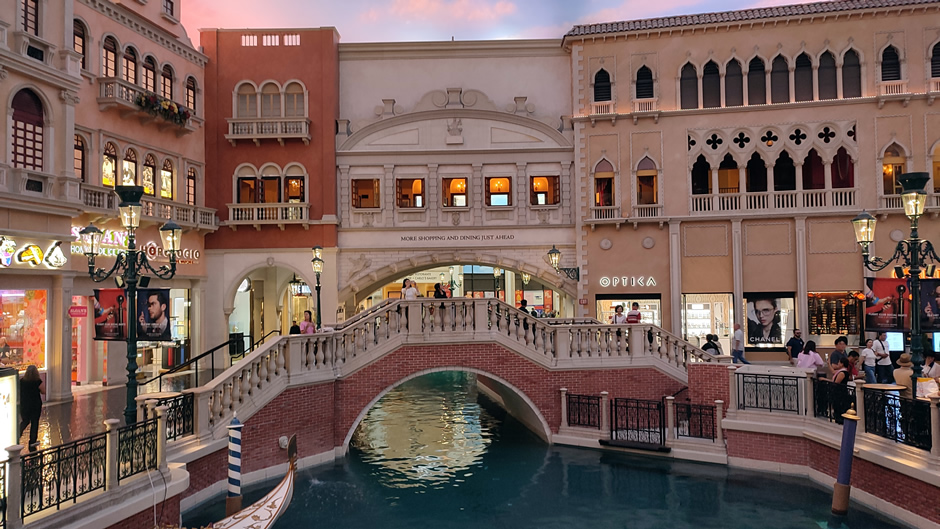
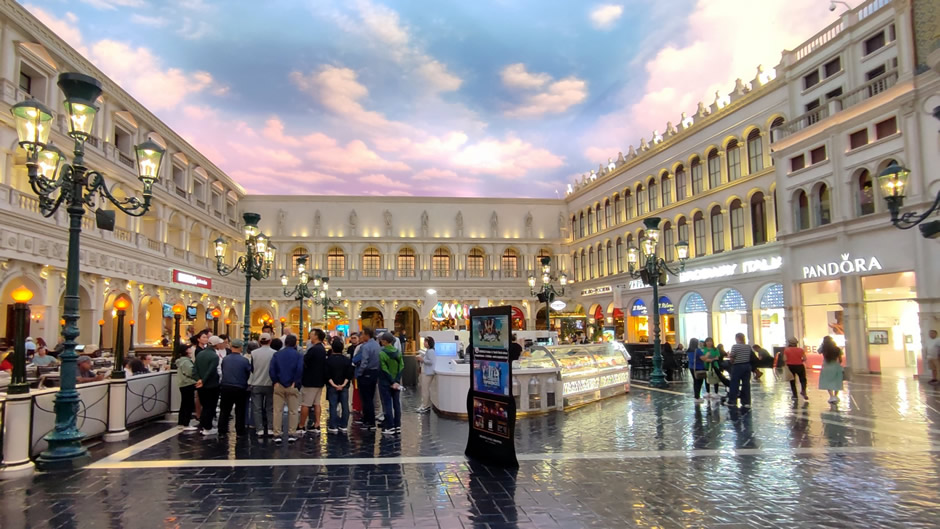
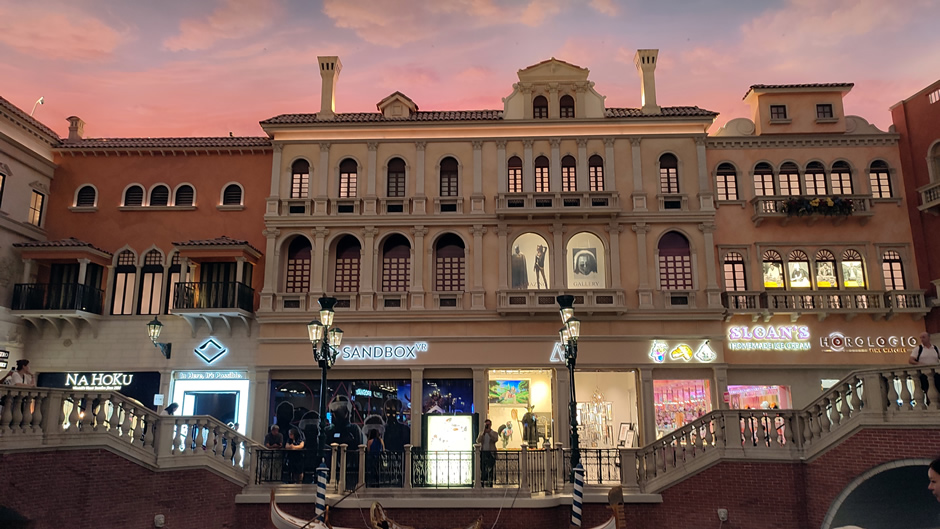
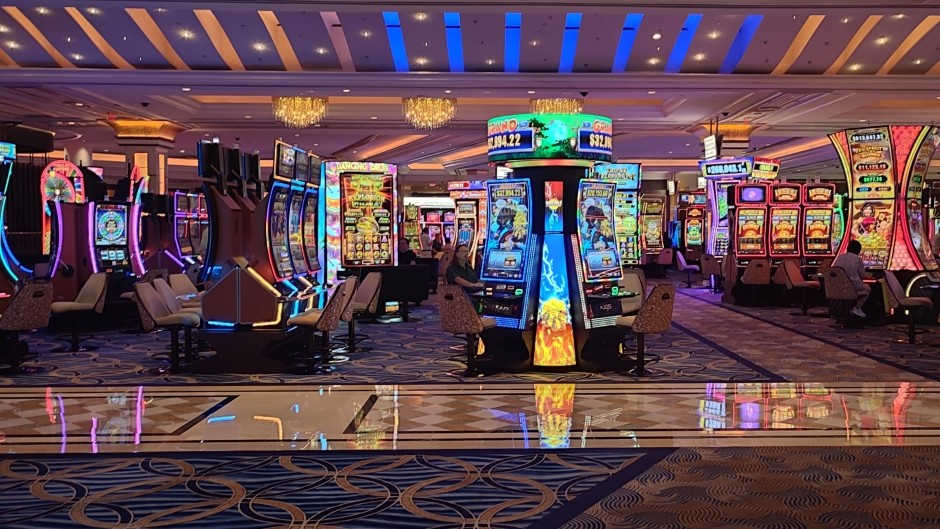
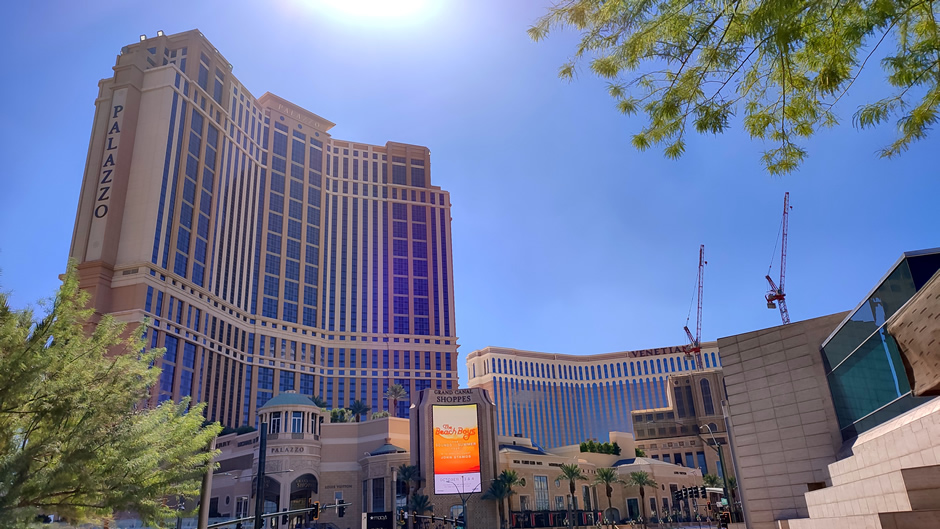
The Venetian & Palazzo (shown below): The Venetian opened in 1999, is themed on Venice and has 4,027 suites. The Palazzo followed in 2007 with 3,000+ suites. Both are 5-star resorts, featuring gondola rides, Grand Canal Shoppes, and the Sphere entertainment venue (see further down the page). The Italian-inspired design of the Venetian & Palazzo sets them apart from other resorts. By room count, the Venetian/Palazzo is the second largest in the world, although it doesn’t fall far short of the Guinness World Record of 7,351 rooms which is held by First World Hotel: Malaysia.
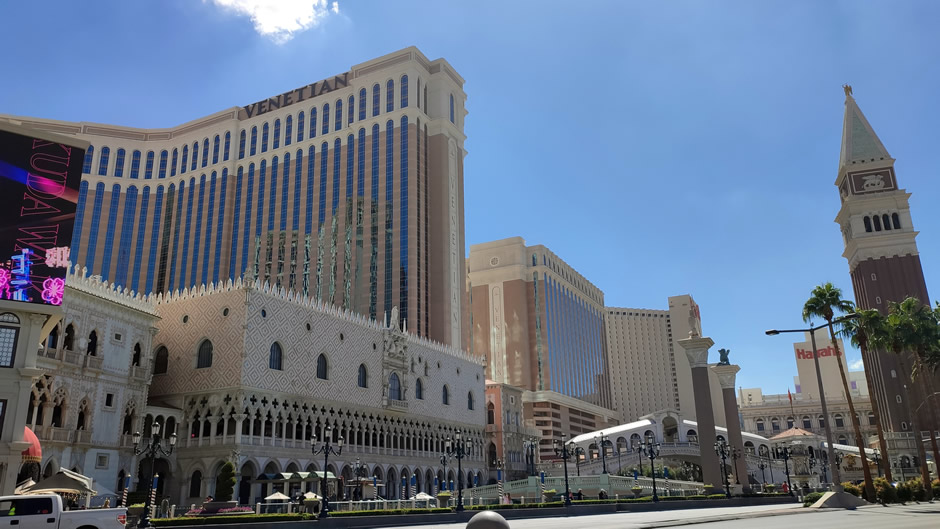
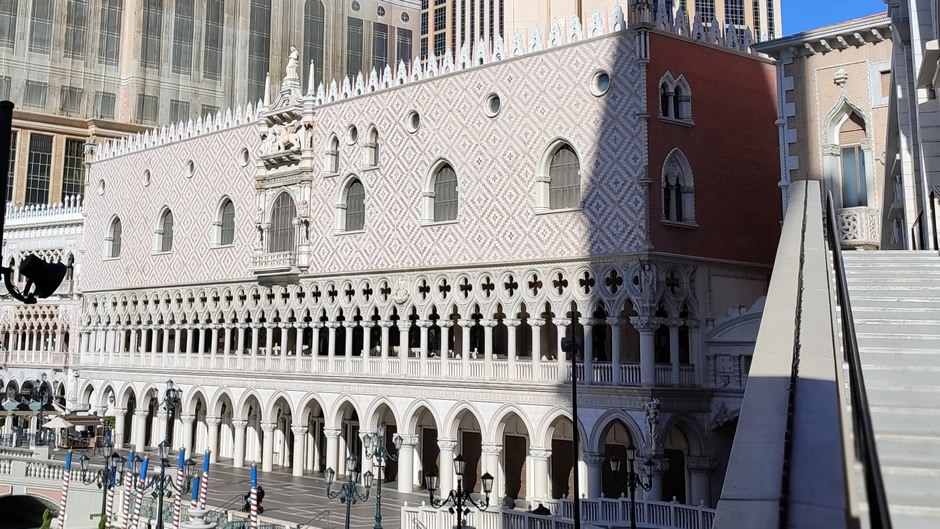
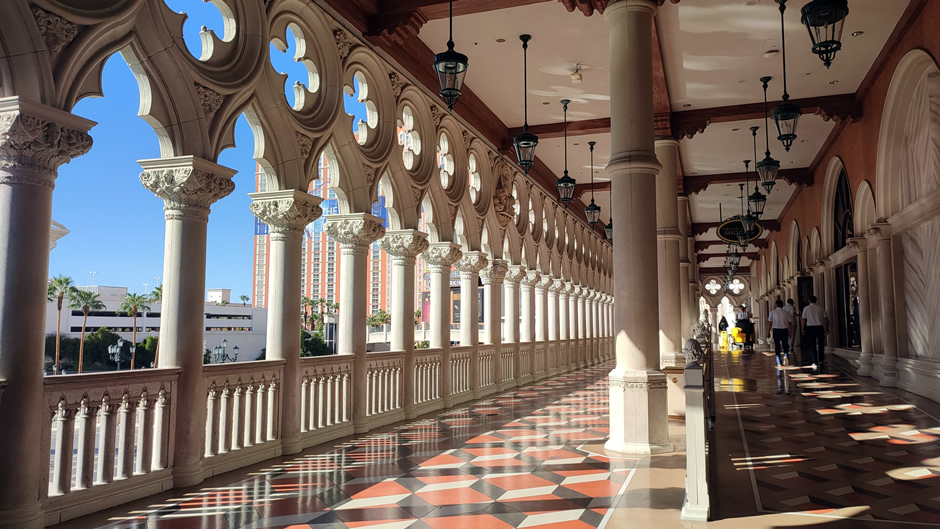
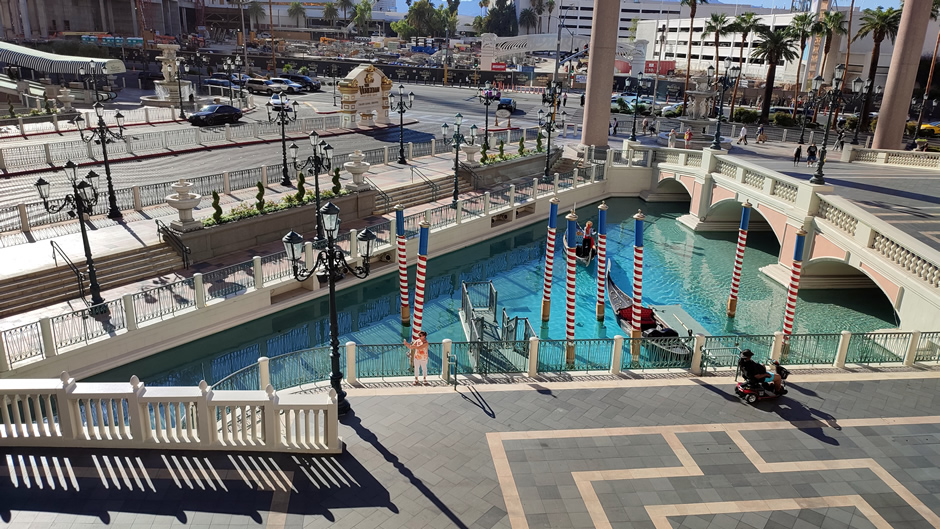
Wynn Las Vegas (shown below): Opened in 2005, Wynn is a luxury resort with 2,716 rooms. Rated 5 stars, it features the Lake of Dreams, Wynn Golf Club, and upscale dining. Its curved bronze tower and emphasis on elegance distinguish it from themed resorts.
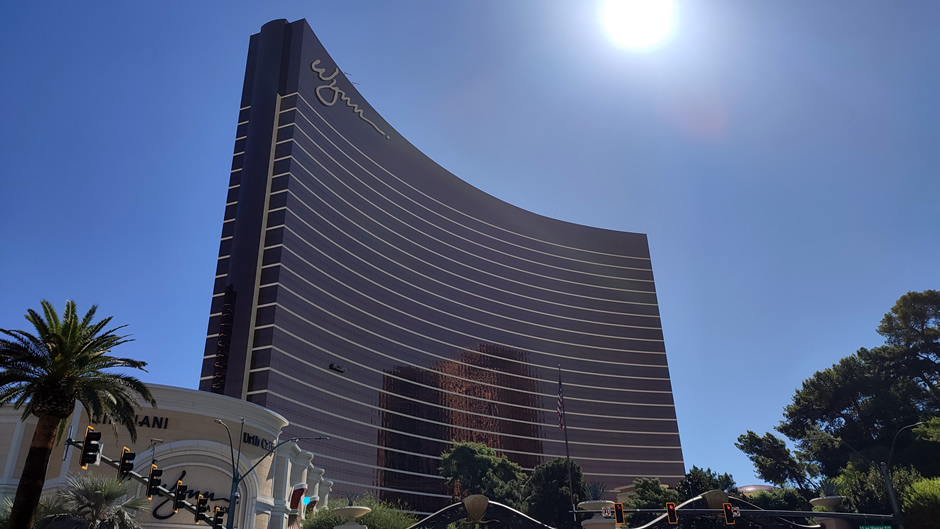
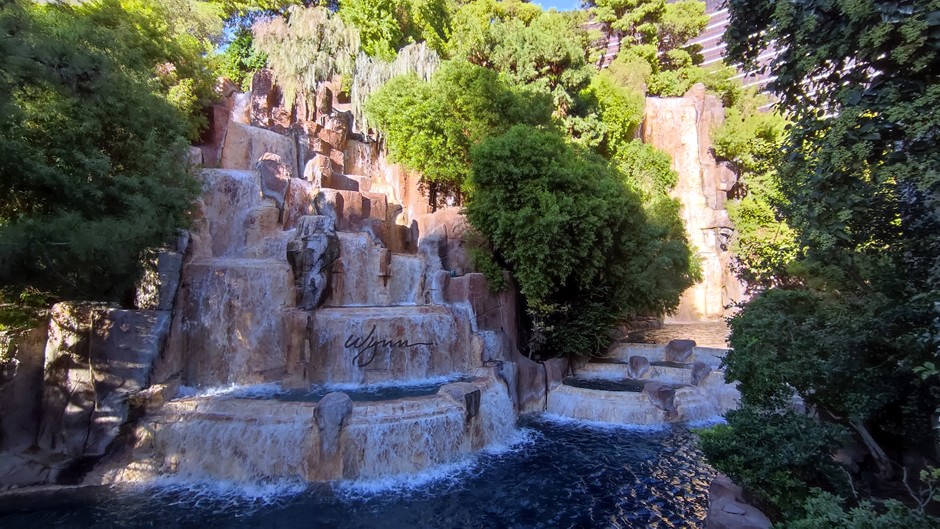

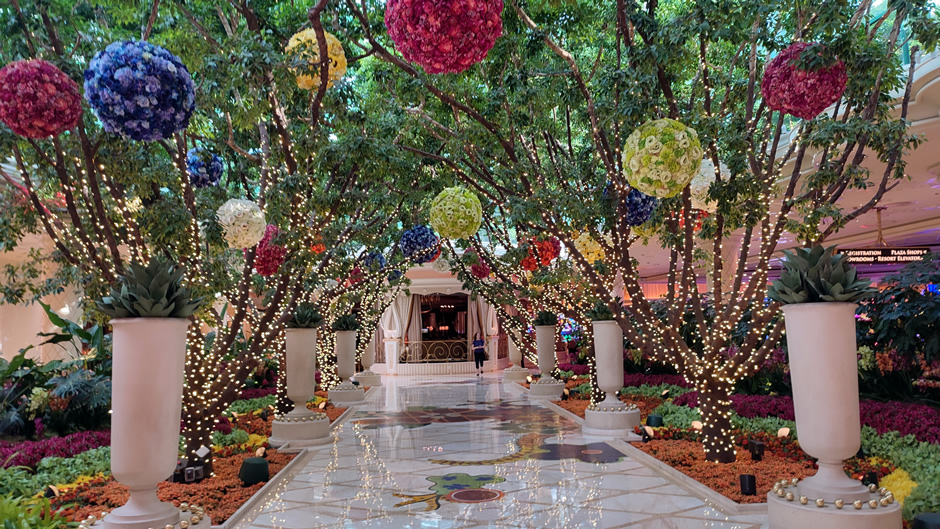
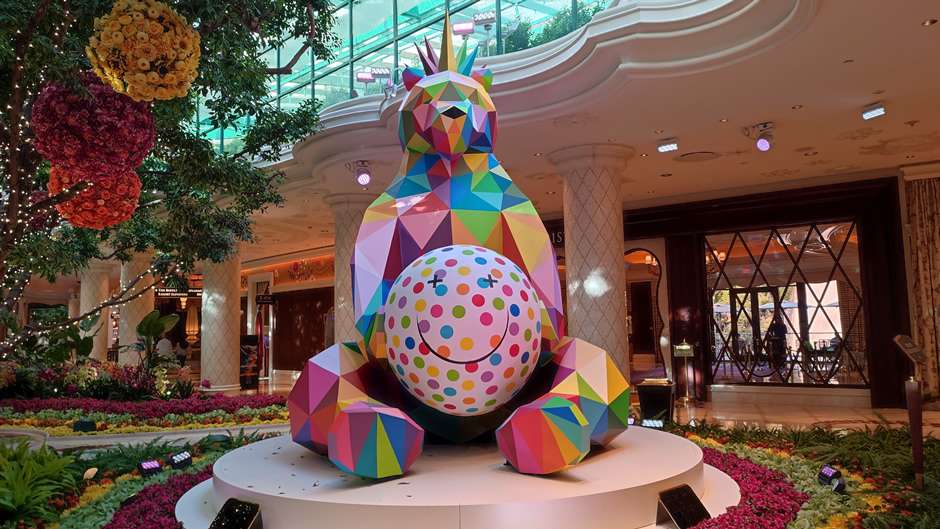
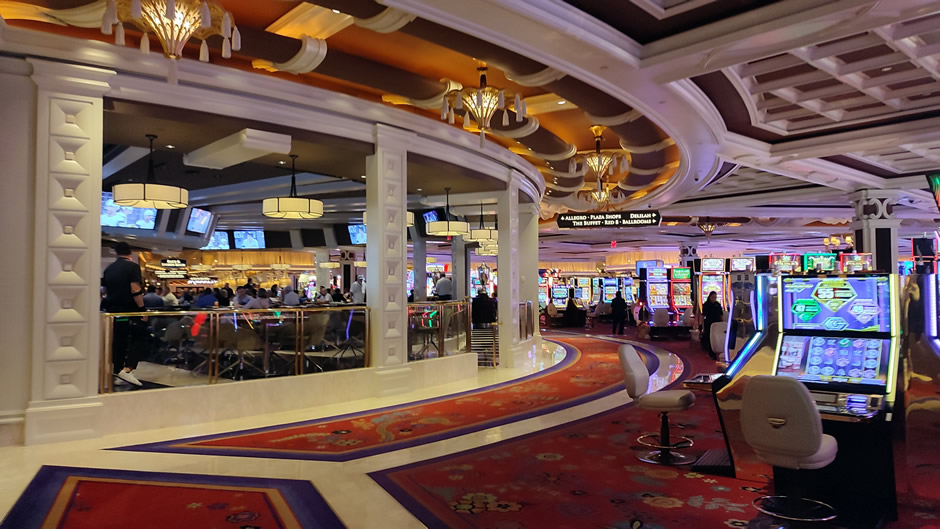
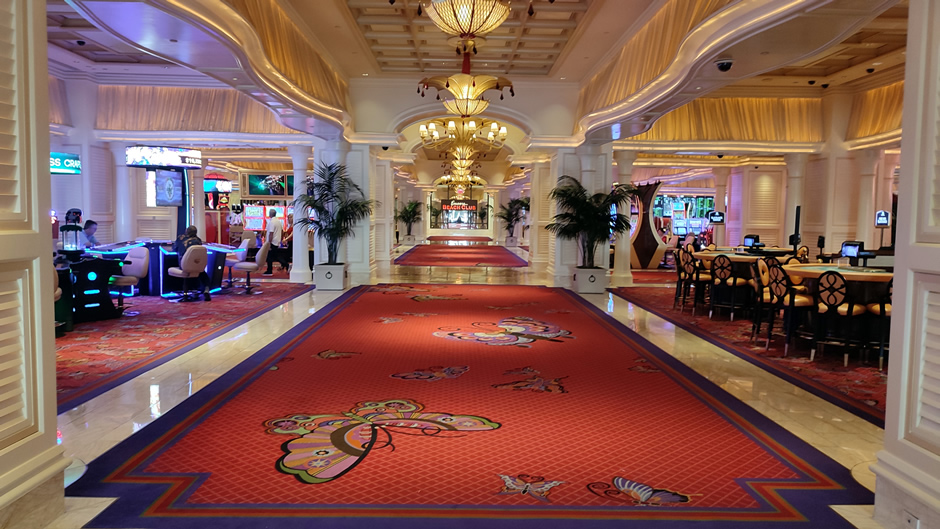
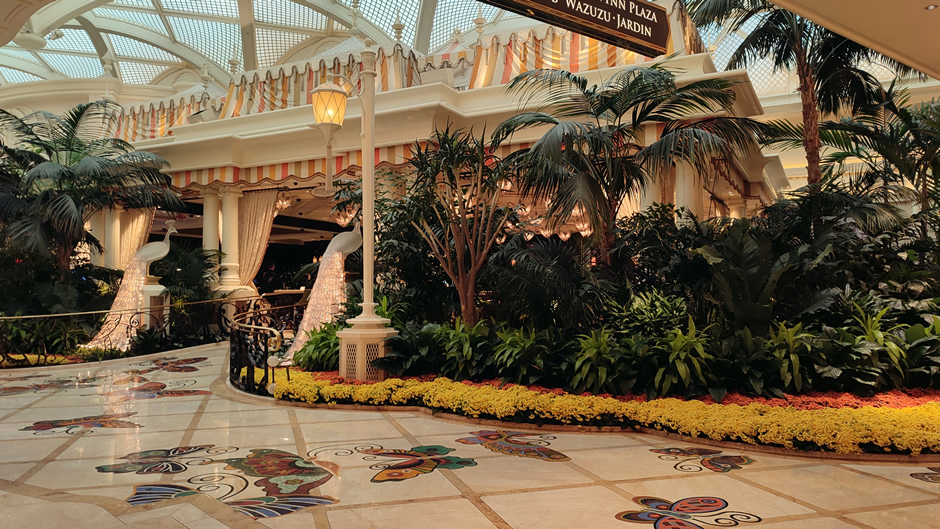
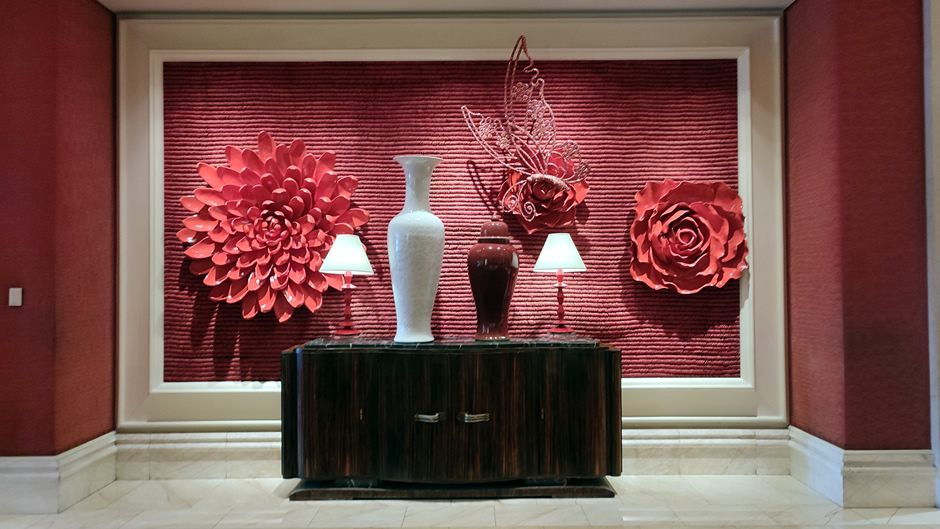
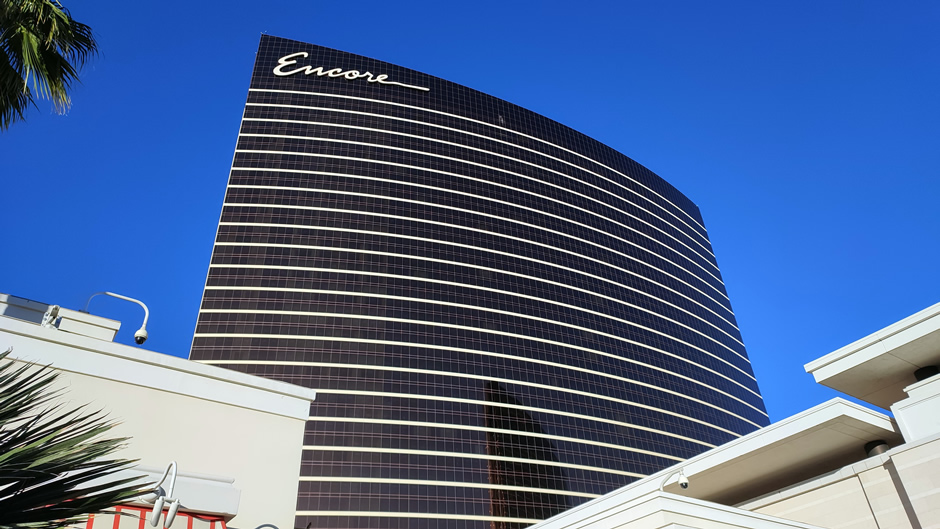
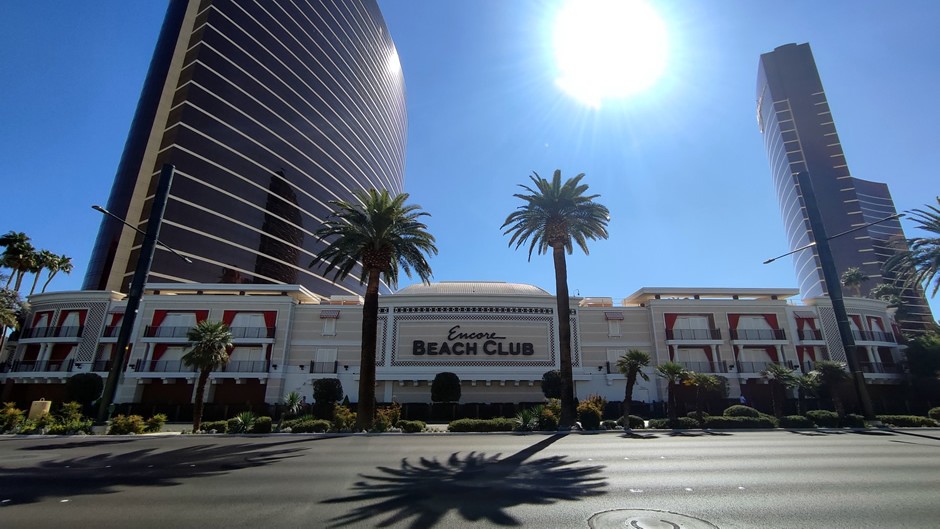
Encore Las Vegas (shown below), often referred to as Encore at Wynn Las Vegas or simply Encore, is a luxury resort, casino, and hotel that opened in December 2008. It is connected to its sister resort, Wynn Las Vegas (located directly south), and features a 48-story tower with over 2,000 suites, a sprawling casino floor, and award-winning restaurants. Guests can enjoy signature attractions like the Encore Beach Club and XS nightclub, along with upscale shopping at the Encore Esplanade. Known for its elegant design and Forbes Five-Star accolades, Encore continues to stand out as one of the Strip’s premier destinations.
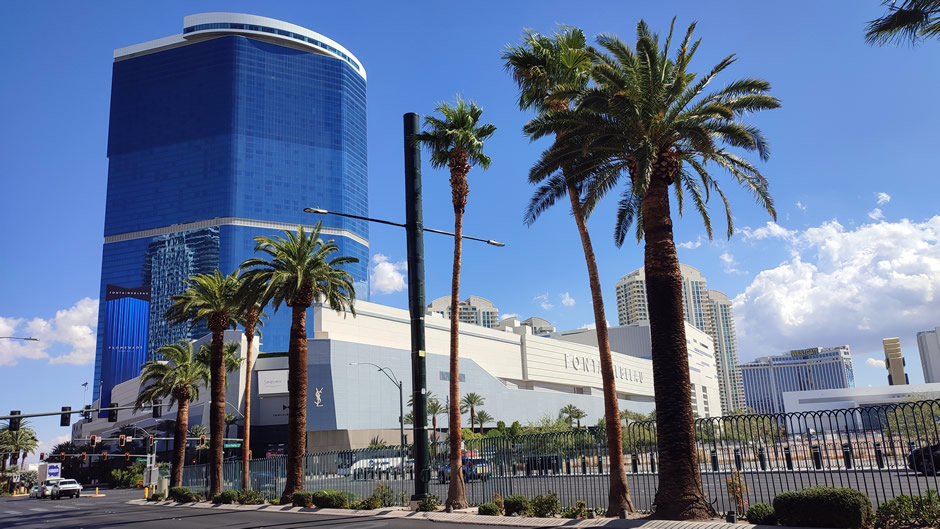
Fontainebleau Las Vegas (shown below): After years of delays, it opened in 2023. With 3,644 rooms and a 5-star rating, it features a 173,000 sq. ft casino, luxury dining, and modern design. Its shimmering glass tower dominates the north Strip.
Fremont Street
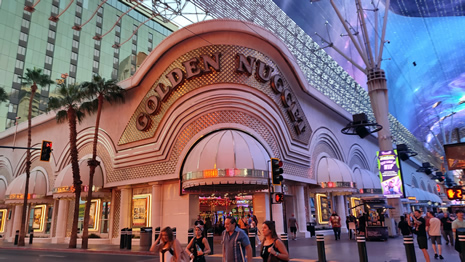
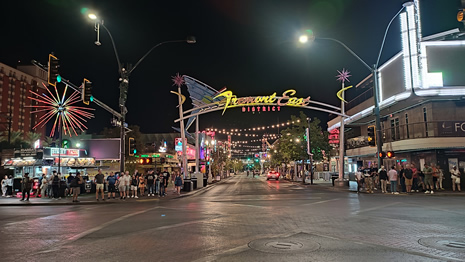
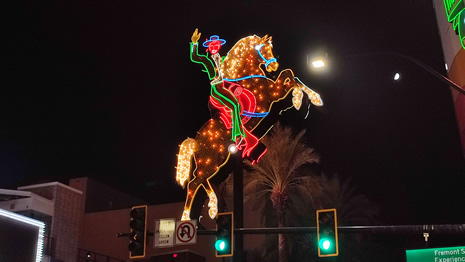
Fremont Street was once the heart of Las Vegas’ gaming but faced decline in the late 20th century as the Strip’s mega-resorts drew visitors away. To counter this, the city launched a major redevelopment project in the mid-1990’s.

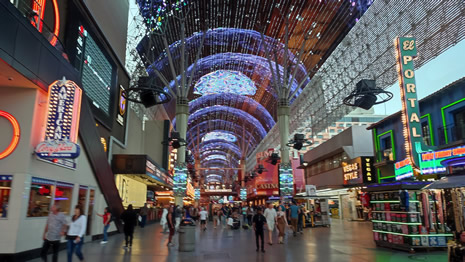
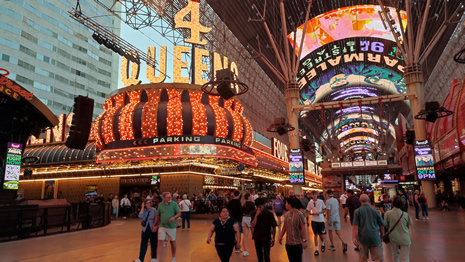
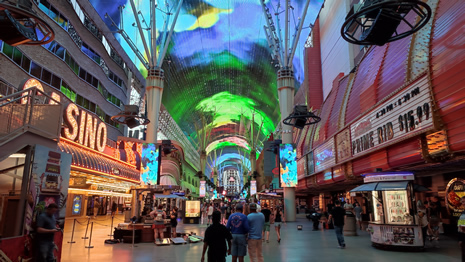
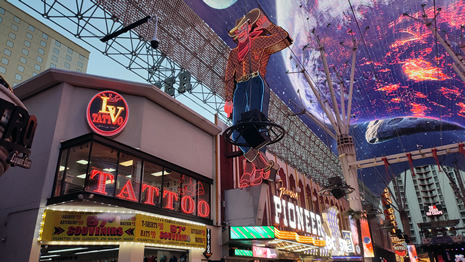
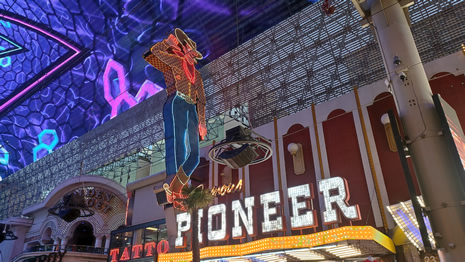
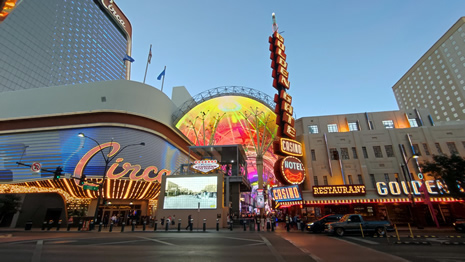
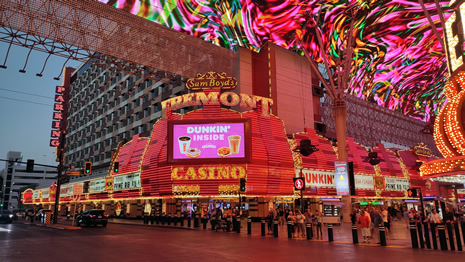
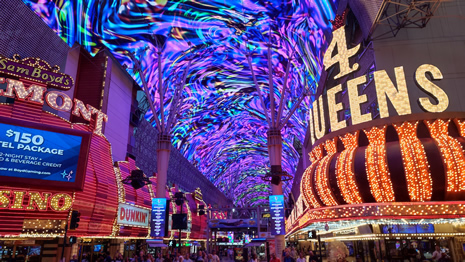
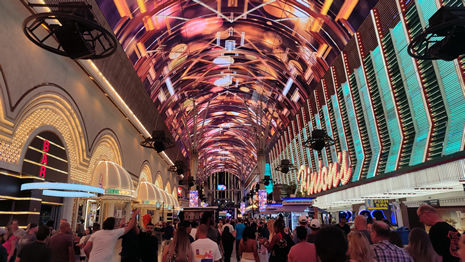
The result was the Fremont Street Experience, a pedestrian mall covered by a 90-foot-high LED canopy stretching four blocks. Construction began in 1994 and the attraction officially opened in December 1995. The canopy hosts nightly light shows and live performances, helping to revive downtown’s appeal. Alongside historic casinos and dining options, visitors can enjoy modern attractions such as the SlotZilla zipline, which sends riders soaring above the crowds. This transformation turned Fremont Street into a blend of old Vegas charm and new entertainment, ensuring its continued role in the city’s identity.
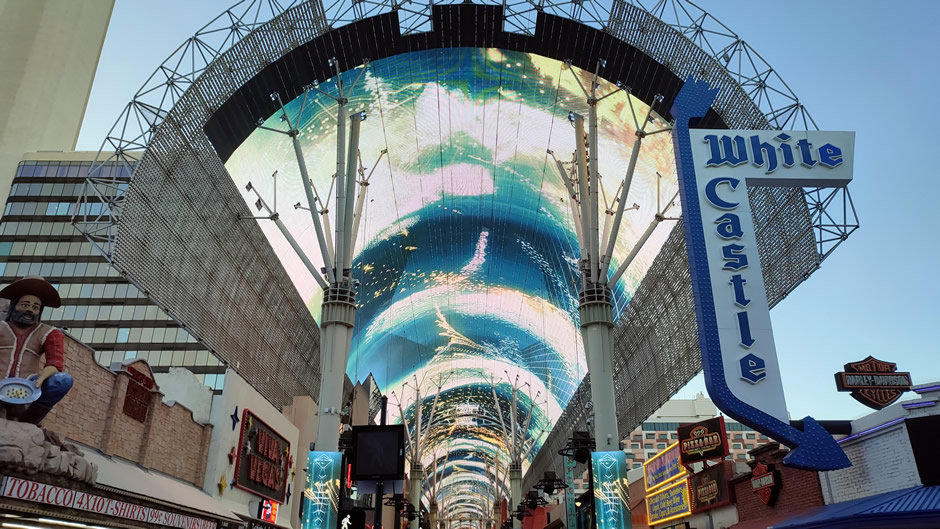
The Fremont Street Experience is best seen in the evenings, when the main entertainment takes place. The massive “Viva Vision” canopy runs a rotating schedule of light shows each night, featuring different themes and music from well-known artists (on this visit it was Katy Perry and Shakira). Alongside these visual displays, multiple stages host live bands and DJs, with lineups that change regularly and expand during seasonal events. This mix of shifting light shows and diverse performances ensures that Fremont Street offers a different experience depending on the night you visit.
 |
 |
|
 |
 |
|
 |
 |
|
 |
 |
|
 |
 |
|
 |
 |
Formula 1
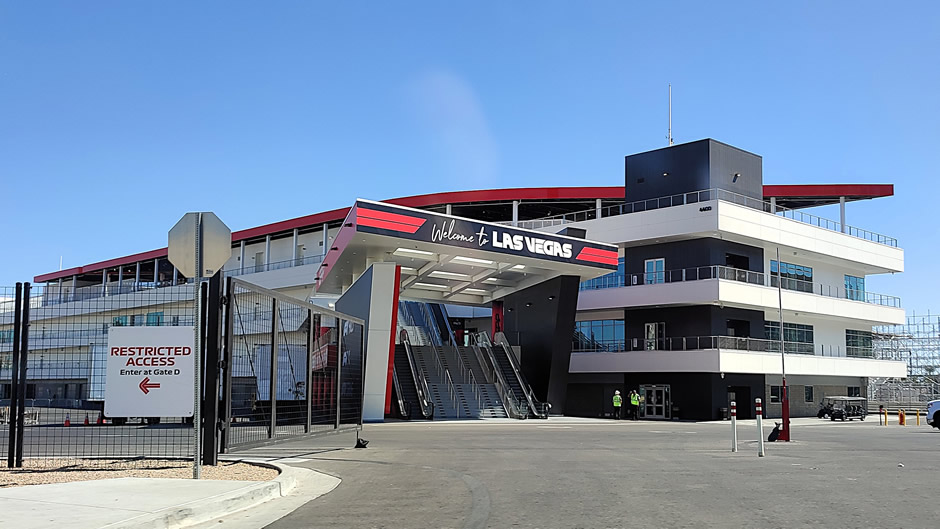
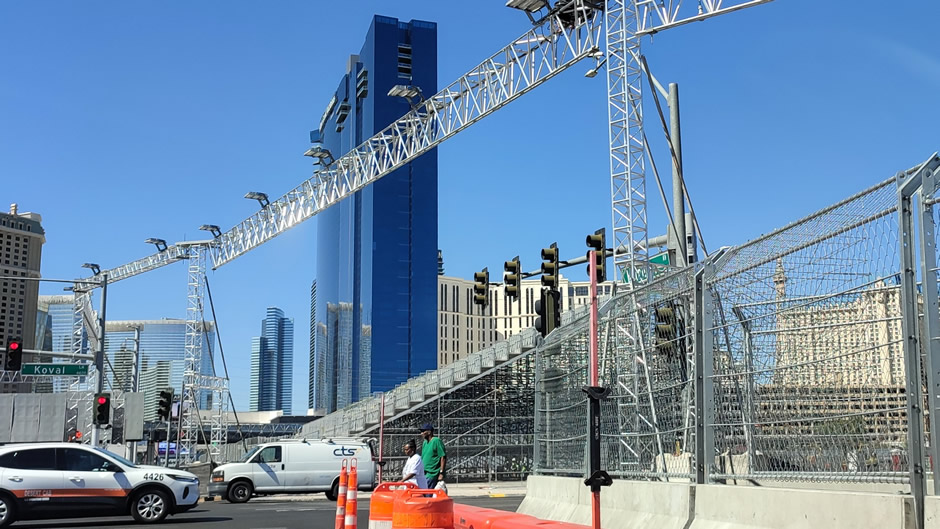
During this visit over 4 nights at the end of September and the start of October 2025, it was possible to see early preparations for the F1 Las Vegas Grand Prix, a major Formula 1 event held on the Strip each November. Setting up the temporary street circuit takes several months, with construction beginning in late summer to install barriers, grandstands, lighting, and race infrastructure before the city transforms into a high-speed venue for the night race:
Sphere
The Sphere is an entertainment venue that opened in Las Vegas on September 29, 2023. It is owned by Sphere Entertainment and is part of the Venetian Resort property, meaning guests staying at the Venetian or Palazzo can access it via a 10-minute walk through the resort's internal walkways.
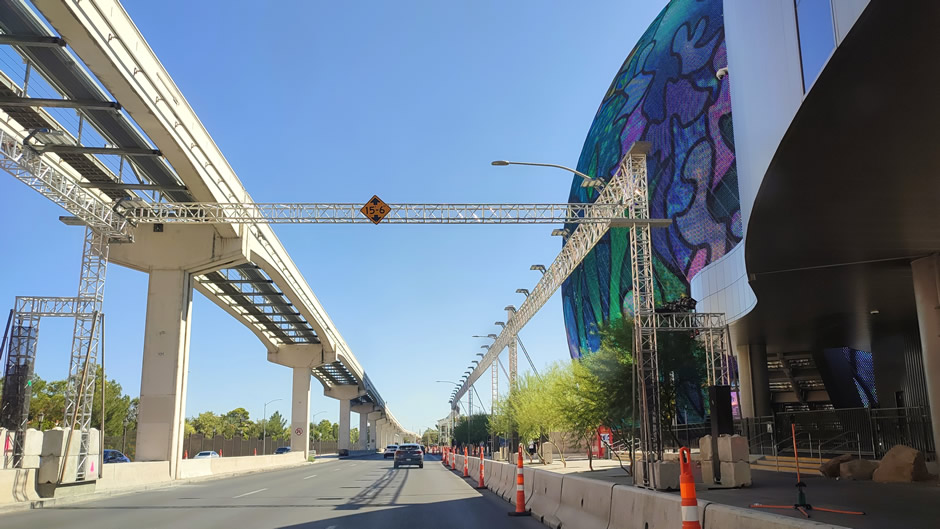
Above The Las Vegas Monorail runs near the Sphere, but it doesn’t stop there. The closest station is Harrah’s/The LINQ, about a 15-minute walk away.
Built at a cost of $2.3 billion, it is the world’s largest spherical structure, standing 366 feet tall and 516 feet wide. The venue seats up to 18,600 people and features an exterior (the “Exosphere”) covered with a massive, 580,000-square-foot LED high-resolution screen, making it a striking addition to the Las Vegas skyline. The Exosphere displays are constantly changing and show dynamic digital art, animations, and advertisements, transforming the building into a seemingly endless array of giant images including a blinking eyeball, the moon, a basketball, or vibrant artistic patterns The Sphere is thus a prominent and attention-grabbing part of the city's skyline. Inside, the venue hosts immersive concerts, shows, and events, with advanced sound and visual technology designed to create a fully enveloping experience.
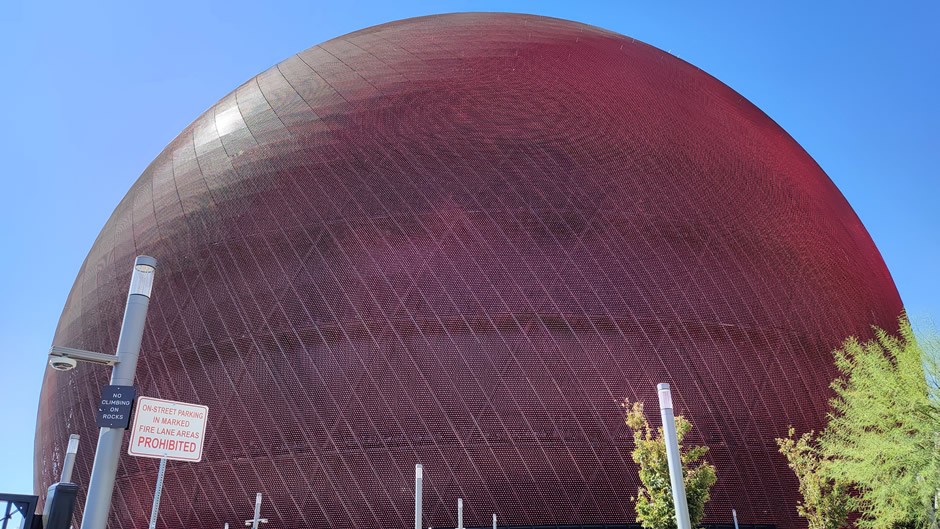
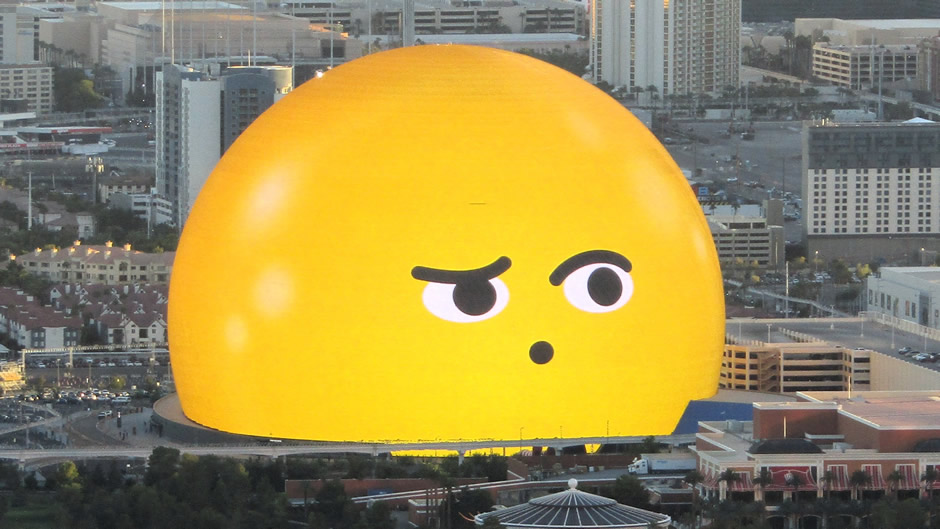
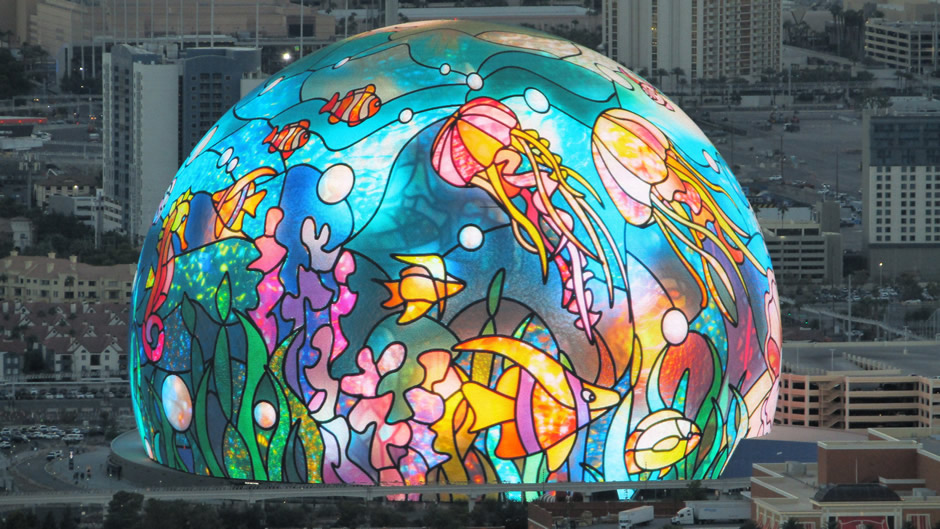
Above: The Sphere up-close and the Sphere at night, as seen through a zoom lens from the STRAT Tower (More on the STRAT tower further down this webpage). The regularly appearing face displayed on it is a popular emoji character named Orbi (sometimes called Orbee), a yellow, expressive figure that has become a cultural icon.
The Vegas Loop
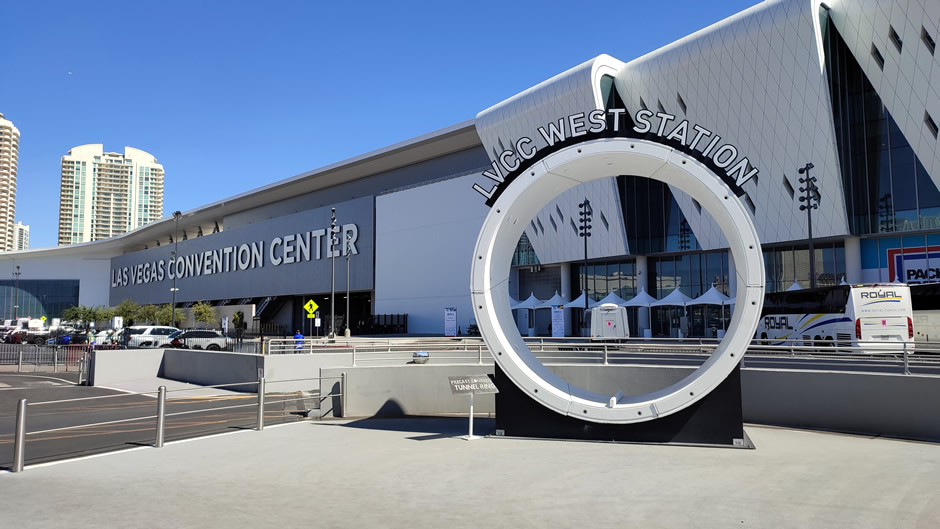
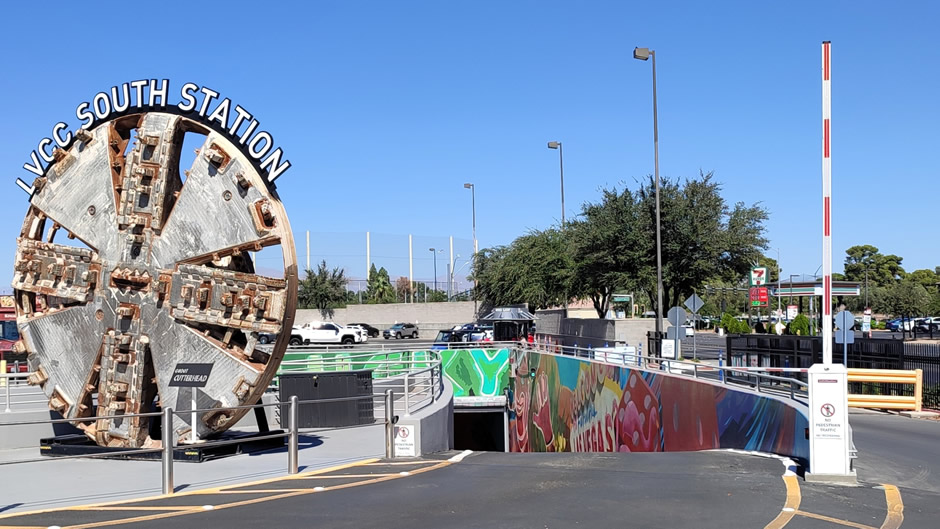
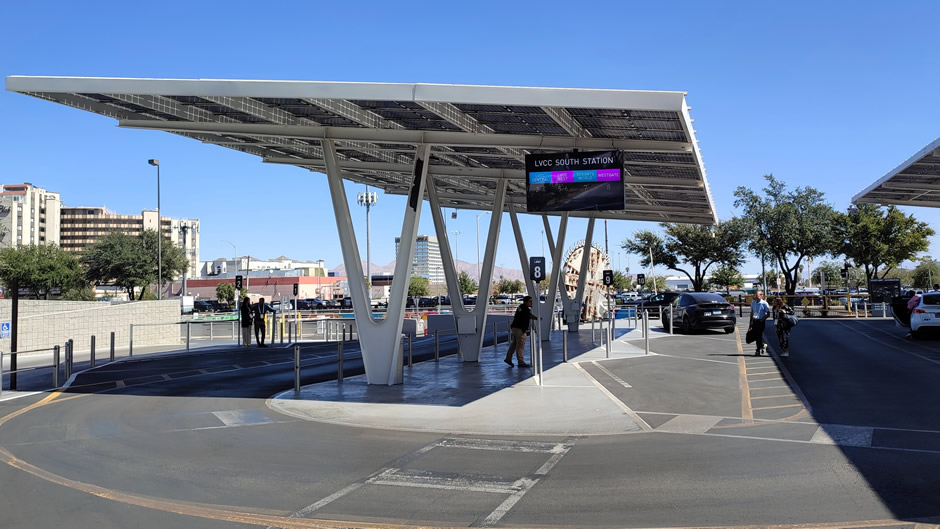
The Vegas Loop is an underground transportation system in Las Vegas designed by Elon Musk’s Boring Company, using Tesla vehicles to shuttle passengers quickly between key destinations. Opened in 2021 at the Las Vegas Convention Center (LVCC), the system currently connects several stations including the LVCC campus, Resorts World, Westgate, and Encore, with plans to expand to more than 90 locations across the city. The tunnels reduce long walks – for example, a 25-minute trek across the convention centre can be cut to just 2 minutes – and are intended to ease traffic congestion for the city’s 40+ million annual visitors. While most rides are currently human-driven, the long-term vision is for fully autonomous trips. Fortunately, at the time of the visit to one of the stations to take a look, there was a convention taking place and it was possible to ride the loop (simply out of curiosity) from LVCC South Station to LVCC West Station and back again, free of charge.

Gold & Silver Pawn Shop
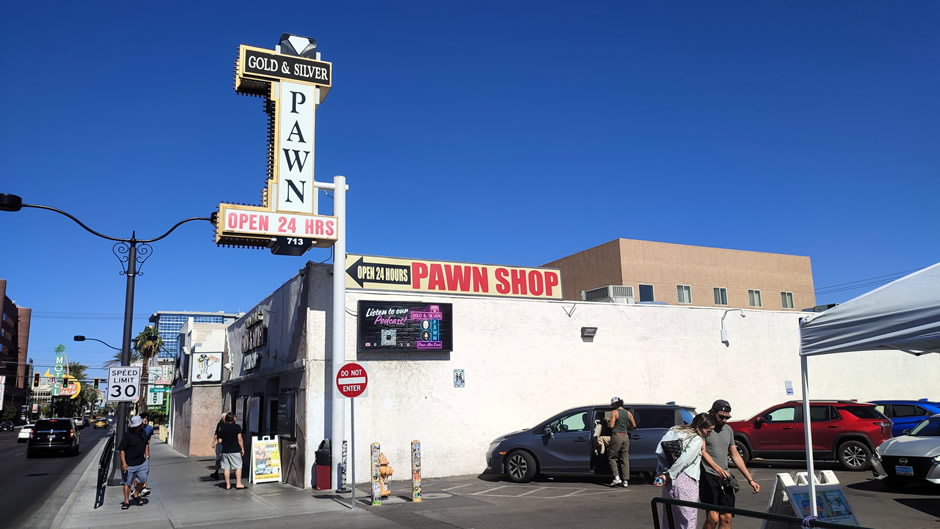
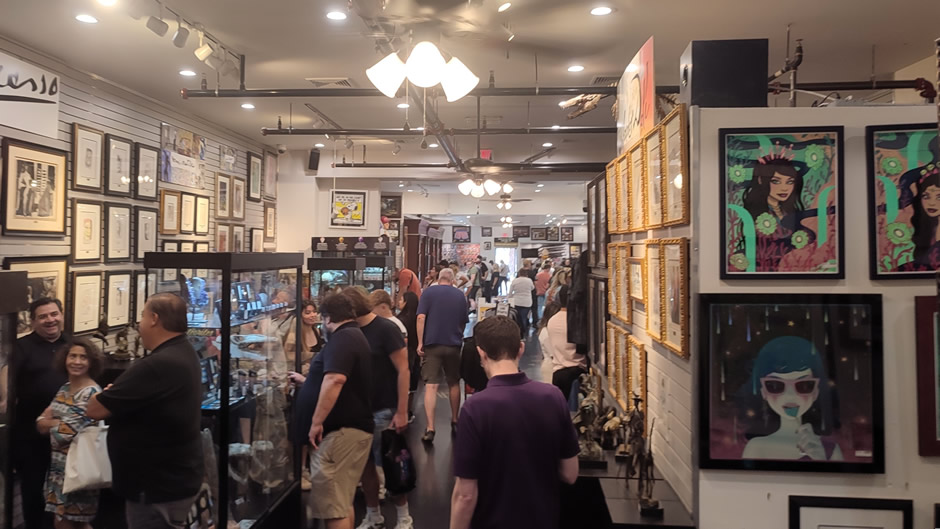
The Gold & Silver Pawn Shop in Las Vegas, shown below, became world-famous as the setting for the reality TV series Pawn Stars, which premiered on the History Channel in 2009. The show follows the Harrison family – Rick, Corey, and the late Richard “Old Man” Harrison – along with family friend Austin “Chumlee” Russell, as they buy and appraise rare and unusual items. Over more than 20 seasons, Pawn Stars turned the shop into a tourist attraction, drawing visitors eager to see where the deals and negotiations take place.
The STRAT Hotel, Casino & Tower
The STRAT Hotel, Casino & Tower (Formerly the Stratosphere) opened in 1996. It has 2,427 rooms, a 3-star rating, and is famous for its 1,149-foot tower, the tallest observation tower in the United States. The STRAT sits on Las Vegas Boulevard within the city limits, positioned just north of the Strip. While many visitors think of it as part of the Strip, Clark County draws the line differently, officially noting that the Strip does not extend into the city itself.
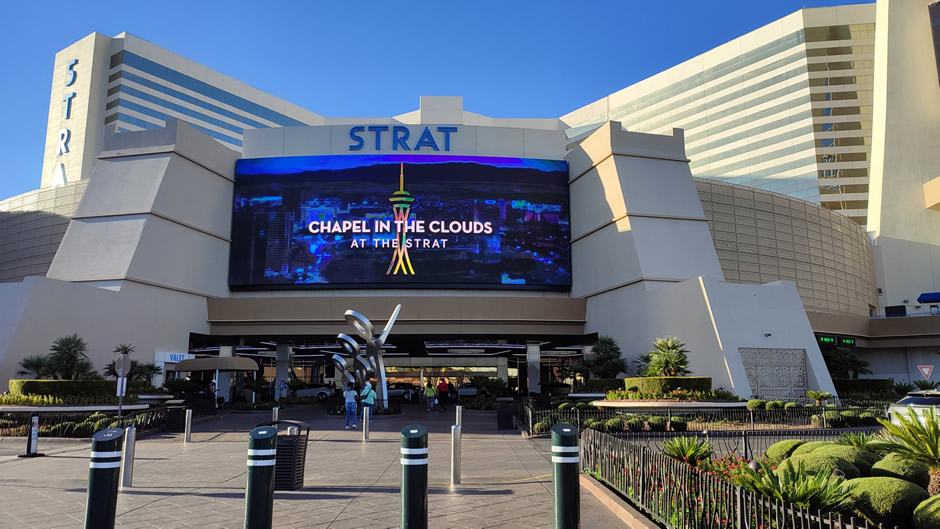
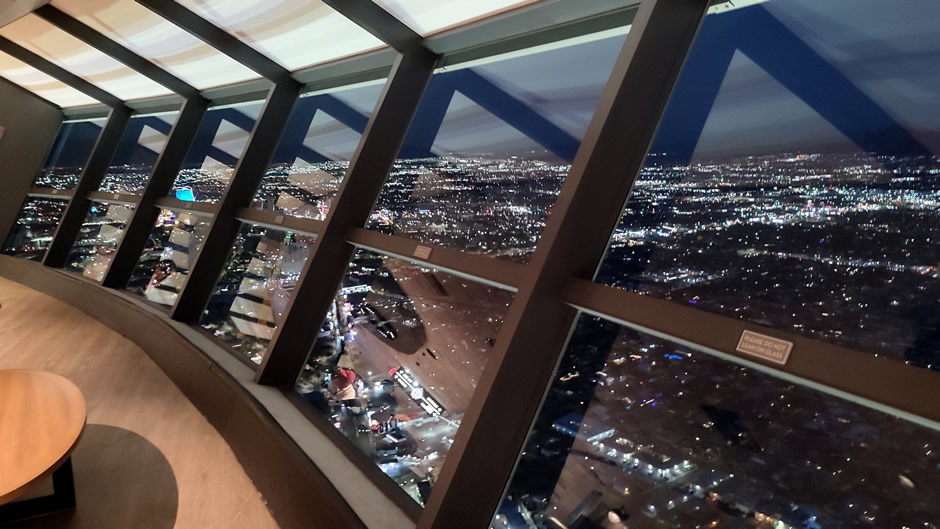
The STRAT Tower offers indoor and outdoor observation decks on levels 108 and 109 respectively with 360-degree views of Las Vegas. There are plenty of seating areas on the inside area. There are also bars, a restaurant (Top of the World restaurant), and a gift shop. By day, visitors see the desert landscape, mountains, and the Strip in detail; at night, the city transforms into a glittering panorama of neon lights.
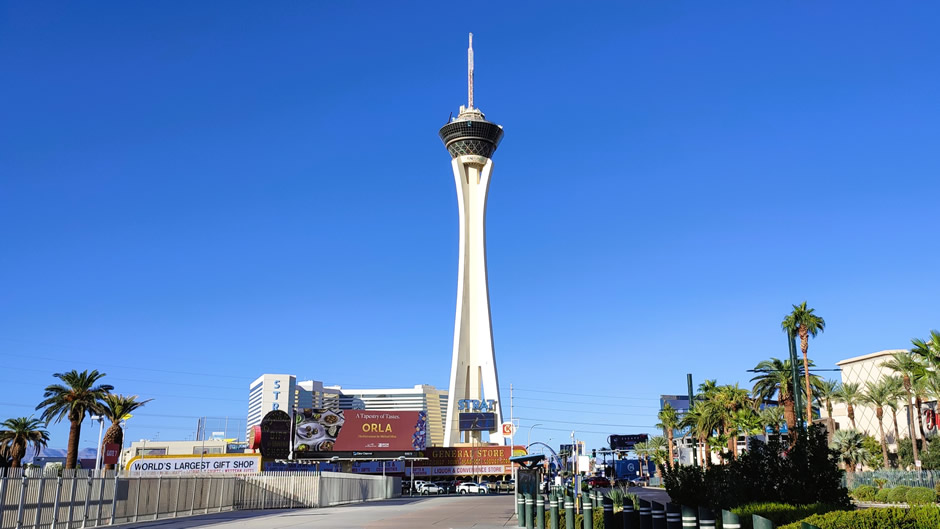
The tower is also known for adrenaline attractions, and visitors can try out the Big Shot (where seated passengers are shot 160 feet upwards at 45mph in a matter of seconds) and SkyJump (a record-breaking controlled free-fall experience sometimes mistaken for a bungee jump, but actually a ride that uses a high-speed-controlled descent system for deceleration). The STRAT has gradually phased out older rides (High Roller in 2005, Insanity in 2023, and the famous X-Scream rollercoaster, also in 2023) to focus on newer experiences like SkyJump and updated observation deck features.

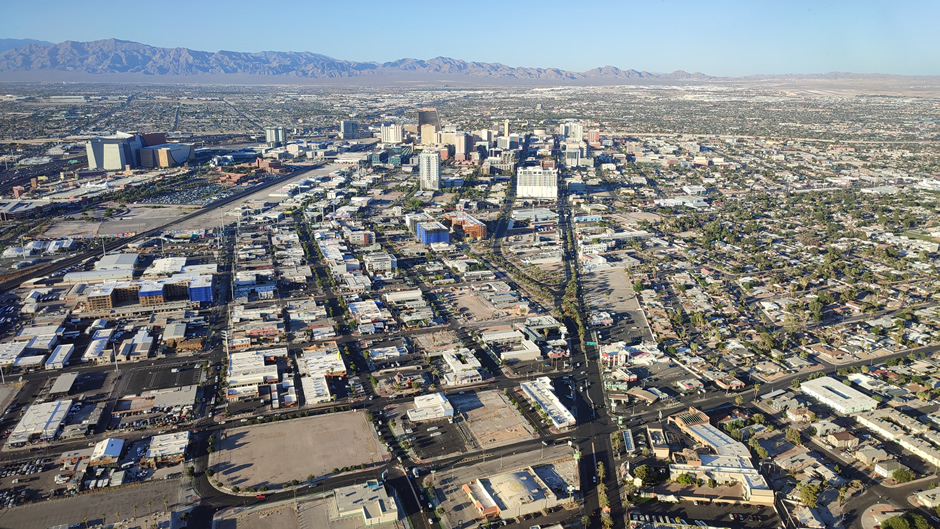
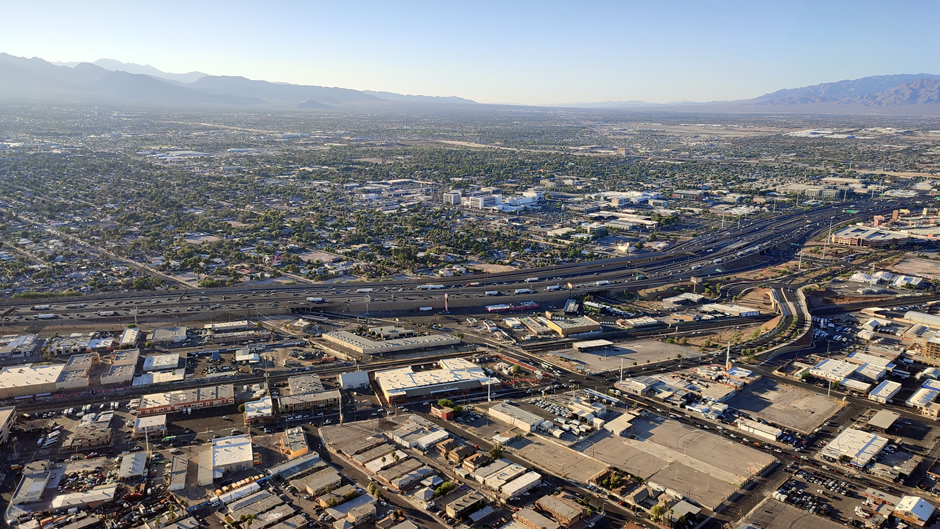
Daytime views highlight the geography around Las Vegas: the Mojave Desert, Red Rock Canyon, and distant mountain ranges, along with a clear look at the Strip’s resorts and downtown skyline.
Night-time views are equally striking, with the Strip glowing in neon, marquees flashing, and the city lights stretching across the valley, creating one of the most iconic panoramas in the world.

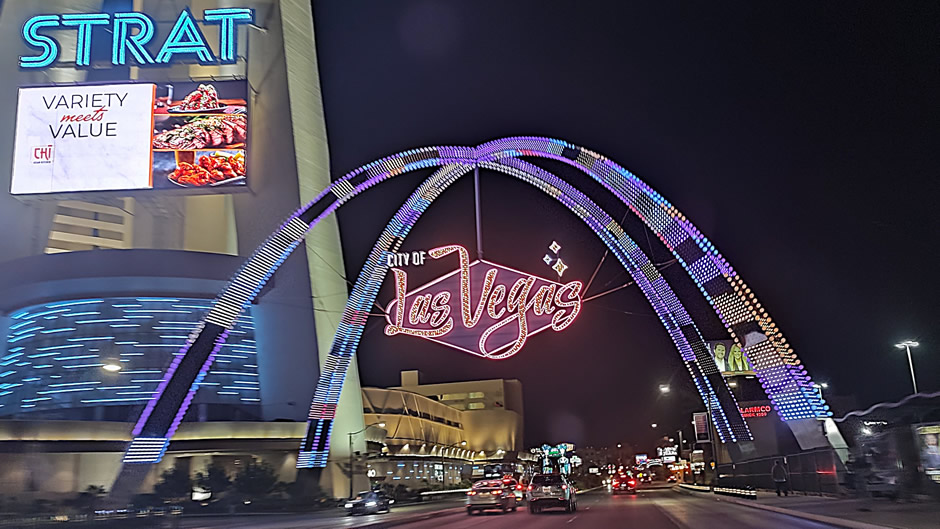
Together, the amenities and views make the STRAT Tower both an entertainment venue and a vantage point for appreciating Las Vegas’s unique setting.
Robert L. Mendenhall Scenic Overlook
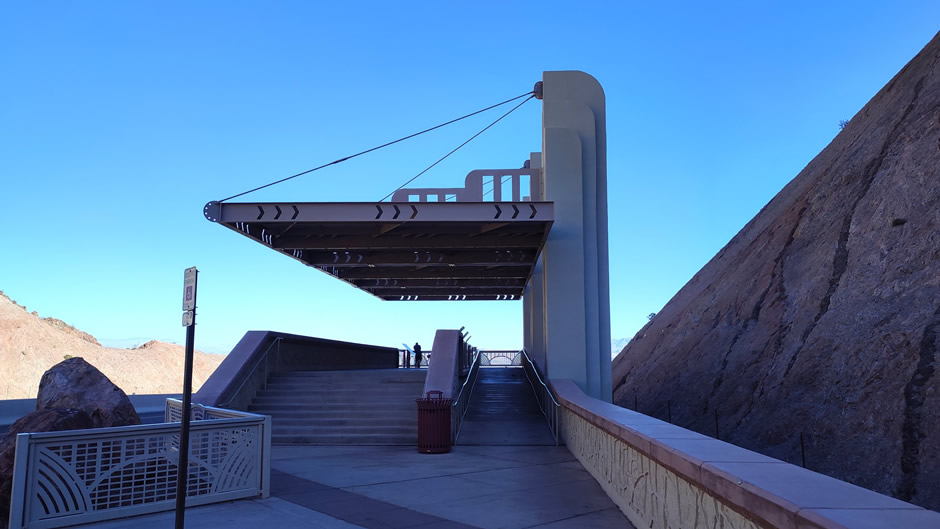
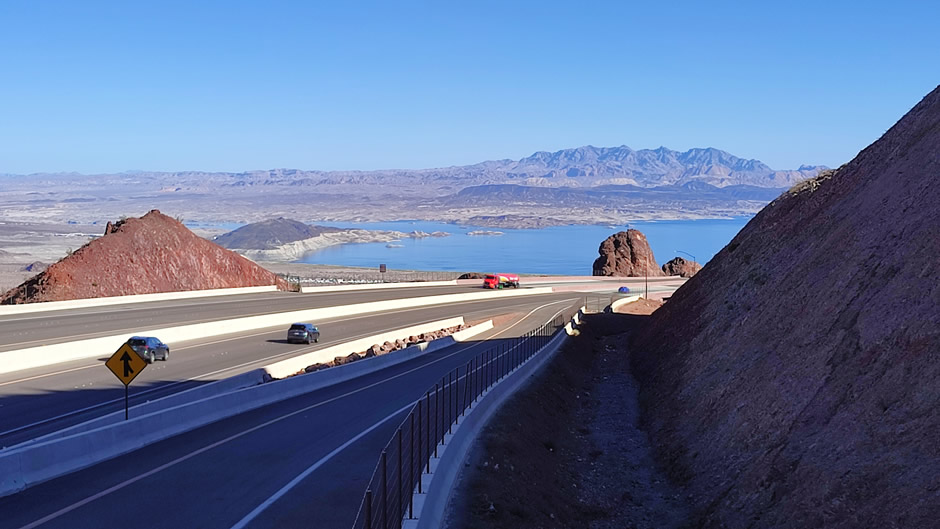
Heading out of Las Vegas on U.S. Route 93/Interstate 11 towards the Hoover Dam, the Robert L. Mendenhall Scenic Overlook near Boulder City provides a clear view of Lake Mead in the distance, the surrounding desert terrain, and the approach toward Hoover Dam. The site includes parking, rest areas, and informational signs that explain the geography and history of the region. It is open year-round and serves as a convenient stop for travellers to take photographs or learn about the local landscape.
Lake Mead – Lakeview Overlook
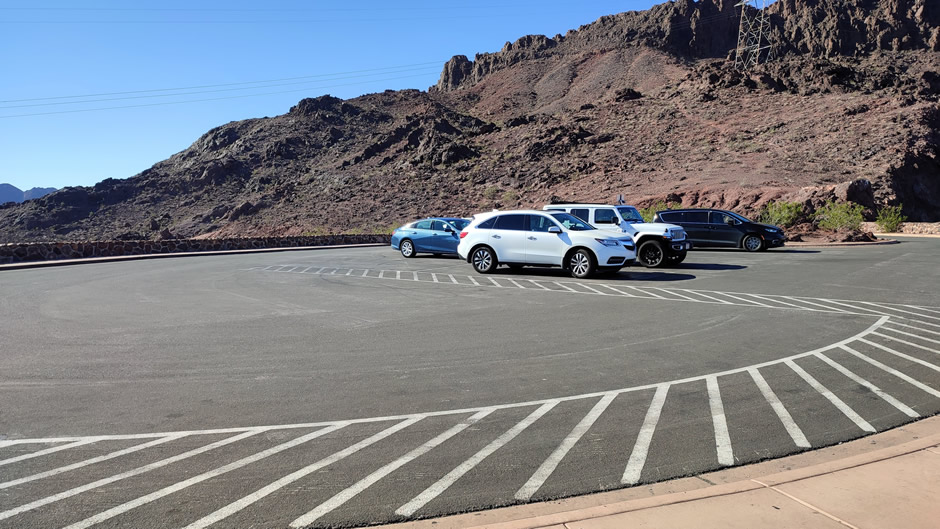
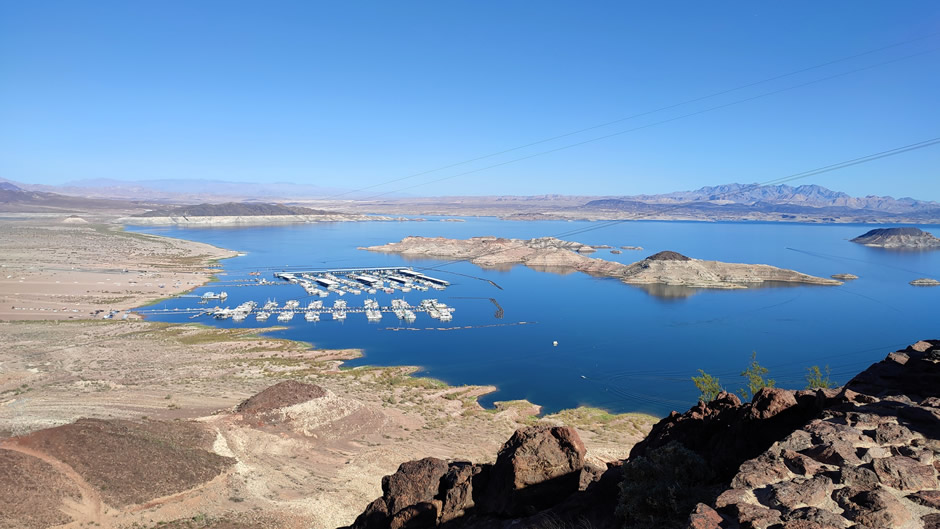
This small but striking scenic viewpoint is perched above the vast blue expanse of Lake Mead and offers sweeping views of the reservoir and the rugged desert landscape that surrounds it. Located near the Historic Railroad Hiking Trail in Boulder City, Nevada, it’s open 24 hours and serves as a quick, rewarding stop for travellers heading to or from Hoover Dam. Visitors often highlight the dramatic drop in water levels, the peaceful atmosphere, and the limited but manageable parking, making it a simple yet memorable vantage point for photography and quiet contemplation.
The Hoover Dam sits on the border of Nevada and Arizona in the Colorado River’s Black Canyon, about 30 miles southeast of Las Vegas. Completed in 1936, it was one of America’s most ambitious public works projects, built during the Great Depression to provide flood control, irrigation water, and hydroelectric power to the growing Southwest. Rising 726 feet, the dam created Lake Mead, the largest manmade reservoir in the United States, and it quickly became a symbol of engineering progress and national resilience.
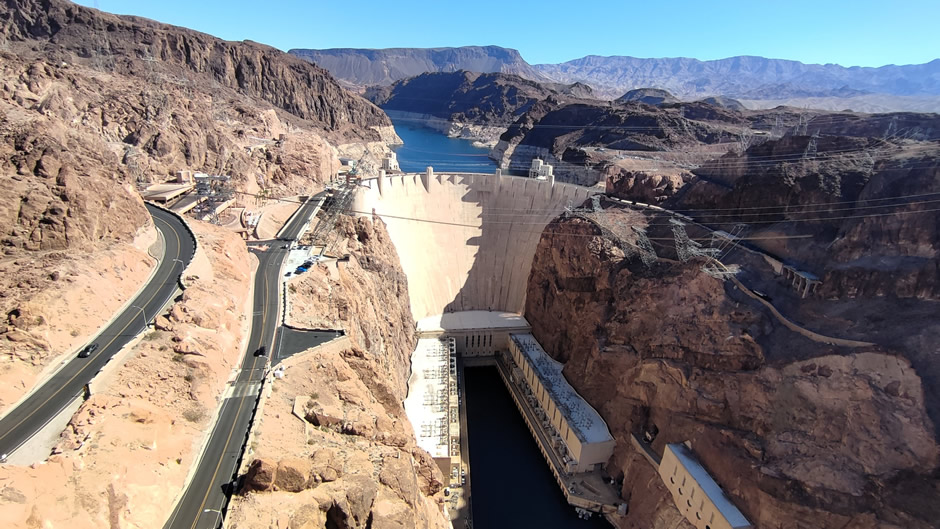
The project was originally authorised under the Boulder Canyon Project Act of 1928, when Boulder Canyon was considered as a possible site. Later surveys determined that Black Canyon, the actual location where Hoover Dam was built, offered better conditions. Boulder Canyon lies upstream of Black Canyon by roughly 20–30 miles along the Colorado River. However, the name “Boulder Dam” persisted for years before Congress officially restored the name Hoover Dam in 1947.
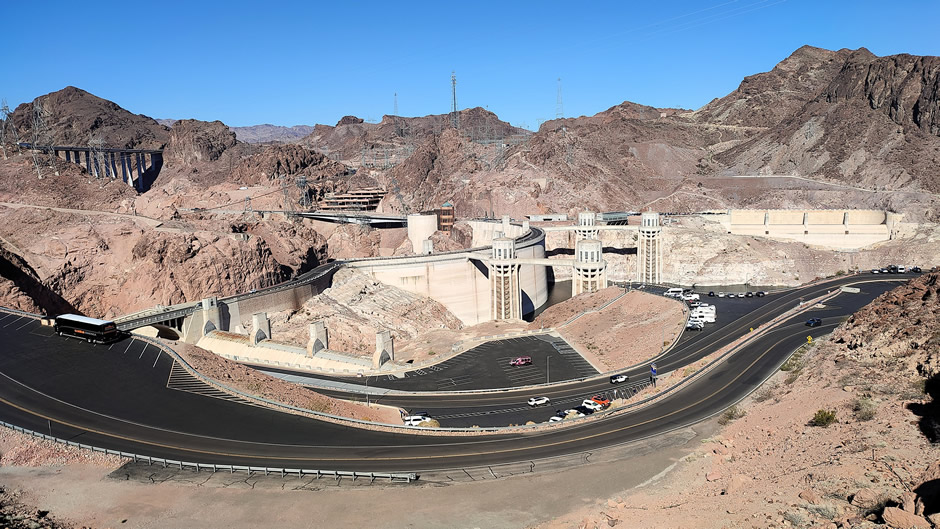
Hoover Dam was built between 1931 and 1936, during the depths of the Great Depression, when thousands of men sought work. Congress had approved the project in 1928 to control flooding, provide reliable irrigation water, and generate hydroelectric power for the growing Southwest. The dam rose 726 feet above the Colorado River, creating Lake Mead. Its construction required immense labour, the establishment of Boulder City to house workers, and cost over a hundred lives. At the time, it symbolised resilience and progress, a federal project that gave jobs and hope to struggling families.
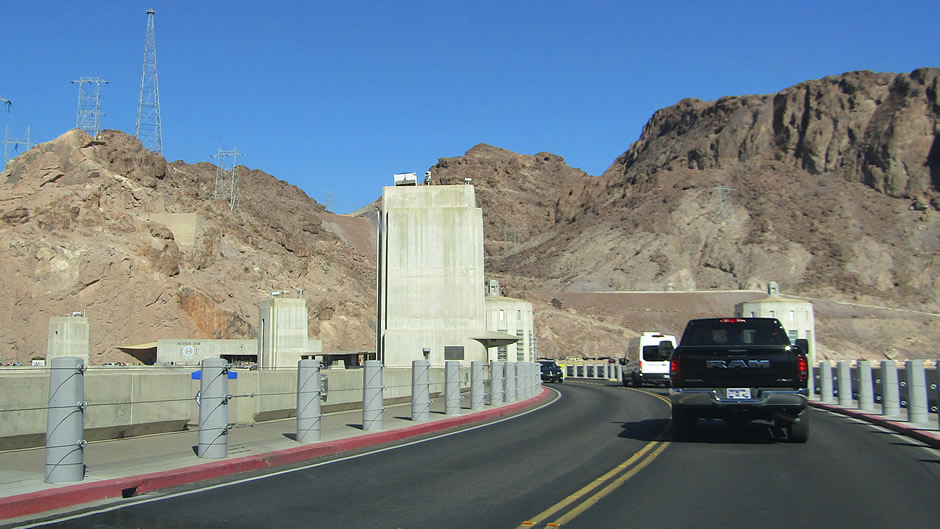
Above: Driving over the Hoover Dam
Today, the Hoover Dam continues to supply water and electricity to millions across Nevada, Arizona, and California. However, Lake Mead’s water levels have declined significantly in recent decades, due to prolonged drought and increased demand. This has raised concerns about long-term water supply and power generation, making the dam not just a tourist site but also a focal point in discussions about climate and resource management.
 |
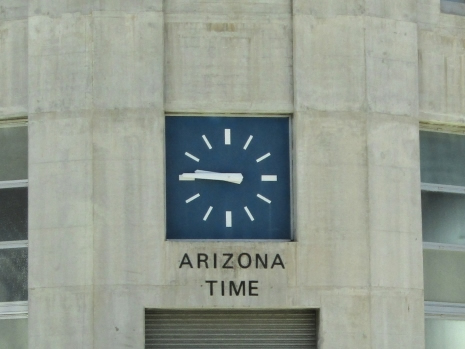 |
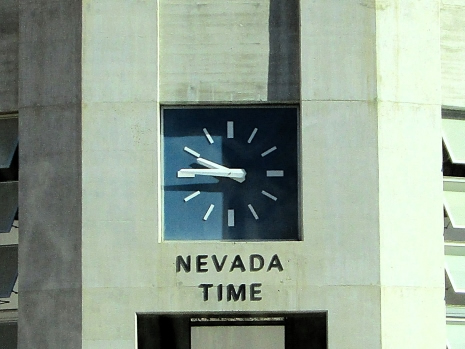
Above: At the Hoover Dam, Arizona stays on the same time all year, while Nevada moves its clocks forward and back for daylight saving. Nevada is an hour behind Arizona in winter but matches Arizona’s time in summer (the positioning of the Arizona hour hand does look a bit questionable!).
Originally, U.S. Route 93 ran directly across the dam, but heavy traffic led to the construction of the Mike O’Callaghan–Pat Tillman Memorial Bridge, completed in 2010. This bypass bridge spans Black Canyon just downstream, easing congestion and providing a dramatic vantage point over towards the dam. Heading from Las Vegas, before reaching the canyon visitors can turn off U.S. Route 93 (which is also Interstate 11, up to the bridge), where a road leads to parking at the Mike O'Callagan–Pat Tillman Memorial Bridge Plaza. A short uphill walk from here leads to the pedestrian walkway across the bridge, offering panoramic views. The Bridge Plaza is designed for accessibility, with ramps and rest areas along the path. Walking or driving across the dam itself remains possible, though vehicle traffic is now limited.
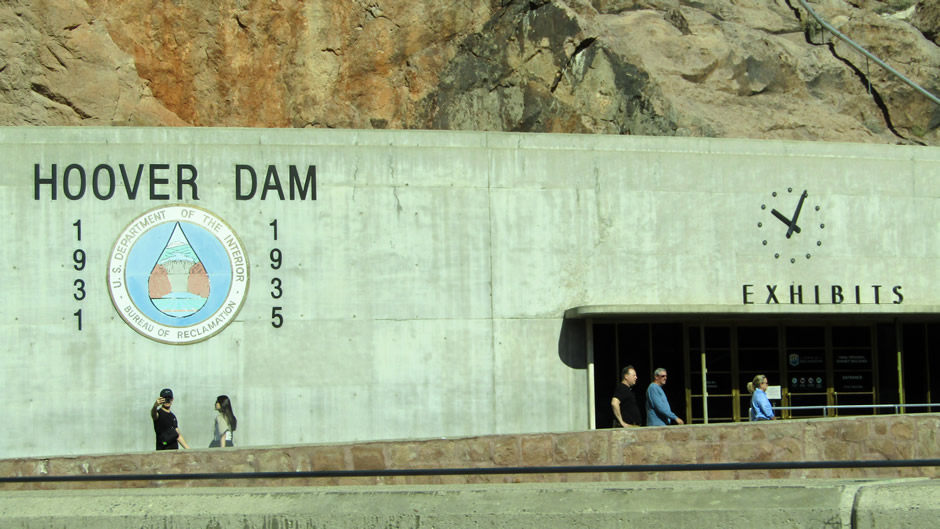
The Hoover Dam has a visitors centre with exhibits on its history, engineering, and environmental impact. Guided tours take visitors inside the dam to see the power plant and tunnels. Amenities include rest stops, shaded areas, and nearby facilities in Boulder City. As with all sites on these webpages, it is worth checking ahead regarding opening times, access etc.
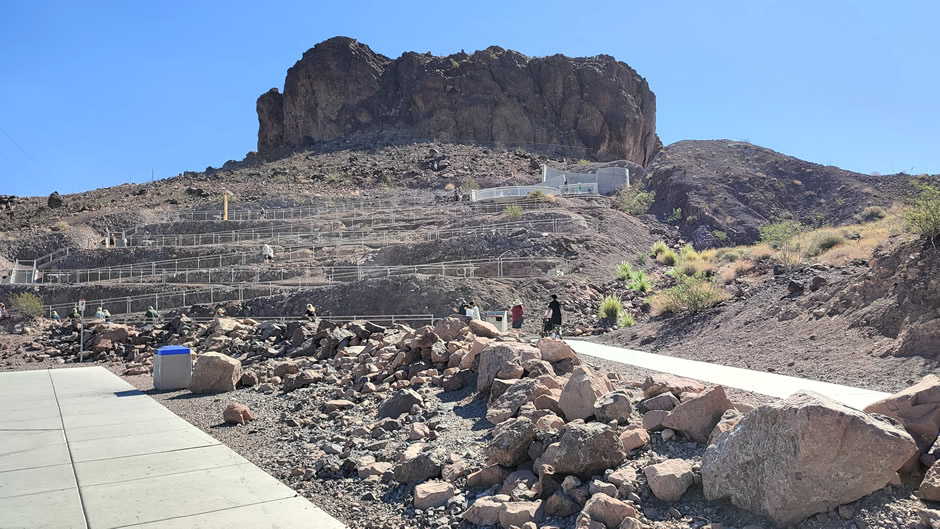
Above: From a parking area, the pedestrian walkway which leads up to the Mike O'Callagan–Pat Tillman Memorial Bridge, from where picture postcard views of the Hoover Dam may be seen.
The Hoover Dam has appeared in numerous films and television shows, often symbolising American engineering might. It featured in “Transformers” (2007), “Vegas Vacation” (1997), and disaster films like “San Andreas” (2015), where its destruction was dramatised. Documentaries and TV specials frequently highlight its role in shaping the American West.
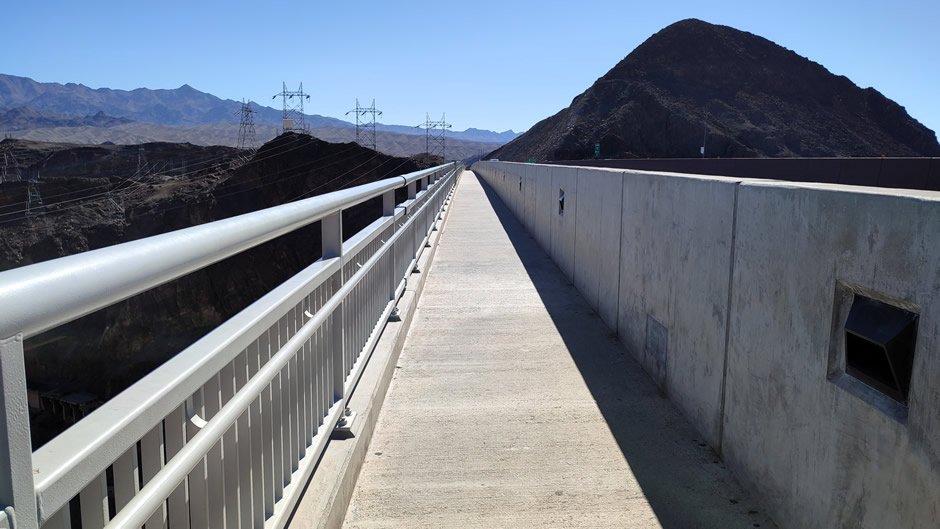
Above: Walkway over the Mike O'Callagan–Pat Tillman Memorial Bridge.
The Hoover Dam site is more than a tourist stop. It is a monument to Depression-era America, a continuing source of power and water, and a vantage point for breathtaking views. Visitors today can explore the dam, walk the bypass bridge, and learn its story through exhibits, while also witnessing firsthand the challenges posed by Lake Mead’s shrinking waters.
Link to Next Page (Page 3 of 11)
Link to Previous Page (Page 1 of 11)
Back to Top
